Trump’s Greenland Tariff Standoff: A Crisis Between Allies
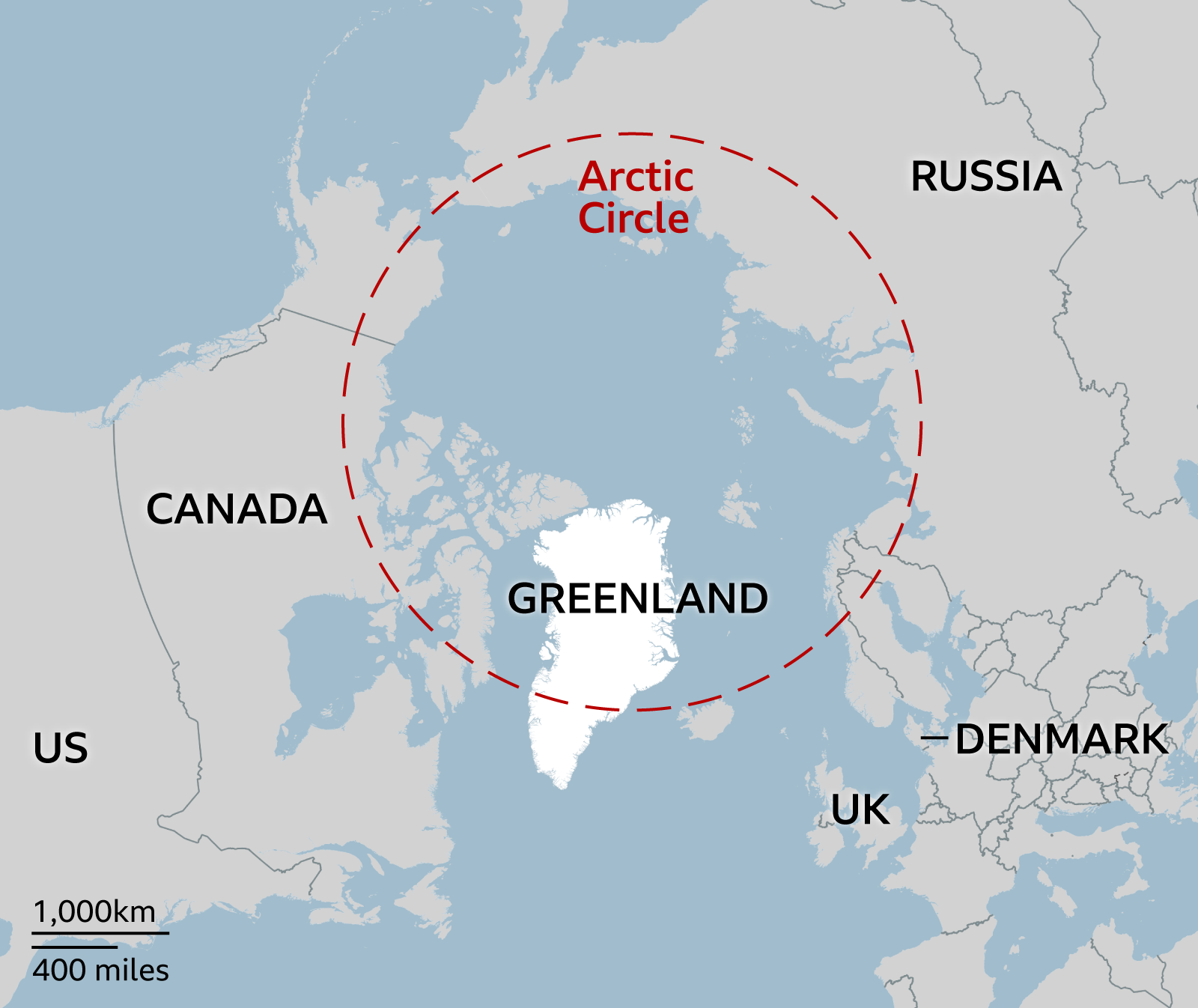
Trump’s Greenland Tariff Standoff. In a bold and controversial move, U.S. President Donald Trump has threatened to impose heavy tariffs on several European countries over a single Arctic island, Greenland. What started as a dispute over sovereignty and security is now threatening to escalate into a major trade confrontation between longtime allies. https://mrpo.pk/european-troops-in-greenland/
Trump has tariffs. Europe has a ‘trade bazooka.’ This Greenland standoff could get ugly, fast
President Donald Trump’s latest tariff threats over Greenland and Europe’s potential countermeasures could result in significantly higher import prices that could weaken both economies.
Neither side appears to be messing around: In an extraordinary escalation of Trump’s pursuit of Greenland, the president announced Saturday that he would impose 10% tariffs on February 1 on goods from Denmark, Finland, France, Germany, the Netherlands, Norway, Sweden and the United Kingdom. It would increase to 25% if an agreement is not reached by June 1.
That triggered an emergency meeting of European countries’ representatives Sunday, and French President Emmanuel Macron reportedly asked the European Union to activate its so-called anti-coercion instrument, colloquially known as a “trade bazooka.” The trade bazooka could block some of America’s access to EU markets or impose export controls, among a broader list of potential countermeasures.

Background: Recent Tensions Over Greenland
The tensions around Greenland have been building for months. The United States has long viewed Greenland as strategically important due to its Arctic location and proximity to Russia. In late 2025, European countries increased military and infrastructure presence on the island, citing defensive purposes and NATO cooperation. Trump interpreted these actions as a challenge to U.S. influence, and combined with his long-standing interest in acquiring the island, it has escalated into a trade and diplomatic standoff.
What Happened?
On January 17, 2026, Trump announced that the United States would impose 10% tariffs on imports from Denmark, Norway, Sweden, France, Germany, the United Kingdom, the Netherlands, and Finland starting February 1.
If no agreement is reached by June 1, the tariffs could rise to 25% and remain in place until Greenland is sold to the United States, a move Trump has repeatedly expressed interest in.
Trump claims Greenland is critical to U.S. national security due to growing Russian and Chinese influence in the Arctic. He also argues that European presence on the island complicates U.S. defence interests.
How Europe Responded
European leaders responded swiftly and firmly, calling the tariff threat unacceptable and coercive:
- A joint statement from the eight countries said these threats “undermine transatlantic relations” and risk a dangerous spiral.
- French President Emmanuel Macron and UK Prime Minister Keir Starmer insisted Greenland’s future should be decided by its inhabitants and Denmark, not forced through economic pressure.
- European officials stressed that their recent military deployments in Greenland are defensive, not aggressive.
Why It Matters
This dispute touches three major areas:
- Trade Relations: The U.S.-EU trade deal is at risk. Tariffs could derail ongoing agreements meant to ease tariffs and open markets on both sides.
- NATO Unity: Using economic threats against allies over Arctic deployments raises questions about alliance cohesion and mutual trust.
- Global Markets: Stocks dipped, the U.S. dollar weakened, and the euro softened as investors weighed rising trade tensions and uncertainty.
Comparison of U.S.–EU Trade Relations (2025 Overview)
| Category | United States | European Union (EU) | Notes / Comparison |
|---|---|---|---|
| GDP (2025 est.) | $27.3 trillion | $22.5 trillion | Both are major economic powers, with the US slightly larger. |
| Population | 334 million | 446 million | EU has a larger population but a smaller per-capita GDP. |
| Total Trade (Goods & Services, 2025) | $5.5 trillion | $5.1 trillion | Both are top global trading blocs. |
| Top Exports | Aircraft, machinery, chemicals, electronics, agricultural products | Machinery, vehicles, chemicals, pharmaceuticals, aircraft | Overlapping export sectors can create competition. |
| Top Imports | Vehicles, machinery, electronics, pharmaceuticals | Machinery, vehicles, electronics, energy products | Both import each other’s goods heavily. |
| Main Trade Agreements | USMCA, CPTPP (observer), various bilateral | EU Single Market, EU trade deals with the UK, Japan, Canada, etc. | Both rely on multilateral and bilateral trade frameworks. |
| Average Tariff Rates | 2–3% overall (higher on some agricultural products) | 5–6% overall (common external tariff) | Tariffs are generally low, but spikes occur in sensitive sectors. |
| Major Trade Disputes (2020–2025) | Steel & Aluminium tariffs, aircraft subsidies, digital services tax | Aircraft subsidies, digital services tax, US tariffs on steel/aluminium | Trade disputes often overlap, creating friction in political negotiations. |
| Investment Flows (FDI) | $5 trillion (in EU) | $4.5 trillion (in US) | Investment is highly reciprocal, showing deep economic integration. |
| Key Trade Challenges | Tariffs, regulatory divergence, digital tax, subsidies | Tariffs, regulatory divergence, Brexit aftermath, and sustainability rules | Greenland tariff issue is a recent addition to these tensions. |
| Strategic Areas in the Greenland Context | Arctic security, defence access, rare earths, shipping routes | Defence cooperation via NATO, scientific research, and strategic resources | Highlights why Greenland has become a geopolitical flashpoint. |
Europe’s Countermoves
Europe is preparing to respond using powerful economic tools:
- The EU’s “anti-coercion instrument” could retaliate with tariffs on U.S. exports or restrictions on American businesses in Europe.
- Talks are underway to revive previously suspended retaliatory tariffs worth billions, signalling that Europe is ready to push back if the situation escalates.
The Big Picture
Trump’s Greenland tariff threat shows how trade can be used as a tool for geopolitical pressure. Using tariffs not to protect industries but to advance territorial ambitions sets a concerning precedent.
A full-scale transatlantic trade war could emerge if tensions continue, affecting global markets, supply chains, and even NATO’s strategic unity.
Final Thoughts
The Greenland standoff is more than a political headline; it is a potential turning point in U.S.-European relations. It forces allies to weigh cooperation against confrontation and shows how economic leverage can test even the strongest partnerships.
The question remains: Will diplomacy prevail, or are we on the brink of a costly alliance clash?
FAQs
1. Why is Greenland important to the U.S. and Europe?
Greenland’s Arctic location is strategically vital for national security, military operations, and monitoring Russian and Chinese activity in the region.
2. Which European countries are affected by Trump’s tariffs?
Denmark, Norway, Sweden, France, Germany, the United Kingdom, the Netherlands, and Finland face tariffs starting at 10%, potentially rising to 25%.
3. What triggered this tariff threat?
Recent European military and infrastructure activities in Greenland, combined with Trump’s interest in acquiring the island, triggered the U.S. response.
4. How could this affect global trade and markets?
Potential retaliatory tariffs, disrupted supply chains, and investor uncertainty could weaken global markets, impact currencies, and disrupt trade deals.
5. What is Europe’s planned response to the U.S. tariffs?
Europe may use its “anti-coercion instrument” to impose counter-tariffs on U.S. imports or restrict American businesses, signalling readiness for escalation if necessary.
-
“A full-scale transatlantic trade war could emerge if tensions continue.”
EP Statement
Editorial Perspective:
The Greenland tariff standoff illustrates how economic tools are increasingly used as instruments of geopolitical pressure. While tariffs are traditionally trade policy measures, in this case, they are leveraged to pursue territorial ambitions, testing the strength of long-standing alliances. Observers should monitor both U.S. domestic politics and European unity closely, as the unfolding developments could reshape transatlantic relations and global trade dynamics.