
Trumplization: It’s Money, Stupid How Deals and Dollars Drive Global Politics
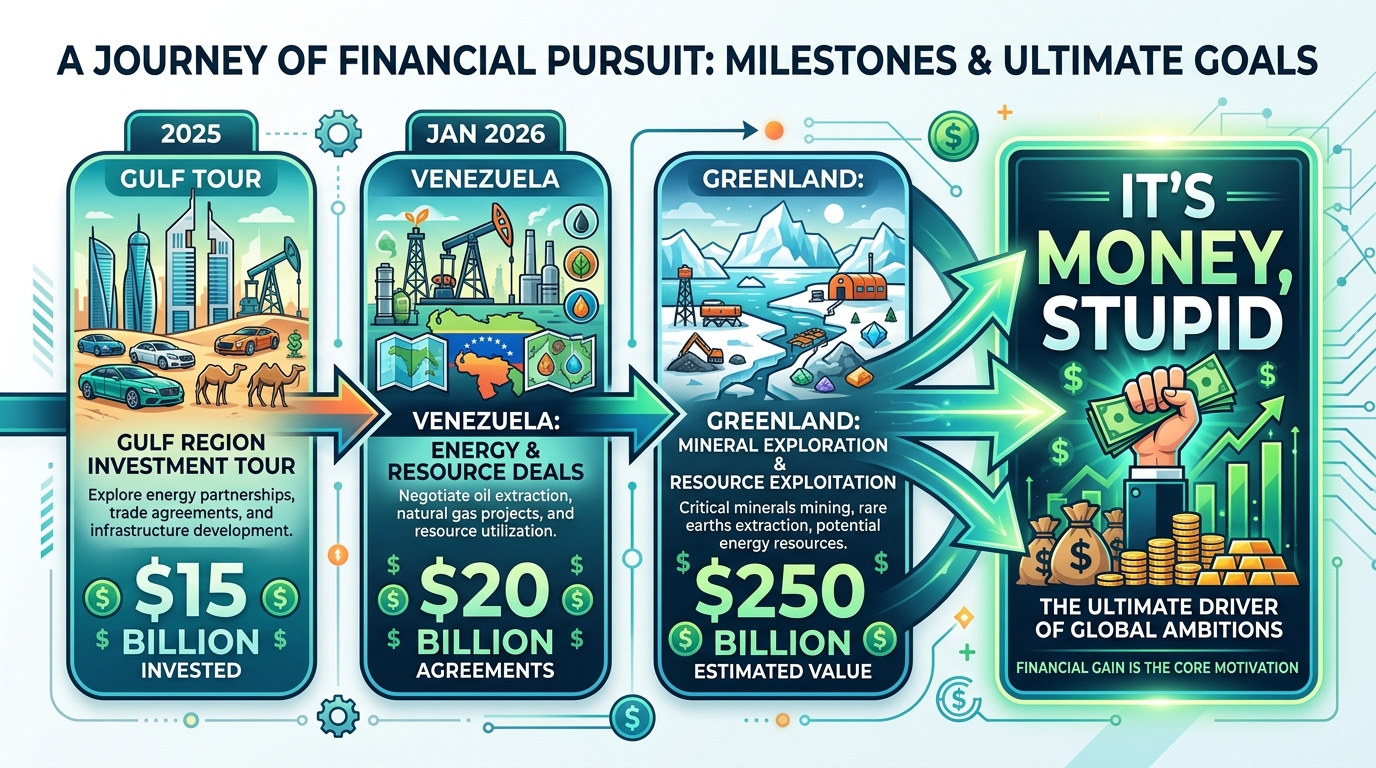
Trumplization: It’s Money Stupid. Since Donald Trump took office, a new style of politics has emerged that some analysts call Trumplization. It is a system where global alliances, conflicts, and diplomacy are increasingly framed as deals with measurable costs and returns. The mantra could be summed up in three words: It’s money, stupid.
https://mrpo.pk/the-age-of-trumplization/
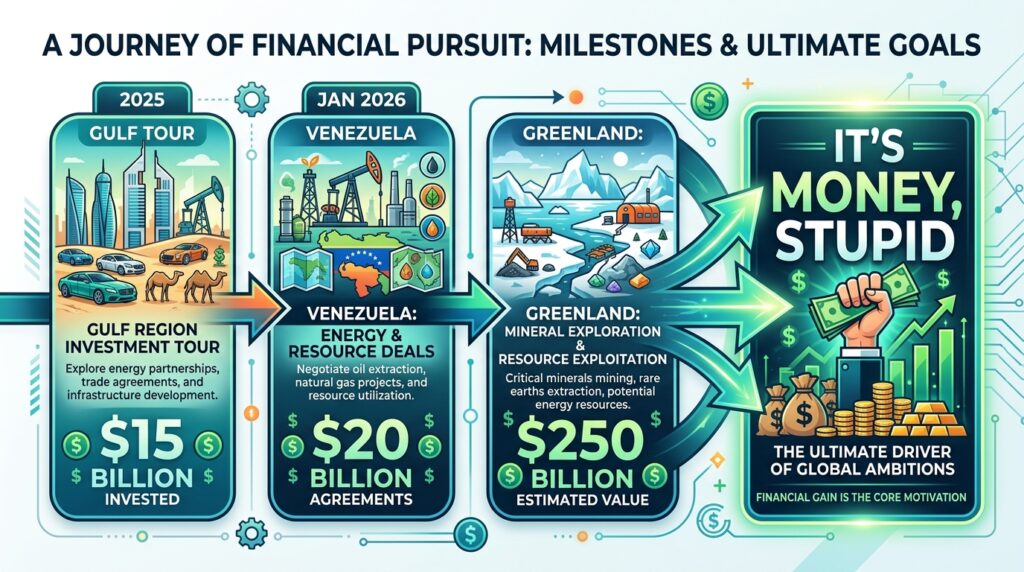
This article explores how Trumplization reshapes geopolitics, affects ordinary voters, and sets the stage for the 2026 midterm elections.
“It’s the Money Stupid”
When Bill Clinton modified James Carville’s phrase and said, “It’s the Economy Stupid”, he distilled a complex issue into a phrase. He was one step away from the universal explanation that explains everything and that drives all things, including our political system. I say, “It’s the Money Stupid”.
https://steemit.com/introduceyourself/@ecoproducer/it-s-the-money-stupid
1. What Is Trumplization?
Trumplization is more than a political brand. It is a shift from traditional ideology-driven governance toward transaction-driven decision-making. In this model, alliances are evaluated in financial terms, conflicts are weighed against potential returns, and influence is negotiated like a balance sheet.
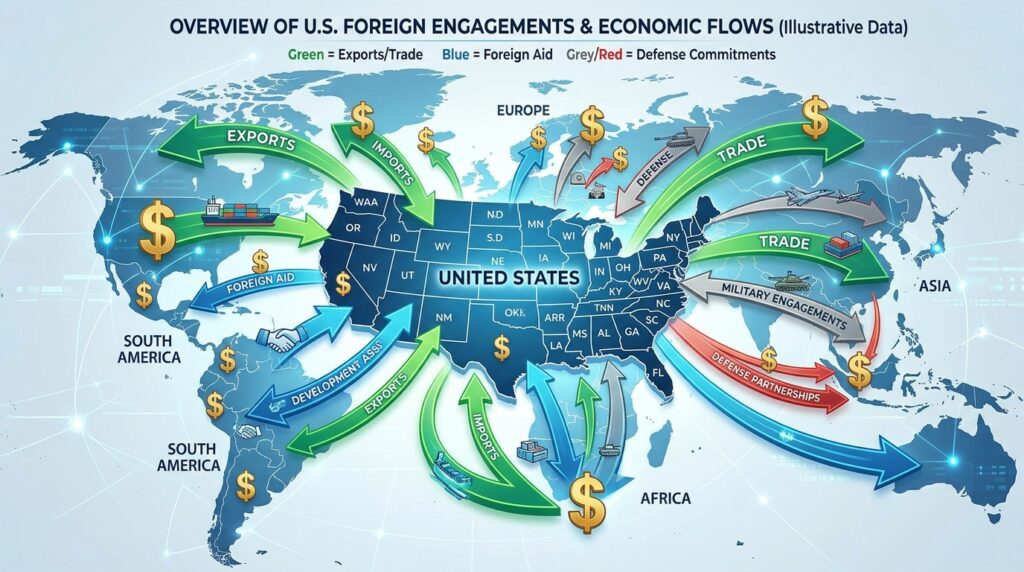
Key characteristics include:
- Transactional diplomacy
- Cost-benefit nationalism
- Blurring of business logic and statecraft
Unlike previous administrations that often framed policy in terms of values or security, Trumplization treats global engagement as an investment. Every decision carries a question: What do we get, and what does it cost?
2. Gulf Partnerships: Security for Sale
Consider the U.S. relationship with the Gulf Cooperation Council states. Under Trump, these countries signed massive arms agreements worth hundreds of billions. Public statements made it clear: We protect you, but you pay for it.
While some analysts view these arrangements as normal defence cooperation, Trumplization frames them as monetised security guarantees. Protection is no longer solely a strategic commitment. It comes with a price tag. This model raises questions about fairness and consistency in global alliances.
3. Wars, Resources, and Strategic Gains
Trumplization also redefines how the U.S. approaches international conflicts:
This one is more muscular. US forces carried out strikes, captured President Nicolás Maduro (and his wife), flew them out, and Trump declared the US would “run Venezuela “until a safe transition.” He explicitly said “money will be controlled by me” and emphasised reopening the oil industry for American companies.
Political pressure and sanctions surrounding oil access highlight the intersection of strategy and economic interest. While regime change and regional influence are factors, the potential for resource gain is unmistakable. In one press conference, he mentioned “oil” 27 times and “money” 13 times, zero mentions of “democracy.”
- Broader resource focus: Post-Venezuela, officials are eyeing its minerals alongside oil. The 2025 National Security Strategy prioritises critical minerals supply chains—Greenland and Venezuela are pieces of that puzzle.
Does it fit perfectly?
- Iran: Cost-sharing debates and pressure on Gulf allies suggest that the financial aspect of military engagement is as important as traditional security objectives.
Even in these high-stakes arenas, money becomes a central metric. But unlike corporate profit statements, the “return” is often diffuse, delayed, or hard to trace in the daily lives of citizens.
4. Greenland: Buying Geography
Few cases illustrate Trumplization better than Trump’s push to acquire Greenland. The island’s rare earth minerals and strategic Arctic location made it a unique target. Policy discussions treated territory as an asset class, raising questions about whether land itself could be negotiated like a corporate acquisition.
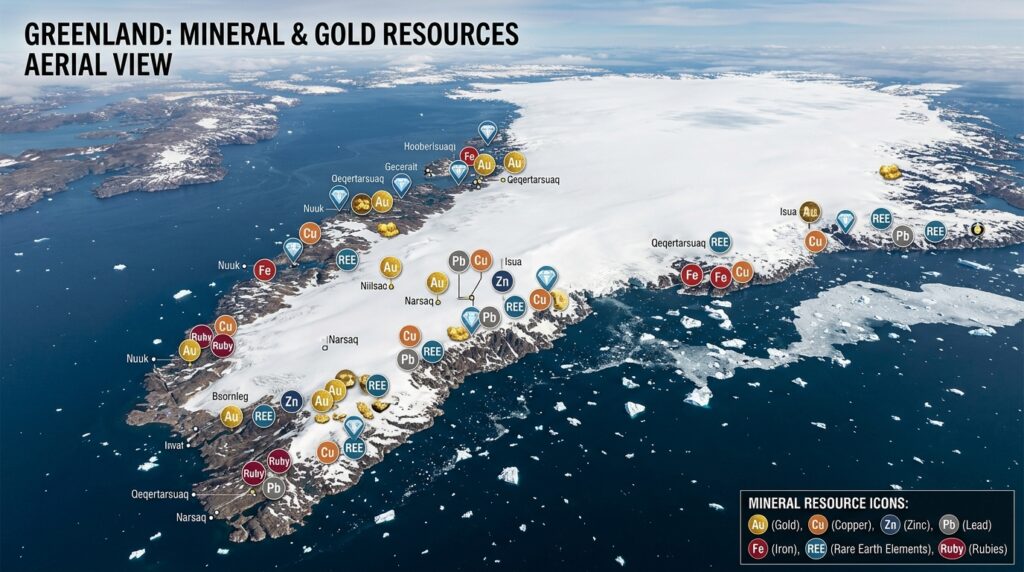
This episode demonstrates a core feature of Trumplization: geopolitics becomes a ledger, where geography, resources, and influence are all measurable and monetizable.
- Broader resource focus: Post-Venezuela, officials are eyeing its minerals alongside oil. The 2025 National Security Strategy prioritises critical minerals supply chains, Greenland and Venezuela are pieces of that puzzle.
Does it fit perfectly?
5. The Voter Mandate: No Wars, Economic Relief
Trumplization is not just a top-down phenomenon. Millions of voters propelled Trump into office because they wanted:
- Fewer foreign wars
- Stronger domestic economy
- Tangible results at home

The Voter Mandate: No Wars, Economic Relief
These voters did not sign up for abstract geopolitical wins measured by arms deals or rare-mineral negotiations. They expected relief in their daily lives. When that relief does not materialise, frustration grows. The disconnect between massive global deals and domestic impact becomes one of the sharpest tensions in Trumplization.
6. Voter Perspective: The Missing Dividend
Trumplization: It’s Money Stupid. For ordinary Americans, the benefits of trillions in Gulf deals, Venezuelan oil manoeuvres, or Greenland negotiations are invisible. Grocery bills remain high, fuel prices fluctuate, and economic anxiety persists. While defence sectors or strategic elites may see gains, the average household feels mostly the costs.
This missing dividend highlights a paradox: if politics is run like a business, the public expects visible returns. Without them, trust erodes, scepticism rises, and the “America First” narrative risks losing credibility.
7. Elections and Public Verdict
Elections are the ultimate test of Trumplization. Recent surveys show Trump’s approval in the low 40s nationally. Loyalty remains strong among the core base, but independents and economically sensitive voters are increasingly concerned about cost-of-living pressures.
Midterm projections suggest Democrats hold an edge in key districts, reflecting the perception gap. While no major wars have been started under Trump, the everyday reality for voters, high grocery bills, rising fuel costs, and delayed benefits from global deals has been fueling a quiet erosion of support.
The lesson is clear: money may drive the method, but daily life determines the verdict. Voters are unlikely to reward policies that feel profitable abroad but leave their wallets and living conditions untouched.
8. Conclusion: Money Explains Method, Not Motive
Trumplization has transformed American foreign policy. Deals, dollars, and negotiations now define global engagement. Yet its ultimate measure will not be in arms contracts or mineral acquisitions. It will be in the economic and psychological impact on ordinary voters.
The system may be more transactional, but elections remind leaders of one truth: political power is only sustainable when ordinary people feel its benefits at home.
Money explains the method but the voters determine the motive.
Expert Perspective Statement :This article relies on public sources like BBC Arabic interviews, White House fact sheets, Reuters, CNN, The Cradle, Middle East Eye, and Wikipedia timelines. It presents verified facts and balanced views for readers to evaluate , no partisan bias, just evidence-based analysis of policy and voter impacts.
6 Frequently Asked Questions
Q1: What is Trumplization?
A: Trumplization refers to the transactional approach to governance and geopolitics exemplified by Trump, emphasising financial and strategic gains in decision-making.
Q2: Why is “It’s money, stupid” relevant?
A: It summarises the core idea that money, resources, and deals increasingly drive policy, often more than ideology or traditional diplomacy.
Q3: How does this affect ordinary Americans?
A: While global deals and alliances may benefit strategic sectors, most citizens experience indirect effects like fluctuating fuel prices, higher costs of living, and limited visible economic gain.
Q4: Do voters support Trumplization?
A: Core supporters often approve due to ideological loyalty, but independents and swing voters are increasingly critical if domestic benefits are not visible.
Q5: How does Trumplization influence foreign allies?
A: Some allies are expected to pay more for security and strategic alignment, creating asymmetry in burden-sharing that influences global relations.
Q6: What can be expected in the upcoming elections?
A: Midterms are likely influenced by economic perception. If the public does not feel tangible benefits, even strong national security or global deals may not translate into electoral support.
Author
Maj Hamid Mahmood (Retired), MA Political Science, LLB, PGD (HRM), is a retired military officer with a background in political science and human resource management. He writes on geopolitics, international relations, and U.S. foreign policy, offering analytical perspectives based on his experience and research.
References
- Emerson College Polling. February 2026 National Poll. https://emersoncollegepolling.com/february-2026-national-poll-trump-approval-steady-as-disapproval-rises-vance-leads-gop-field-while-democrats-hold-midterm-edge
- NY Post. “Trump’s 100% Approval Among MAGA Republicans.” March 2026. https://nypost.com/2026/03/18/us-news/cnn-data-guru-marvels-at-trumps-100-approval-rating-from-maga-republicans-he-is-the-1972-miami-dolphins
- Wall Street Journal. “Trump Approval and Economic Sentiment.” March 2026. https://www.wsj.com/politics/elections/trump-approval-rating-economy-poll-b3a62e57
- Focal Data. “Cost of Living Fueling Democrat Strength in Midterms.” 2026. https://www.focaldata.com/blog/cost-of-living-fuelling-democrat-strength-in-new-midterms-polling
- Ipsos. “Midterm Projections and Trump’s Struggle.” 2026. https://www.ipsos.com/en-us/what-midterm-projections-tell-us-about-trumps-central-struggle
- FactCheck.org. “Trump and Greenland Acquisition.” 2026. https://www.factcheck.org/2026/01/trumps-claims-about-greenland
Glossary / New Word Addition
Trumplization (noun)
Pronunciation: /trʌmp·ləˈzeɪ·ʃən/
Definition: The normalisation of transactional, power-first politics, in which leverage, unilateral decisions, and dominance replace diplomacy and collaborative governance.
Trumplization describes a pattern of political behaviour, not an individual or nation.
Usage in Context:
- “The age of Trumplization reminded the world how thin the line between order and dominance really is.”
- “Under Trumplization, institutions are sidelined, and transactional politics replace multilateral collaboration.”
- “This article uses the term Trumplization to describe a pattern of power-first politics, not as an insult toward any individual.”
Why It Matters:
- Highlights modern methods of influence and dominance in global politics.
- Offers language to discuss observable patterns without personal attacks.
- Strengthens the concept for academic, journalistic, and public usage.
References / Source: Introduced in the article “The Age of Trumplization: Power, Pressure, and the Shadow of Colonialism”. Supported by historical and contemporary analyses of power politics, colonial and neo-colonial practices.