
The Value of Marriage: A Sacred Bond That Builds Families, Communities, and Civilisations
Introduction: Why Marriage Still Matters
The Value of Marriage: A Sacred Bond That Builds Families, Communities, and Civilisations. Marriage is one of humanity’s oldest institutions. It existed long before governments, courts, or written laws. Across centuries, cultures, and continents, people kept returning to marriage not because it was easy, but because it worked.
Today, marriage is often treated as optional, outdated, or purely personal. But religions, civilisations, and social systems across history have viewed it very differently.
Marriage has never been just about romance.
It has always been about stability, responsibility, belonging, and continuity.
In a fast-changing world, understanding the true value of marriage is more important than ever.
Marriage: More Than a Personal Choice

Marriage may begin with two individuals, but it never remains limited to them.
When a man and a woman marry, they bring:
- Their families
- Their values
- Their histories
- Their responsibilities
Marriage creates new bonds between parents, siblings, relatives, and communities. It transforms strangers into family and builds networks of care that extend far beyond the couple.
This is why, in traditional societies, marriage was celebrated publicly. It was not a private experiment; it was a social commitment.
Marriage as a Social Institution
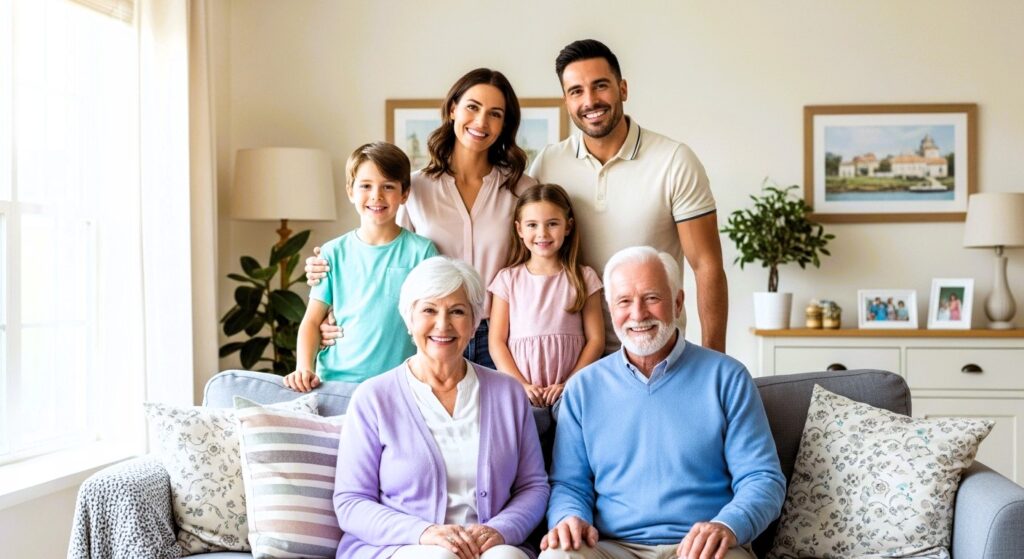
Strong marriages form strong families.
Strong families form stable societies.
This chain has been observed across civilisations. Where marriages are respected and supported:
- Children grow with emotional security
- Elders are cared for within families
- Social trust increases
- Conflict and isolation decrease
Marriage teaches people patience, compromise, and responsibility, qualities every healthy society depends on.
The benefits of a strong marriage are clear. They include better physical health, emotional stability, and financial security. These benefits also serve as a testament to God’s design for relationships. A strong marriage is not just about a piece of paper; it’s about sacrifice and commitment between two people that point a watching world to God Himself.
Marriage: A Sacred Bond Across Religions and Cultures
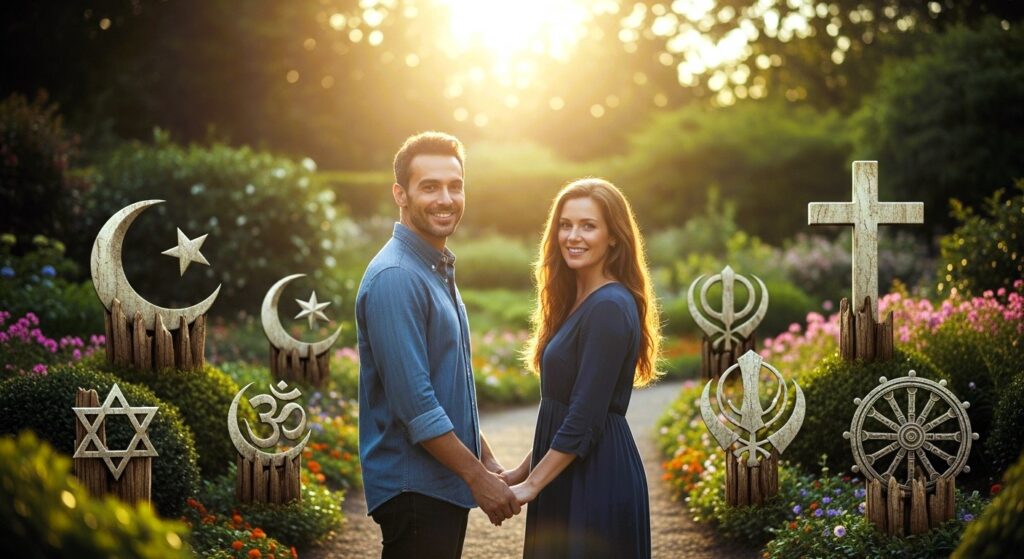
Despite differences in rituals, religions agree on one core truth:
Marriage is sacred, purposeful, and morally significant.
Let us look at how major faiths define and honour marriage through their scriptures.
The Value of Marriage: Marriage in Islam: A Covenant of Tranquillity, Love, and Mercy
In Islam, marriage (Nikah) is described as a solemn covenant (Mithaqan Ghaliza).
Qur’anic Foundation
The Qur’an presents marriage as a divine sign:
“And among His signs is that He created for you spouses from among yourselves, that you may find tranquility in them; and He placed between you love and mercy.”
(Qur’an 30:21)
Marriage in Islam rests on three pillars:
- Tranquillity (Sukoon)
- Love (Mawaddah)
- Mercy (Rahmah)
It is meant to calm hearts, not disturb them.
Teachings of Prophet Muhammad ﷺ
The Prophet ﷺ emphasised marriage as a moral safeguard and social responsibility:
“Marriage is part of my Sunnah.”
(Ibn Majah)
HE رسول اللہ صلی اللہ علیہ وسلم also said:
“The best of you are the best to their families.”
(Tirmidhi)
Islam clearly defines rights and responsibilities for both spouses, emphasising balance, kindness, and mutual respect.
Marriage in Christianity: A Holy Sacrament of Lifelong Commitment
Christianity views marriage as a holy sacrament instituted by God.
Biblical Teachings
The Bible states:
“Therefore a man shall leave his father and mother and be united to his wife, and they shall become one flesh.”
(Genesis 2:24)
Jesus reinforced the permanence of marriage:
“What God has joined together, let no one separate.”
(Mark 10:9)
Marriage in Christianity emphasises:
- Faithfulness
- Sacrificial love
- Lifelong unity
The marital bond reflects love rooted in service, patience, and commitment.
Marriage in Hinduism: A Sacred Duty and Spiritual Partnership
In Hinduism, marriage (Vivah) is one of the most important samskaras (life sacraments).
Marriage supports the four aims of life:
- Dharma (duty)
- Artha (prosperity)
- Kama (love)
- Moksha (liberation)
The Rig Veda describes marriage as a lifelong journey:
“May you two live here in harmony, rejoicing through a hundred autumns.”
The Saptapadi (seven steps) symbolises shared responsibility, loyalty, and cooperation, often believed to bind the couple beyond this life.
Marriage in Judaism: A Sacred Covenant (Kiddushin)
Judaism considers marriage essential to a complete and ethical life.
The Torah states:
“It is not good for man to be alone.”
(Genesis 2:18)
Marriage in Judaism emphasises:
- Mutual obligations (Ketubah)
- Respect and dignity
- Building a faithful home (Bayit Ne’eman)
Marriage is not only emotional, but it is also deeply moral and communal.
Marriage in Sikhism: A Union of Two Souls
Sikhism views marriage as a spiritual union (Anand Karaj).
The Guru Granth Sahib teaches:
“They are not husband and wife who merely sit together; they alone are truly married who have one light in two bodies.”
Marriage in Sikhism is built on:
- Equality
- Shared spiritual growth
- Service to family and society
Marriage in Buddhism: An Ethical and Compassionate Partnership
Buddhism does not mandate marriage, but strongly promotes ethical conduct within it.
Marriage succeeds when partners practice:
- Compassion
- Faithfulness
- Mindful speech
- Mutual respect
Marriage is valued as a path to peaceful coexistence and emotional stability.
The Merits of Marriage vs. the Cost of a Life Without Marriage

Marriage is not perfect. But neither is life without it.
The real question humanity has always asked is not “Is marriage easy?”
It is: “Which life leads to deeper peace, balance, and meaning?”
Across spiritual teachings, social experience, and modern psychology, marriage continues to show clear advantages, especially when it is peaceful and responsible.
1. Spiritual Merits of Marriage: The Value of Marriage
Marriage as Spiritual Stability
Across religions, marriage is seen as a path of spiritual discipline.
- It teaches patience over impulse
- Responsibility over selfishness
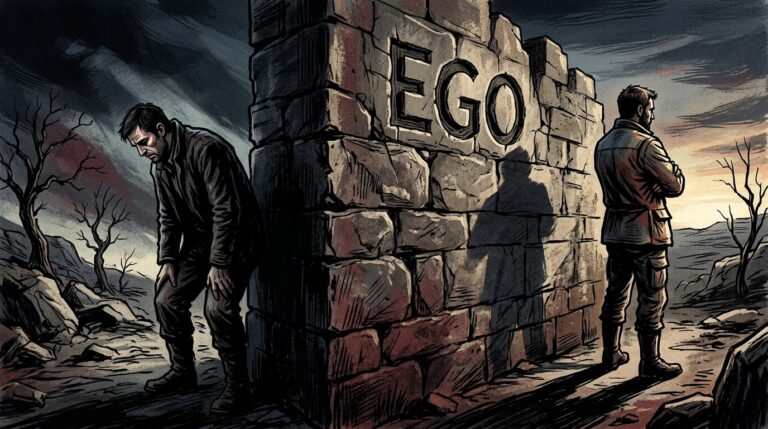
- Service over ego
In Islam, marriage is a means of completing faith.
In Christianity, it is a sacrament.
In Hinduism and Sikhism, it is a sacred duty and spiritual partnership.
Marriage grounds spirituality in real life, not isolation.
Life Without Marriage (Spiritual Risk)
A life without a committed partnership often struggles with:
- Emotional emptiness
- Lack of accountability
- Disconnection from purpose
Solitude can be peaceful, but long-term isolation often weakens spiritual discipline, not strengthens it.
2. Social Merits of Marriage
Marriage as Social Glue
Marriage connects:
- Families to families
- Generations to generations
- Individuals to communities
It creates:
- Social responsibility
- Shared care for children and elders
- Emotional safety nets
Married households historically form the backbone of stable societies.
No Marriage, Fragmented Society
When marriage declines:
- Loneliness increases
- Single-parent burdens rise
- Elder care weakens
- Social trust erodes
This is not theory; it is visible in many modern societies today.
3. Human Body & Natural Requirements
Human beings are not designed for permanent emotional solitude.
Marriage fulfils natural human needs:
- Companionship
- Physical intimacy in a safe, dignified way
- Emotional warmth
- Long-term care during illness and ageing
A peaceful marriage regulates stress hormones, improves sleep, and even supports physical health.
Without Marriage
Life without a stable partnership often leads to:
- Unstable relationships
- Emotional exhaustion
- Unsafe coping behaviours
- Physical neglect in later years
Temporary freedom often comes at the cost of long-term security.
4. Psychological and Mental Well-Being
Peaceful Marriage and Mental Health
A healthy marriage provides:
- Emotional grounding
- Someone to share burdens with
- Validation and belonging
- Reduced anxiety and depression
Psychology consistently shows that emotionally supportive marriages improve:
- Mental resilience
- Self-worth
- Coping ability during crises
Marriage does not remove stress, but it shares it.
Mental Cost of No Marriage
Long-term unmarried life can increase:
- Chronic loneliness
- Anxiety and depression
- Identity confusion
- Emotional instability
Humans are social by design.
A life without deep bonds slowly strains the mind.
5. Emotional Security vs Emotional Drift
Marriage Offers Emotional Anchoring
Marriage gives:
- Continuity
- Emotional predictability
- A sense of “home” beyond walls
It allows emotions to settle, not constantly restart.
No Marriage Often Means Emotional Drift
Without commitment:
- Relationships remain temporary
- Emotional investment stays guarded
- Breakups become routine
- Trust becomes harder over time
Freedom without roots eventually feels empty, not empowering.
6. Children, Legacy, and Meaning
Marriage naturally supports:
- Stable parenting
- Emotional development of children
- Moral continuity
- Intergenerational bonding
Children raised in peaceful married homes statistically show better:
- Emotional regulation
- Social confidence
- Long-term relationship skills
Without marriage:
- Parenting burdens often fall unevenly
- Children face emotional gaps
- Family continuity weakens
The Value of Marriage: A Balanced Truth (Important)
Marriage is not magic.
A toxic marriage is worse than peaceful solitude.
But a healthy, respectful marriage consistently proves to be:
- Spiritually grounding
- Socially stabilizing
- Psychologically protective
- Emotionally fulfilling
The goal is not marriage at any cost
The goal is marriage with responsibility, compassion, and peace.
In One Line
Marriage is not about losing freedom.
It is about choosing the right kind of responsibility,
the kind that gives life depth instead of loneliness.
One Message, Many Faiths
Across religions and cultures, marriage is consistently seen as:
- Sacred, not casual
- Responsible, not selfish
- Social, not isolated
- Moral, not temporary
Different scriptures.
Same wisdom.
Marriage as a School of Character
Marriage shapes people quietly but powerfully.
It teaches:
- Patience during hardship
- Responsibility beyond emotion
- Forgiveness after mistakes
- Growth through compromise
A successful marriage does not eliminate problems; it creates a safe place to face them.
Why Marriage Still Matters Today
In a world driven by speed, individualism, and instant gratification, marriage offers something rare:
- Stability in uncertainty
- Commitment in a disposable culture
- Depth in shallow connections
Marriage reminds us that love is not just something we feel; it is something we practice daily.
A Natural Bridge to the Pillars of the Home
Marriage provides the foundation.
Daily married life provides the structure.
Beliefs become behaviour.
Values become habits.
Commitment becomes responsibility.
This is where the role of husband and wife becomes central, not as competitors, but as pillars holding the home upright.
👉 This leads directly to our next article: “Husband and Wife: The Two Pillars That Hold a Home Together.”
FAQs: Common Questions About Marriage
1. Why is marriage valued across religions?
Because it provides moral structure, emotional stability, and social continuity.
2. Is marriage only a religious institution?
No. Even secular societies recognise marriage as a stabilising social institution.
3. How does marriage strengthen society?
By creating responsible families, emotionally secure children, and cooperative communities.
4. Is marriage just about love?
Love begins marriage; responsibility sustains it.
5. Does marriage still matter in modern life?
Yes. Modern pressures make stable relationships more essential than ever.
6. Can marriage shape personal character?
Absolutely. Marriage teaches patience, empathy, and accountability.
References / Further Reading
- Qur’an 30:21
- Hadith: Ibn Majah, Tirmidhi
- Bible: Genesis 2:18–24, Mark 10:9
- Rig Veda & Hindu Vivah traditions
- Guru Granth Sahib (Anand Karaj)
- Jewish teachings on Kiddushin and Ketubah
- Sociological studies on family and social stability