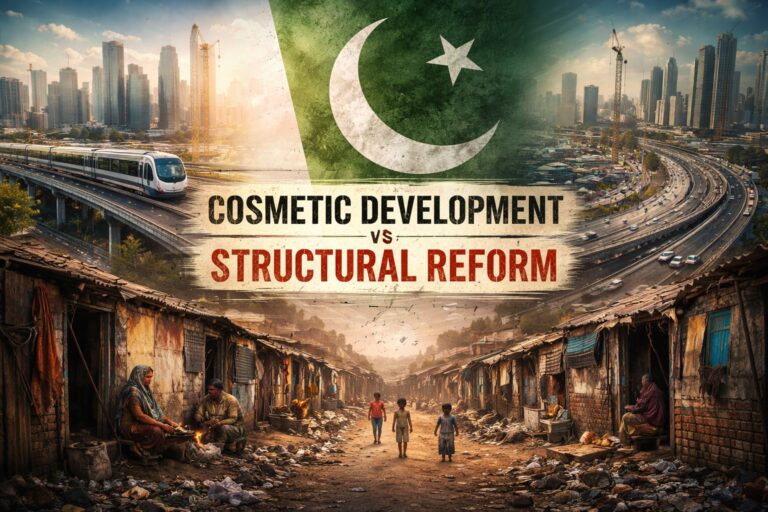
The Pakistan Education System 2026: Crisis, Digital Shift, and the Way Forward
Updated: Feb, 2026
Introduction
It is mandated in the Constitution of Pakistan to provide free and compulsory education to all children between the ages of 5 and 16 years and enhance adult literacy. With the 18th constitutional amendment, the concurrent list, which comprised 47 subjects, was abolished, and these subjects, including education, were transferred to federating units as a move towards provincial autonomy.
The year 2015 is important in the context that it marks the deadline for the participants of the Dakar declaration (Education For All [EFA] commitment), including Pakistan. Education-related statistics, coupled with Pakistan’s progress regarding education targets set in Vision 2030 and Pakistan’s lagging in achieving EFA targets and its Millennium Development Goals(MDGs) for education, call for an analysis of the education system of Pakistan and to look into the issues and problems it is facing so that workable solutions can be recommended.
Is Pakistan finally closing the literacy gap? As of February 2026, the Pakistan education system stands at a critical crossroads. While the national literacy rate has improved to 62.8%, the country still faces an “Education Emergency” with over 25.37 million out-of-school children (OOSC).
In this comprehensive 2026 guide, we analyse the current structure, the digital revolution in rural learning, and how international partnerships with the EU and World Bank are reshaping the future of Pakistani youth.
Quick Stats: Education in Pakistan (2026 Update)
-
National Literacy Rate: 62.8% (Targeting 70% by 2030).
-
Out-of-School Children: 25.37 Million (A decrease from 26.2M in 2024).
-
Digital Connectivity: 57% of households now have high-speed internet access.
-
Budget Allocation: Rs. 420 Billion (Federal + Provincial combined).
-
Gender Gap: Female literacy remains 18% lower than male literacy in rural Sindh and Balochistan.
The 6-Tier Structure of Pakistan’s Education System
The system is divided into six distinct levels. Under the SNC 2.0 (Single National Curriculum) update of 2025, there is a renewed focus on STEM from the primary level.
-
Pre-Primary (ECCE): For children aged 3–5 years.
-
Primary (Grades 1–5): Focusing on foundational literacy and numeracy.
-
Middle (Grades 6–8): Introduction to formal sciences and digital literacy.
-
Secondary (Grades 9–10): Leading to the Secondary School Certificate (SSC/Matric).
-
Higher Secondary (Grades 11–12): Intermediate (HSSC) or A-Levels.
-
Tertiary (University): Undergraduate and Postgraduate degrees regulated by the HEC.
The 2026 Digital Revolution: Closing the Rural Divide
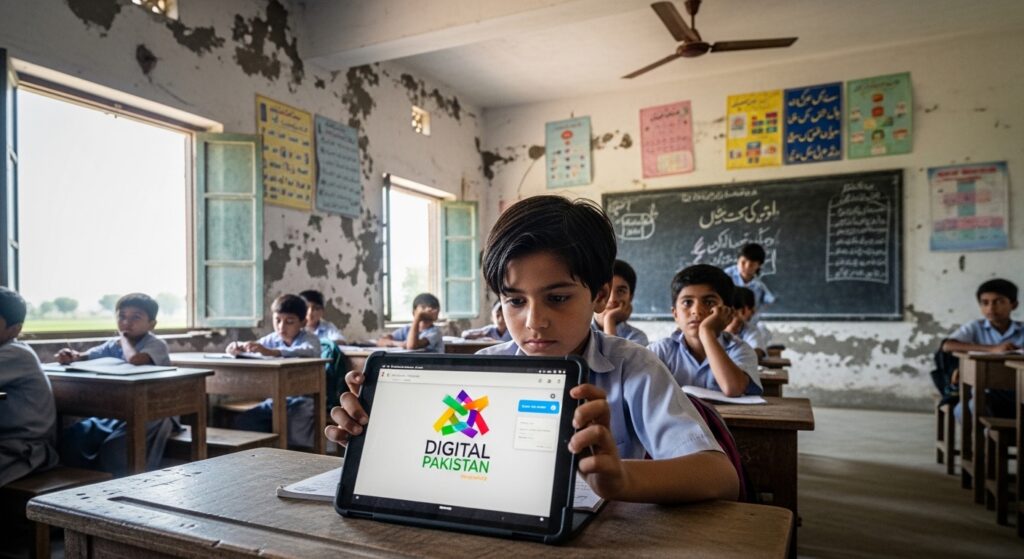
A major shift in 2026 is the integration of Non-Formal Education (NFE) through mobile technology. With the “Social Protection Wallets” launched via BISP, families are now receiving “Education Bonuses” directly to their phones if their children maintain 80% attendance.
Global Perspective: The European Union (EU) and GIZ (Germany) have invested $200 million into Pakistan’s “Digital Classroom Initiative,” providing solar-powered tablets to schools in the most remote areas of South Punjab and KP.
Why 40% of Graduates are Unemployable: The Skills Gap
Despite high graduation numbers, the “Skills Gap” remains a hurdle for Pakistan’s GDP.
-
Rote Learning: Traditional exams still favour memory over critical thinking.
-
Lack of Vocational Training: Only 7% of students opt for technical streams (TVET).
-
Market Mismatch: Universities are producing more liberal arts graduates than the tech-heavy 2026 job market requires.
The 2026 Solutions: A Roadmap to Reform
To address the crisis, the following five pillars are being implemented in the 2026-2030 Education Roadmap:
-
Public-Private Partnerships (PPP): Adopting the “Sindh Education Foundation” model nationwide, where private NGOs manage underperforming government schools.
-
Teacher Licensing Act 2025: Mandatory professional certification for all teachers, ensuring that only qualified educators enter the classroom.
-
Skills-First Curriculum: Integrating AI, Coding, and Climate Change awareness into the Middle School (Grades 6-8) curriculum to align with global standards.
-
The “Zero OOSC” Incentive: Expanding the Benazir Taleemi Wazaif (stipends) to include free transport and mid-day meals, removing the economic barrier for the poorest families.
-
Hybrid Learning Hubs: Utilising vacant school buildings in the evening as digital vocational centers for adults and out-of-school youth.
BISP & Education: The Vital Link
For many families, education is only possible through the Benazir Income Support Programme. If you are looking to register your child for education stipends, check our BISP 8171 Online Check Guide 2026 to see how the new Rs. 14,500 payment can support your children’s schooling.
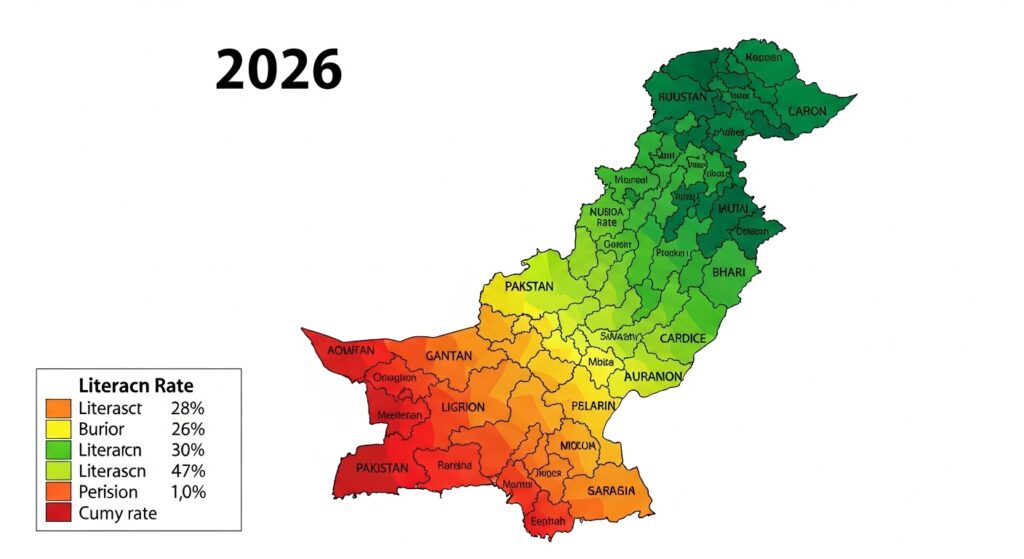
Visual Insights for 2026
Final Thoughts: The Economic Necessity
Education in Pakistan is no longer just a social issue; it is a regional economic necessity. For international observers in the US and Europe, Pakistan represents a massive untapped talent pool. If the 2026 reforms hold steady, the country could become a hub for remote tech talent by 2030.
Do you think digital tablets and mobile wallets are the answer to Pakistan’s education crisis? Share your thoughts in the comments below.
https://mrpo.pk/the-most-in-demand-skills-for-remote-jobs-in-2025/

https://ipripak.org/education-system-of-pakistan-issues-problems-and-solutions/
Budget Allocations of BISP in 205/26
Fulfilling another commitment with the International Monetary Fund (IMF), the Federal Government has proposed approximately a 20 per cent increase in funding for the Benazir Income Support Programme (BISP) to Rs 716 billion in the upcoming Budget Fiscal Year 2025-26.
The announcement in this regard was made by Finance Minister Muhammad Aurangzeb in his budget speech in the National Assembly here yesterday. The Government has earlier informed the IMF that the allocation for the BISP will be enhanced by around Rs117 billion from Rs. 598.71 billion for the fiscal year 2024-25 to Rs 716 billion in the upcoming fiscal year, the IMF country report May 2025 for Pakistan said.
“Our FY26 budget will include Rs 716 billion (0.5 per cent of GDP) BISP allocation, a 20 per cent nominal increase relative to FY25,” Pakistan told the IMF. This includes an increase in unconditional cash transfer (UCT) Kafaalat Program benefits to adjust for anticipated annual inflation in 2025 (new end-January 2026 SB), allowing an increase in the quarterly benefit from Rs 13,500 to Rs 14,500 beginning in January 2026. It will also allow us to maintain the total number of enrolled households at 10 million.
Unfortunately, beyond distributing cash to families, the BISP program lacks any structured initiative to equip people with skills that could help them earn a livelihood or establish small-scale local enterprises within their communities.
Digging into the Roots: The Inception and Aim
The first national education gathering, the All Pakistan Educational Conference, 1947, set the agenda: primary education should be free and compulsory, and schools should plant seeds of brotherhood, morality, and national unity with a distinctly Islamic flavour. Fast forward a few years, and you’ll see a recurring dance: policies rolling out, ambitious reforms, religious and ethical lessons sprinkled in, but with every step forward, two sideways—and sometimes a step back.
Nuance check: The intention was noble, and in many ways ahead of its time. But in practice, the goals kept tripping over chronic underfunding, bureaucracy, and (let’s be honest) leadership short on political will.
Progressive Steps and A Few Stumbles

Every new government approached the blackboard with different colored chalk. The 1959 and 1970 policies pressed for universal education, as if hoping proclamation alone would fix the ever-opening gap between vision and infrastructure.
Early ’70s drama: Zulfikar Ali Bhutto’s government pushed reforms bigger than a Bollywood dance number, proposing free education up to grade ten, and betting on science and technology before they were buzzwords. But then came the ’80s, with General Zia mixing more religious content into the classroom cocktail. Was it harmony, or confusion? It depends on whom you ask.
21st-century upgrades? The 2009 policy tried to fix what the old scripts missed: early childhood education, gender equity, and more inclusive schooling. Yet with out-of-school children still numbering in the tens of millions, the sequel is still in draft mode.
The Syllabus: What’s In, What’s Out
Sit in a typical public school, and you’ll notice what’s missing as much as what’s taught. Despite digital revolutions elsewhere, technical, scientific, and digital knowledge often take a back seat in most government classrooms. IT labs? Rare. Robotics clubs? Unheard of outside elite urban schools.
Pros of the system:
-
Compulsory schooling for ages 5–16 (on paper, at least).
-
Religious and moral education for social cohesion.
-
Strong private sector education, especially globally recognised O-/A-levels, for those who can afford it.
-
Renewed attention to early childhood and adult literacy programs.
Cons nobody can ignore:
-
High dropout rates haunt rural and disadvantaged communities, sometimes over 50% in primary grades.
-
Learning outcomes remain dismal. Many students leave school with neither critical thinking skills nor practical knowledge.
-
Stark disparities: private schools thrive, while public schools struggle with outdated materials and overcrowded classes.
-
Teacher training is patchy, leaning more on syllabus repetition than skill-building.
The elephant in the classroom: The gap between curriculum and the digital demands of the job market keeps young Pakistanis on the wrong side of the opportunity divide.
Digital Literacy, Scientific Knowledge And the Leap Towards Societal Change
What if every Pakistani student mastered computers and scientific thinking instead of simply memorising textbook answers? Integrating digital and scientific knowledge in schools is the game-changer Pakistan’s been searching for, think of it as swapping a cart for a car in the journey towards development.
-
Societal Benefits: Tech-savvy, scientifically literate citizens create new industries, solve complex problems, and drive national growth. Without these skills, Pakistani youth risk becoming spectators in the global knowledge race.
-
Sustainability Comes Alive: Digital tools and scientific know-how foster smarter agriculture, greener cities, and responsive health care, turning sustainability from an academic buzzword into everyday practice.
But let’s not romanticise: Getting there means rebuilding classrooms (sometimes literally), retraining teachers, and—most crucially, making digital and science education available to all, not just the privileged few in big cities.
Following the Money: Budgets vs. Ambitions
Here’s where the story takes a turn for the political thriller. Despite talk of “education emergencies,” national priorities often tell a different tale.
The government spending on education in Pakistan has fallen to a new low in the past year, despite being declared a national emergency with 26 million children, or more than one in three, out of school, one of the highest percentages globally, Save the Children said in a statement on Thursday.
Since the start of the current fiscal year in July 2024 to March 2025, education expenditure fell by 29 per cent. The percentage of GDP spent on education has fallen consistently since 2018, when it was 2pc to 0.8pc, according to the latest Pakistan Economic Survey.
The UN-backed Incheon Declaration recommends that governments allocate 4pc to 6pc of their GDP to education.
https://www.dawn.com/news/1918310
The INGO says Pakistan needs urgent investment to get 26 million children into school. In 2024, the government said it aimed to increase the education budget to 4pc of GDP by 2029. The government cannot break that promise to Pakistan’s children.“
-
Punjab’s 2025 Education Budget: A whopping Rs 812 billion promises new classrooms, IT labs, and scholarships.
-
Federal Education Budget: Slashed by 44%, from Rs 103.8 billion to just Rs 58 billion.
-
BISP (Benazir Income Support Programme): Roughly Rs 200 billion earmarked for direct cash transfers, over three times the federal education allocation.
While BISP provides vital short-term relief, it does little for upskilling or long-term empowerment. This lopsided budget reflects a system where quick political wins trump long-haul investments in human capital.
Why not just spend more on education? That question echoes from newspaper columns to drawing rooms. Is the system designed to maintain dependency? Some critics say yes, because empowering an educated, skilled population means challenging entrenched power structures. More likely, it’s a grim combo of inertia, resource shortages, and a focus on immediate vote-winning handouts over harder, slower educational progress.

Reality Check: Comparing with the World
While Pakistan’s education system occasionally produces Nobel laureates (hello, Malala!), average learning outcomes still lag behind regional peers. Classrooms are often stuck in the 1990s, chalk, talk, and little technology, while the world zips by in the cloud.
Is the education system competitive? In pockets, yes: students in top private schools ace global standards and populate top universities abroad. But for the vast majority, quality, relevance, and access are works in progress.
The Road to a Truly Educated Pakistan
So, where does Pakistan go from here? The script isn’t set; there’s no clapping slate to cut to the happy ending. But there’s hope:
-
Modernise the Curriculum: Make science, digital skills, and creative thinking as foundational as reading and math.
-
Invest, Really Invest, In Teachers: Quality learning starts with skilled, motivated educators, not overburdened lecturers reading from broken books.
-
Bridge the Digital Divide: Whether through public-private partnerships or government-led reforms, tech access must reach every school, not just the elite.
-
Budget with Bravery: Move education to the front of the funding queue, recognising it as essential infrastructure, not just another line item.
-
Link Welfare to Empowerment: Combine cash aid with skills training and education, so social safety nets help people stand on their own feet.
 One Last Lesson
If you’re still with me, thanks for not skipping class. Pakistan’s education system isn’t just a policy document or a line in the budget; it’s a living, breathing force shaping millions of dreams. With honest reflection and bold reforms, the hope for a brighter, smarter, and more resilient Pakistan isn’t just wishful thinking; it’s possible, one classroom at a time.