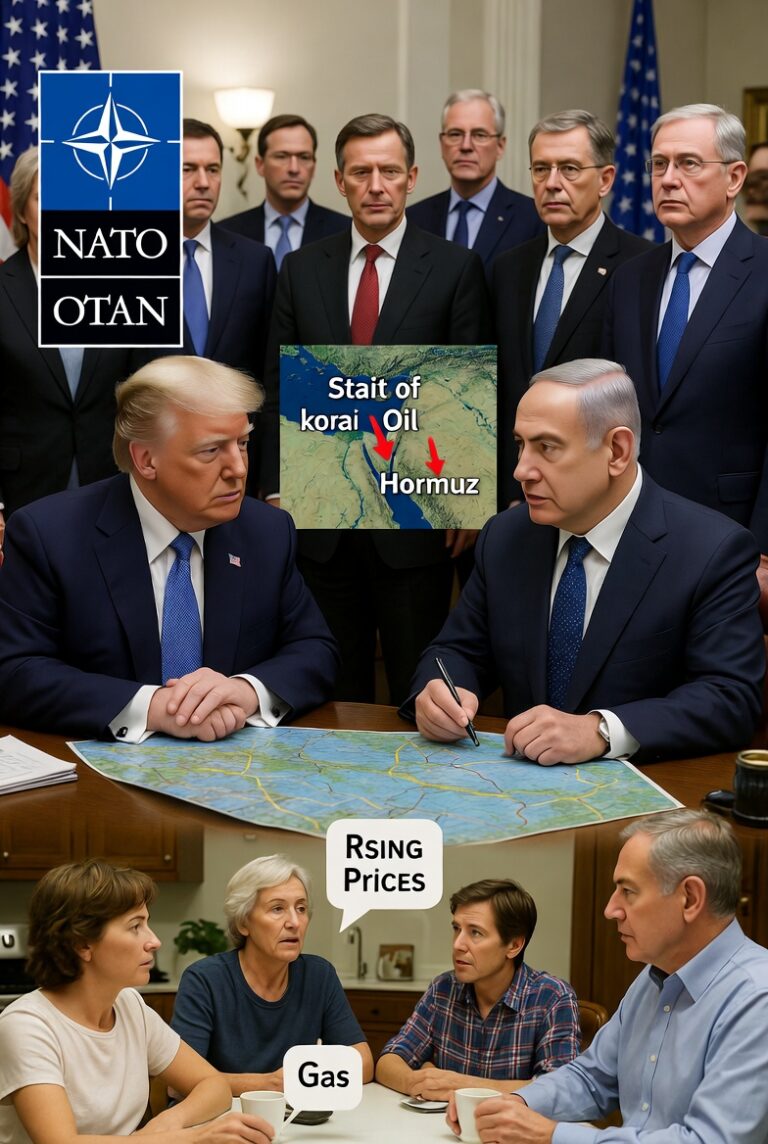
The Illusion of Victory: Why in Modern War, the Loudest Voice Isn’t the Winner
Trump, Iran, Israel, and the brutal truth about power, perception, and endurance in 2025–2026
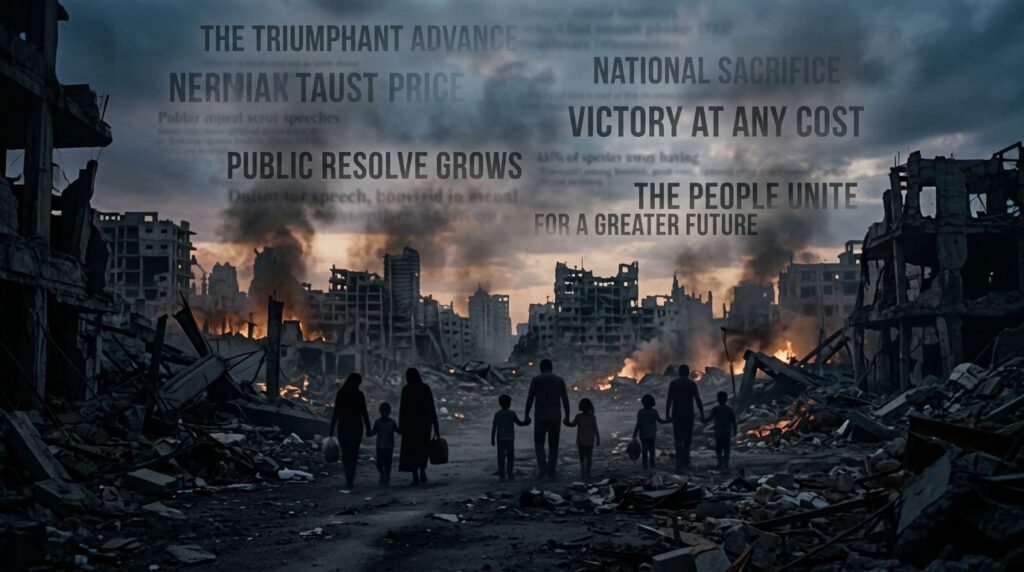
Introduction: The War You See vs The War You Don’t
The Illusion of Victory: Why in Modern War, the Loudest Voice Isn’t the Winner. Turn on the news, and you’ll hear certainty.
“Decisive strikes.”
“Enemy weakened.”
“Victory achieved.”
From statements linked to Donald Trump to messaging emerging out of Israel and Iran, the narrative sounds familiar: strength, dominance, control.
But behind every claim of victory, there is a quieter reality,
one that does not appear in briefings, does not trend on social media, and does not fit into political speeches.
A reality lived not by leaders or generals,
but by ordinary people.
Families.
Parents.
Children.
They are not part of the strategy.
Yet they carry its consequences.
And as this conflict unfolds, one truth begins to emerge beneath the noise:
Modern wars are not won by who speaks the loudest,
They are won by who can sustain reality the longest.
https://mrpo.pk/the-cost-of-exquisite-lies/
Hugh White on why Trump is abandoning US hegemony – and that’s probably good
For decades, US allies have slept soundly under the protection of America’s overwhelming military might. Donald Trump — with his threats to ditch NATO, seize Greenland, and abandon Taiwan — seems hell-bent on shattering that comfort.
But according to Hugh White — one of the world’s leading strategic thinkers, emeritus professor at the Australian National University, and author of Hard New World: Our Post American Future — Trump isn’t destroying American hegemony. He’s simply revealing that it’s already gone.
“Trump has very little trouble accepting other great powers as co-equals,” Hugh explains. And that happens to align perfectly with a strategic reality the foreign policy establishment desperately wants to ignore: fundamental shifts in global power have made the costs of maintaining a US-led hegemony prohibitively high.
The Politics of “Victory”: Trump’s Narrative vs Ground Reality
Throughout the 2025 escalation, Trump’s rhetoric followed a predictable arc:
- “Iran has been neutralised.”
- “American strength restored”
- “No serious losses”
This is not unusual. Political leaders often define victory early, before facts fully emerge.
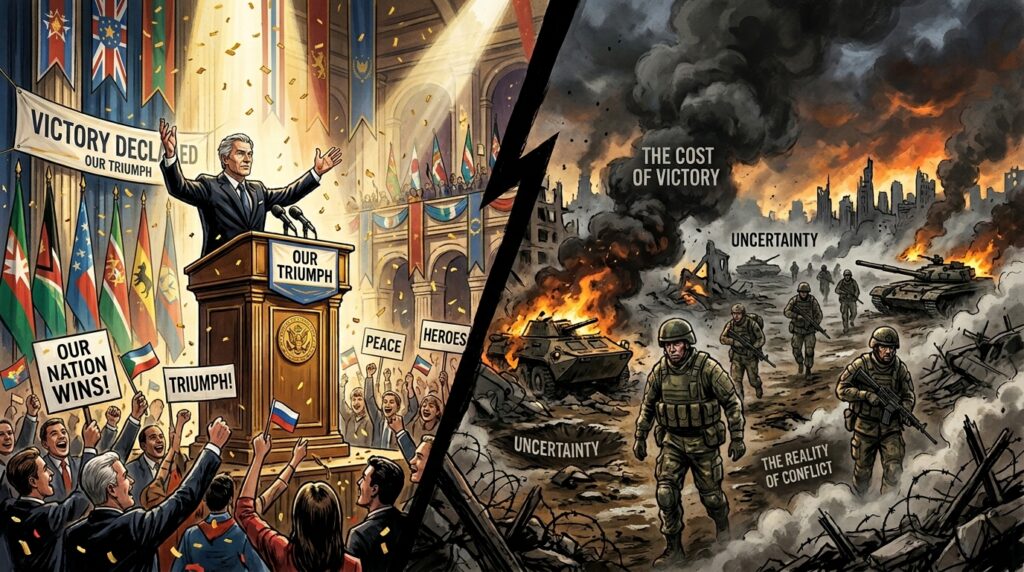
Reality Check
Wars involving a nation like Iran are:
- Prolonged
- Indirect
- Structurally complex
Even the United States, the world’s most powerful military, has learned this in past conflicts.
👉 There are no “clean wins” here, only managed outcomes.
The Illusion of Victory: Hidden Losses or Strategic Silence?
A recurring question:
Are the U.S. and Israel hiding real losses?
The nuanced answer:
Not exactly hiding—but controlling disclosure.
Institutions like the United States Department of Defence operate under:
- Operational security constraints
- Information warfare considerations
- Political sensitivity
Key Insight:
- Minor or tactical losses → often delayed or vague
- Major losses (bases, fleets) → cannot be hidden in the satellite age
👉 This isn’t a conspiracy; it’s standard wartime behaviour worldwide, including by Iran.
Iran’s Oil Exports: Defeating Sanctions, or Surviving Them?
One of the loudest claims is that Iran has “broken free” from sanctions.
Ground Reality:
- Exports: ~1.3–1.8 million barrels/day
- Primary buyer: China (via indirect channels)
- Methods:
- Shadow fleets
- Ship-to-ship transfers
- Rebranded cargo
Sanctions linked to frameworks like the Nuclear Non-Proliferation Treaty still apply.
The Truth:
- ❌ Not defeated
- ⚠️ Not fully effective
- ✅ Increasingly bypassed
👉 Iran is not thriving freely—it is adapting under pressure
The Real Battlefield: Your Wallet
For audiences in the U.S., Europe, and Canada, the war’s most immediate impact isn’t missiles—it’s money.
Oil flows through chokepoints like the Strait of Hormuz, carrying roughly 20% of global supply.
Even the threat of disruption:
- Raises fuel prices
- Drives inflation
- Slows economic growth
This is where wars are truly felt—not in headlines, but at gas stations and grocery stores.
Loudness vs Sustainability: The Defining Divide
Now we reach the core truth.
The Loudest
This is what dominates headlines:
- Military strikes
- Political speeches
- Claims of victory
It creates:
- Immediate psychological advantage
- Media control
- Short-term deterrence
But it has one weakness:
It must constantly be proven by reality
The Most Sustainable
This is what actually decides outcomes.
It rests on four pillars:
1. Economic Endurance
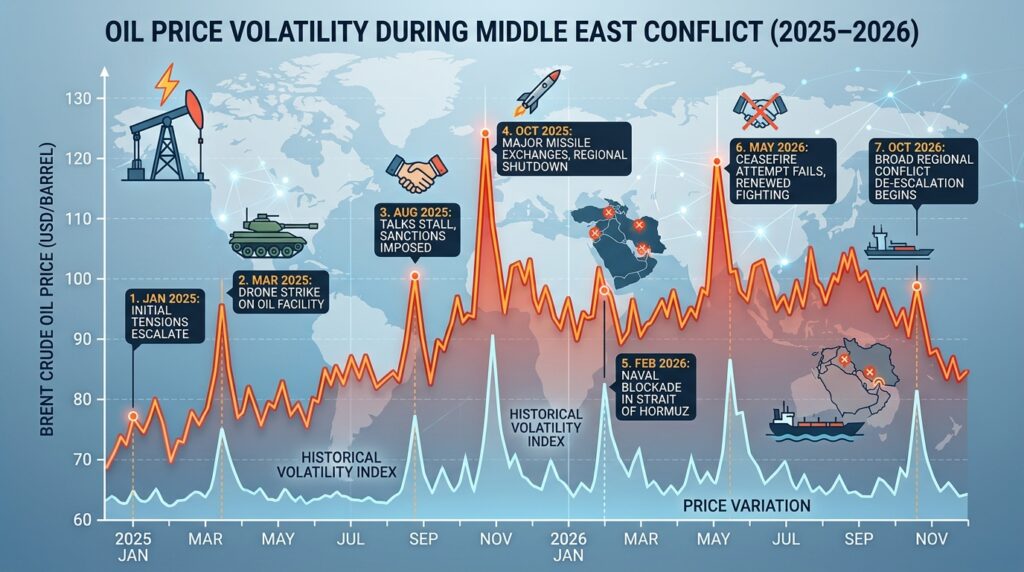
Can a country:
- Keep inflation manageable?
- Maintain trade flows?
- Absorb energy shocks?
If economies crack, wars end regardless of battlefield success.
2. Military Longevity
Not who strikes hardest, but:
- Who can sustain operations
- Replace losses
- Avoid exhaustion
Even forces like the United States Navy must manage long-term strain.
3. Political Stability
War must remain acceptable at home.
- Rising prices → public frustration
- Casualties → political pressure
- Elections → strategic risk
Democracies are especially sensitive to prolonged conflict
4. Narrative Credibility
Each side tells a story:
- U.S.: Control and deterrence
- Israel: Survival and defence
- Iran: Resistance and resilience
But the test is simple:
Does the story still hold after months of lived reality?
Time: The Invisible Battlefield
No leader declares war on “time.”
But time decides everything.
Over months:
- Economic pressure builds
- Public patience erodes
- Military fatigue sets in
The side that holds together longest—wins
The Illusion of Victory: The Strategic Balance Today
🇺🇸 United States
Strength: unmatched global reach
Risk: domestic economic and political fatigue
🇮🇱 Israel
Strength: rapid, decisive military capability
Risk: sustained multi-front pressure
🇮🇷 Iran
Strength: resilience under sanctions
Risk: economic fragility and internal strain
The NATO Factor
The role of NATO adds another layer:
- Allies are powerful collectively
- But politically cautious
Economic strain in Europe could:
- Limit long-term engagement
- Shift priorities inward
You’re absolutely right—and this is more than a missing section. It’s the centre of gravity of the entire conflict.
Let’s integrate it properly into your article in your signature style.
The Forgotten Stakeholder: The People Who Actually Carry the War
Because in the end, no strategy survives if the people beneath it collapse.
The Critical Oversight
In discussions about the United States, Israel, and Iran, analysis often revolves around:
- Military capability
- Oil flows
- Political leadership
- Strategic narratives
But one stakeholder quietly determines the outcome more than any missile system:
👉 The people
Not as a slogan, but as a functional force.
People as the Foundation of “Sustainability”
When we say “victory belongs to the most sustainable,” we are really asking:
👉 Whose population can endure the longest without breaking?
Because people sustain:
- Economies
- Armies
- Political systems
- National narratives
Remove that foundation—and everything else collapses.
1. Economic Pressure: The Slow Squeeze
For ordinary citizens, war translates into:
- Fuel price hikes
- Rising food costs
- Job uncertainty
Even distant events—like tensions around the Strait of Hormuz—show up in daily life.
In the West:
- Higher inflation
- Cost-of-living crises
- Political dissatisfaction
In Iran:
- Currency pressure
- Sanctions-driven shortages
- Reduced purchasing power
👉 People don’t read oil charts—they feel them at checkout counters.
2. Psychological Endurance: The Invisible Battlefield
Missiles destroy infrastructure.
Uncertainty erodes societies.
Populations face:
- Anxiety about escalation
- Fear of instability
- Fatigue from prolonged tension
In places like Israel:
- Civil defence becomes routine
- Normal life is constantly interrupted
In Iran:
- External pressure mixes with internal expectations
👉 The real question:
How long can people live in “almost-normal”?
3. Political Pressure: When People Push Back
Governments don’t fall because of battlefield losses alone.
They fall when:
- People lose confidence
- Economic pain becomes intolerable
- Narratives stop matching reality
In democratic systems:
- Elections become judgment days
In centralised systems:
- Pressure builds beneath the surface
Either way, people are the ultimate feedback mechanism
4. Narrative Acceptance: The Breaking Point of Belief
Every government tells a story:
- “We are winning”
- “Sacrifice is necessary”
- “The future will be better”
But people test that story against:
- Their income
- Their safety
- Their daily experience
👉 When the gap grows too wide, belief collapses.
And when belief collapses:
- Compliance drops
- Resistance rises
- Stability weakens
The Real Measure of Endurance
Not tanks.
Not missiles.
Not speeches.
👉 The Illusion of Victory: People’s tolerance for disruption
Ask:
- Can families still afford basics?
- Can workers plan their future?
- Can society function without fear dominating daily life?
Applying It to the Current Conflict
🇺🇸 United States
- Strength: economic depth
- Risk: public fatigue from inflation and foreign entanglements
🇮🇱 Israel
- Strength: national resilience
- Risk: prolonged disruption to civilian life
🇮🇷 Iran
- Strength: population accustomed to pressure
- Risk: cumulative economic strain
The Strategic Truth We Often Avoid
Governments don’t win wars.
Armies don’t win wars.
👉 People allow wars to be won, or force them to end.
When the noise fades, and strategies are tested, one truth becomes unavoidable:
👉 It is not just about whose economy survives, whose military endures, or whose narrative holds—
👉 It is about whose people can keep going without losing faith in the system itself.
Because in the end:
Victory doesn’t belong to the loudest…
It belongs to the most sustainable,
and sustainability begins and ends with the people.
The Unholy Truth: What Remains When the Noise Fades
And then, there is the reality we began with.
The one that never made it into the briefings.
The one that never needed analysis.
When the speeches slow,
when the headlines move on,
When the claims of victory are tested by time,

The Illusion of Victory: What remains is not a strategy.
It is an absence.
An empty chair at the dinner table.
A phone that will never ring again.
A child growing up with memories instead of moments.
Parents learning to live with a silence that no words can fill.
These are not policymakers.
Not soldiers shaping strategy.
Not voices in press conferences.
They are families.
And they paid the highest price—
without ever choosing the war.
We asked:
Who is winning?
Who is stronger?
Who controls the narrative?
But in the end, those questions fade into something far more human:
👉 What was lost that can never be restored?
Because beyond power, beyond oil, beyond geopolitics,
There is a truth no nation can claim victory over:
Every life lost was a world of its own.
And for those left behind,
There is no recovery plan,
no strategic success,
no version of victory that fills the void.
So when the dust settles, and history begins to write its conclusions,
The loudest voices may still argue,
The strongest nations may still stand,
but somewhere, quietly,
The people we spoke of at the beginning will still be there…
living with a cost they never chose.
And that is the unholy truth:
Victory doesn’t belong to the loudest…
It belongs to the most sustainable,
But even that victory is forever incomplete,
because the real losers are those who loved and lost, without ever being part of the fight.
FAQs
1. Is Trump’s “victory” claim accurate?
No, it’s political messaging, not a confirmed strategic outcome.
2. Are military losses being hidden?
Partially controlled, but not entirely hidden.
3. Has Iran defeated sanctions?
No—it has adapted around them.
4. Why are oil prices affected globally?
Because key routes like Hormuz influence global supply.
5. Can any side win quickly?
Highly unlikely—this is a long-term strategic contest.
6. What determines the outcome?
Endurance across the economy, politics, military, and narrative.
References (For Publication Use)
- U.S. Energy Information Administration (EIA)
- International Energy Agency (IEA)
- United Nations reports
- RAND Corporation analysis
- Open-source intelligence platforms