
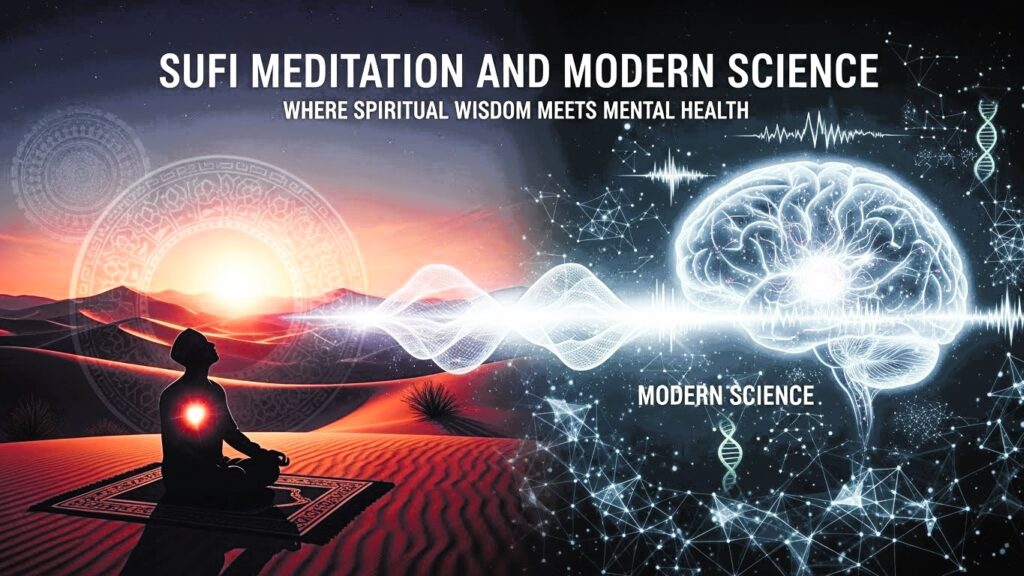
Sufi Meditation and Modern Science: Where Spiritual Wisdom Meets Mental Health
Sufi meditation, known as dhikr or muraqaba, centres on remembering God through rhythmic breath, heart-focused repetition of divine names, and inner witnessing to dissolve the sense of self-separation from the Divine. Unlike Western mindfulness, which often empties the mind for calm, or Christian centring prayer, which uses a word to rest in silence, Sufi practice actively invokes God’s presence to purify the heart and ignite divine love, like kindling a fire in the chest rather than just watching thoughts pass.
https://mrpo.pk/?p=13956&preview=true
The History of Sufi Meditation: A Journey of Love, Unity, and Inner Peace
The Essence of Sufi Meditation
At its core, Sufism is the mystical branch of Islam, but its teachings transcend religious boundaries, speaking directly to the universal longing for love, peace, and divine union. The word ‘Sufi’ is believed to be derived from ‘suf,’ referring to the woolen garments worn by early Sufis, symbolizing simplicity and detachment from worldly desires.
Sufi meditation is not just a practice—it’s a state of being. It invites you to quiet your mind, open your heart, and dissolve the illusion of separation between yourself and the divine. This path embraces both men and women, honoring the shared humanity and longing within every soul.
Core Practices
Dhikr involves silently or vocally repeating names like “Allah” or “Hu” with each breath: inhale while visualising divine light entering the heart, exhale to release ego. Muraqaba builds on this by sitting still, knees on the ground if possible, eyes closed, tongue on the mouth’s roof, to observe thoughts and emotions as a witness, always anchoring in God’s qualities from the Quran.
This rhythmic invocation starts slow, then speeds up slightly for intensity, aiming for the heart to “register” the divine name without tongue movement, much like a mantra but directed toward union with the Beloved.
Comparison to European Traditions
Sufi meditation resembles Christian contemplation in heart-centred surrender but differs by emphasising ecstatic divine love over quiet consent, avoiding mind-emptying that could invite passivity. To a European familiar with mindfulness apps, think of it as breath awareness plus intentional invocation of a higher Light, transforming observation into active polishing of the soul’s mirror for God’s reflection, not detachment, but passionate merging.
| Aspect | Sufi Practice | Western Mindfulness | Christian Centring Prayer |
|---|---|---|---|
| Focus | Heart, divine names (e.g., Allah/Hu with breath) | Breath or thoughts, neutral observation | Sacred word for God’s presence, silence |
| Goal | Union with the Divine, heart purification | Mental clarity, stress reduction | Resting in God, consent to presence |
| Energy | Active invocation, light visualisation | Passive emptying | Receptive stillness |
Steps for Beginners
For centuries, Sufi mystics practised long periods of silence, remembrance, and reflection, often for hours at a time.
Today, science asks a similar question from a different angle:
What helps the human mind feel safe, regulated, and whole?
Surprisingly, the answers often meet in the same place.
Sufi Spiritual Practices & Modern Science: A Gentle Comparison
| Sufi Practice | Purpose in Sufi Tradition | Modern Scientific Understanding | Mental Health Benefit |
|---|---|---|---|
| Zikr (Repetitive Remembrance) | To stay connected to the Divine and quiet the ego | Repetitive sounds + slow breathing regulate the nervous system and reduce cortisol | Calms anxiety, lowers stress, creates emotional stability |
| Muraqaba (Focused Inner Awareness) | Deep self-awareness and spiritual presence | Similar to mindfulness and focused-attention meditation | Improves emotional regulation and reduces overthinking |
| Breath Awareness with Sacred Phrases | Align breath with spiritual intention | Slow breathing activates the parasympathetic nervous system | Reduces panic symptoms and physical tension |
| Sama (Listening to Poetry or Music) | Emotional purification and heart opening | Music therapy affects mood, dopamine, and emotional processing | Helps release suppressed emotions, supports grief healing |
| Silence with Presence (Khalwat) | Inner reflection and spiritual insight | Comparable to silent meditation and sensory rest | Reduces mental overload and burnout |
| Rhythm & Repetition | Create spiritual flow and grounding | Predictable patterns calm the brain’s fear centre (amygdala) | Creates safety, especially for anxious minds |
| Heart-Centered Focus | Spiritual connection through the heart | Heart–brain coherence improves emotional balance | Enhances calm, clarity, and emotional resilience |
| Gentle Guidance by a Murshid (Teacher) | Spiritual safety and direction | Parallels therapeutic alliance in psychology | Builds trust, emotional safety, and consistency |
| Gradual Practice (No Forcing) | Inner readiness over discipline | Trauma-informed care emphasises pacing | Prevents overwhelm and emotional shutdown |
Key Insight
Sufi practices and modern psychology speak different languages but they calm the same nervous system.
Where Sufism says connection, science says regulation.
Where Sufism says presence, science says awareness.
The Common Misunderstanding About Spiritual Practices
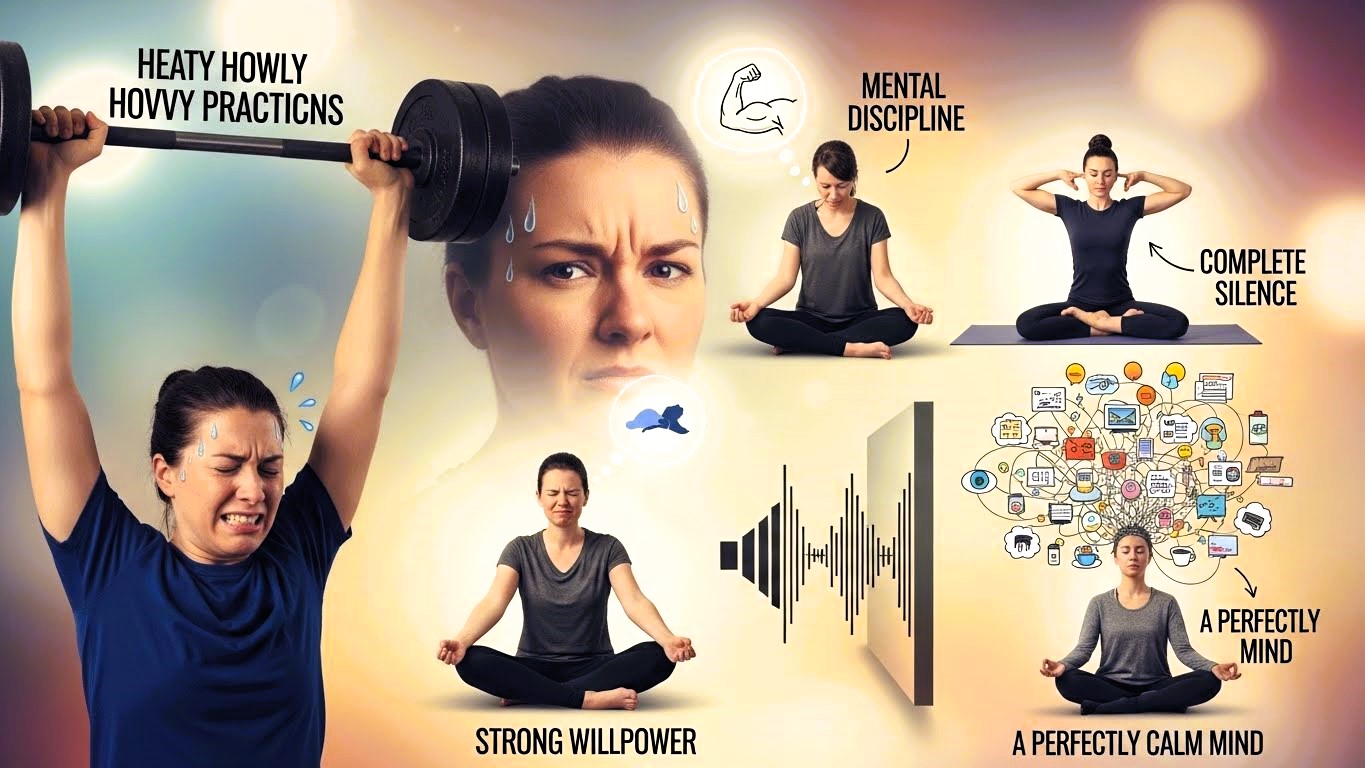
Many people assume that spiritual practices require:

- Strong willpower
- Mental discipline
- Complete silence
- A perfectly calm mind
That assumption keeps anxious or emotionally overwhelmed people away.
But Sufi meditation was never about mental control.
It was about connection.
Modern psychology now confirms something Sufis always knew:
The nervous system heals faster when it feels supported, not forced.
What Sufi Meditation Focuses On (In Simple Terms)
At its core, Sufi meditation involves:
- Repetition (zikr)
- Breath awareness
- Emotional presence
- Trust rather than effort
Instead of emptying the mind, the heart is gently occupied.
That distinction matters especially for anxious minds.
What Modern Science Says About the Same Practices
Sufi Meditation and Modern Science, Neuroscience and psychology now show that practices similar to Sufi meditation:
- Activate the parasympathetic nervous system
- Reduce cortisol (stress hormone)
- Improve heart rate variability
- Create a sense of safety and grounding
- Reduce rumination and emotional overload
These effects are observed in:
- Breath-based meditation
- Mantra repetition
- Compassion-focused practices
Science uses different words.
The experience is the same.
Zikr and Repetition: The Science Behind It
Sufi zikr often involves repeating:
- A divine name
- A short phrase
- A rhythm synced with breathing
Modern studies show that rhythmic repetition:
- Calms the amygdala (fear centre)
- Stabilizes attention
- Prevents the mind from spiralling
This is why repetition feels soothing, not boring.
The mind needs something safe to hold onto.
Breath + Meaning = Regulation
Sufis often synchronised breath with remembrance:
- Inhale — awareness
- Exhale — release
Modern science confirms:
- Longer exhales calms the nervous system
- Slow breathing reduces panic symptoms
- Breath-focused practices improve emotional regulation
When breath carries meaning, its effect deepens.
This is not a placebo.
It is physiology.
Why Sufis Could Sit for Long Hours (And Many People Can’t)
The difference wasn’t discipline.
It was a relationship.
Sufis weren’t alone with silence.
They felt accompanied.
Modern psychology explains this as:
- Felt a sense of support
- Secure attachment
- Internal safety
When the nervous system feels safe, time stretches.
Spiritual Practices as Mental Health Support (Not Replacement)
It’s important to be clear:
Spiritual practices are not a substitute for therapy or medical care.
But they are powerful supports when:
- Anxiety feels chronic
- Emotions feel heavy
- The mind feels restless but tired
They work best when framed gently, not as an obligation or guilt.
For the Modern Mind: What Still Works Today
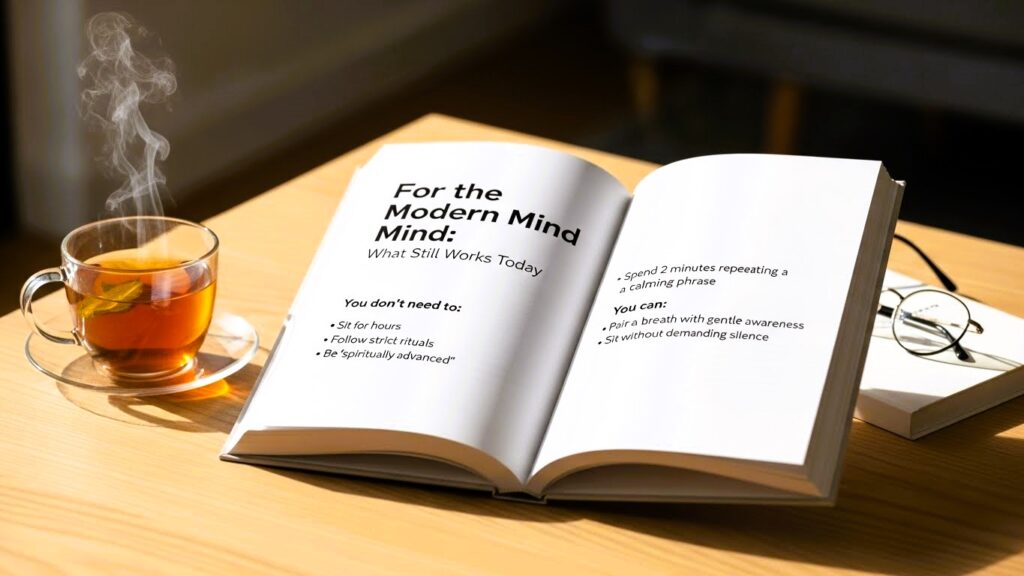
You don’t need to:
- Sit for hours
- Follow strict rituals
- Be “spiritually advanced”
You can:
- Spend 2 minutes repeating a calming phrase
- Pair breath with gentle awareness
- Sit without demanding silence
These practices:
- Build emotional resilience
- Reduce stress reactivity
- Restore inner steadiness over time
Where Spiritual Wisdom and Science Truly Meet
Both agree on this:
Healing happens when the system feels safe enough to rest.
Sufi meditation approached safety through connection.
Science approaches it through regulation.
Different paths.
Same destination.
A Gentle Closing
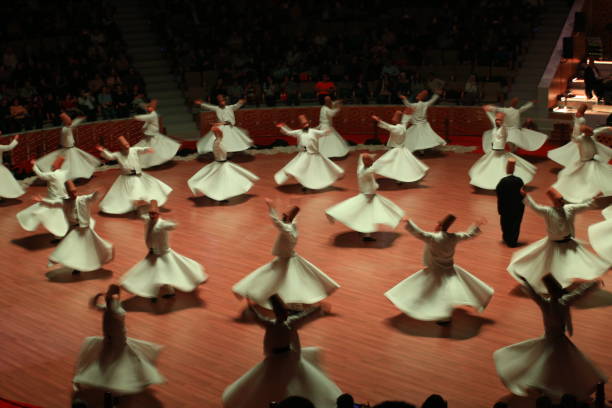
You don’t need to choose between spirituality and science.
They were never enemies.
One speaks the language of the heart.
The other speaks the language of the nervous system.
Both are simply trying to answer the same human question:
“How do I learn to live inside myself without fear?”
And perhaps the answer has always been closer than we thought.
Frequently Asked Questions (FAQs)
1. Is Sufi meditation the same as modern mindfulness or meditation?
Not exactly, but they overlap.
Sufi meditation focuses on connection and remembrance, while modern mindfulness focuses on awareness and regulation. Both calm the nervous system and reduce mental overload, but they approach it from different angles, spiritual and psychological.
2. Can spiritual practices like zikr really help with anxiety or stress?
Yes, when practised gently.
Repetitive phrases combined with slow breathing help calm the brain’s fear centre and reduce stress hormones. Science now recognises these effects, even when the practice comes from spiritual traditions.
3. Do I need to be religious to benefit from these practices?
No.
The mental health benefits come from rhythm, breath, focus, and emotional safety, not belief alone. Many people adapt these practices in a non-religious way while keeping their calming effects.
4. Can Sufi meditation replace therapy or medical treatment?
No.
It should be seen as support, not a replacement. Therapy addresses trauma, patterns, and diagnosis; spiritual practices help regulate emotions and build inner stability alongside professional care.
5. Why do repetitive practices calm the mind instead of making it restless?
Because repetition gives the mind something predictable and safe to focus on.
Neuroscience shows this reduces overthinking, stabilises attention, and lowers anxiety, especially in emotionally overloaded minds.
6. Is it normal if silence feels uncomfortable during meditation?
Yes, very normal.
For many people, silence initially brings up anxiety. Both Sufi wisdom and modern psychology emphasise gentle focus over forced silence, allowing comfort to grow gradually.
References
- Porges, S. W. (2011).
The Polyvagal Theory: Neurophysiological Foundations of Emotions, Attachment, Communication, and Self-Regulation.
Norton & Company.
— Explains how safety and regulation calm the nervous system. - Kabat-Zinn, J. (2003).
Mindfulness-based interventions in context: Past, present, and future.
Clinical Psychology: Science and Practice, 10(2), 144–156.
— Foundational research on mindfulness and stress reduction. - Benson, H., & Proctor, W. (2010).
Relaxation Revolution.
Scribner.
— Demonstrates how repetitive prayer and meditation lower stress responses. - Koenig, H. G. (2012).
Religion, spirituality, and health: The research and clinical implications.
ISRN Psychiatry.
— Reviews evidence linking spiritual practices with mental well-being. - Thayer, J. F., & Lane, R. D. (2009).
Claude Bernard and the heart–brain connection.
Neuroscience & Biobehavioral Reviews, 33(2), 81–88.
— Explains breath, heart rate variability, and emotional regulation. - Newberg, A., & Waldman, M. R. (2009).
How God Changes Your Brain.
Ballantine Books.
— Explores neurological effects of spiritual practices like prayer and meditation.
Disclaimer: The content in this article, Sufi Meditation and Modern Science, Holistic Digital Wellness, is intended for informational and educational purposes only. It provides insights, tips, and general guidance on health, beauty, and wellness, but it is not a substitute for professional medical advice, diagnosis, or treatment.
Always consult a qualified healthcare professional for personal medical concerns. For more information about our approach to health and wellness content, please read our Health & Wellness Disclaimer.