Public Interest: A Pathway to Equitable Governance in Pakistan
Introduction
Public Interest Pathway to Equitable Governance in Pakistan. The concept of public interest is fundamental to creating equitable and just societies. It ensures that policies and actions prioritise the collective well-being of the public over individual or elite interests. In Pakistan, where governance challenges impact societal progress, understanding and applying public interest is critical. This article explores the definition of public interest, its historical evolution, its relevance in modern societies, and its significance in Islamic jurisprudence. With a focus on Pakistan, it examines violations of public interest, their negative effects, and offers actionable recommendations for fostering a welfare-oriented society. https://mrpo.pk/the-power-of-words/

What is Public Interest?
Public interest refers to the welfare or well-being of the general public, encompassing policies, laws, or actions that benefit society as a whole. Economist Lok Sang Ho defines it as the “ex ante welfare of the representative individual,” emphasising impartial decisions that enhance societal well-being.
Examples of Public Interest

- Public Health Programs: Pakistan’s polio vaccination campaigns protect communities from preventable diseases.
- Environmental Regulations: Laws restricting industrial pollution safeguard public health and ecosystems.
- Universal Education: Subsidised schooling promotes equal opportunities and societal progress.
- Public Interest Litigation (PIL): The case of Darshan Masih v. The State (1990) freed bonded labourers, protecting marginalised groups.
Historical Evolution of Public Interest
The concept of public interest has evolved through several key phases:
- Philosophical Roots (18th–19th Century): Philosophers like John Stuart Mill advocated for collective welfare through rules maximising societal happiness. John Rawls’ “veil of ignorance” emphasised impartial decision-making.
- Governance Integration (Early 20th Century): Public interest became a cornerstone of democratic governance, guiding policies with principles of necessity and convenience.
- Public Interest Law (1960s): Human rights lawyers popularised public interest law, with organisations like the ACLU advocating for disadvantaged groups.
- Modern Applications: Today, public interest extends to journalism (e.g., investigative reporting) and technology (e.g., socially responsible tech solutions).
Why Public Interest Matters Today
Public interest is essential for creating inclusive societies. Comparing societies that prioritise it with those that do not highlights its importance.
Societies Prioritising Public Interest
- Sweden: Its welfare state offers universal healthcare and education, reducing inequality and fostering trust.
- New Zealand: Transparent governance and environmental policies promote sustainability and public confidence.
Benefits:
- Reduced poverty and social disparities.
- Stronger social cohesion and institutional trust.
- Protection of vulnerable populations.
Societies Neglecting Public Interest
- Somalia: Weak governance leads to conflict and poverty due to the absence of public interest policies.
- Zimbabwe: Elite-focused policies have caused economic collapse and widespread poverty.
Consequences:
- Widening wealth gaps and social exclusion.
- Erosion of trust in institutions.
- Increased instability from unmet public needs.
Public Interest in Islamic Society and Jurisprudence
In Islamic society, public interest is embodied in maslaha, a principle promoting community welfare in alignment with Sharia (Islamic law).
Maslaha in Islamic Jurisprudence
Maslaha guides legal rulings when no explicit guidance exists in the Quran or Hadith. It aligns with the objectives of Sharia (Maqasid al-Sharia), prioritising:
- Preservation of religion.
- Protection of life, intellect, property, and lineage.
The Prophet Muhammad (peace be upon him) emphasised charity, stating, “Donate in charity to people of all faiths,” promoting social justice through zakat and sadaqah.
Historical Examples
- Prophet’s Era (7th Century): The Medina society supported orphans, widows, and non-Muslims, reflecting inclusive welfare.
- Abolition of Slavery (1846): Tunisian ruler Ahmad Bey abolished slavery, citing Islamic principles of justice.
- Zakat and Waqf: These institutions historically funded education, healthcare, and poverty alleviation.
Modern Relevance
Maslaha informs policies like Islamic finance, which promotes equitable wealth distribution. However, misinterpretations by extremist groups underscore the need for balanced, welfare-oriented governance.
Public Interest in Pakistan
Pakistan’s 1973 Constitution emphasises public interest through Public Interest Litigation (PIL) under Article 184(3), enabling the Supreme Court to address public welfare issues.
Examples of Public Interest
- Darshan Masih v. The State (1990): The Supreme Court freed bonded labourers, protecting vulnerable communities.
- Shela Zia v. WAPDA (1994): The court prevented environmental hazards from high-voltage lines, prioritising public health.
- Public Transport Reforms: In Syed Wasey Zafar v. Government of Pakistan (1994), the court ensured equitable access to transport services.
Violations of Public Interest
Violations by individuals and state organs undermine Pakistan’s commitment to public interest.
Violations by Individuals
- Tax Evasion: Wealthy citizens evade taxes, reducing funds for public services.
- Encroachment on Public Land: Illegal occupation of parks deprives communities of shared spaces.
- Sectarian Hatred: Misuse of religious narratives fuels division and disrupts social harmony.
Violations by State Organs
- VIP Culture: Elites receive preferential treatment, such as protocol services and road closures, disrupting public access to resources and services.
- Lopsided Pay Increases: Pay raises favour senior bureaucrats and politicians, while lower-class workers, like teachers, receive minimal increments, exacerbating inequality.
- Inadequate Agricultural Reforms: With 37% of Pakistan’s workforce in agriculture, the state’s failure to invest in irrigation, modern farming, or fair pricing leaves small farmers vulnerable to poverty.
The Government’s Moral Obligation to Enact People-Friendly Policies
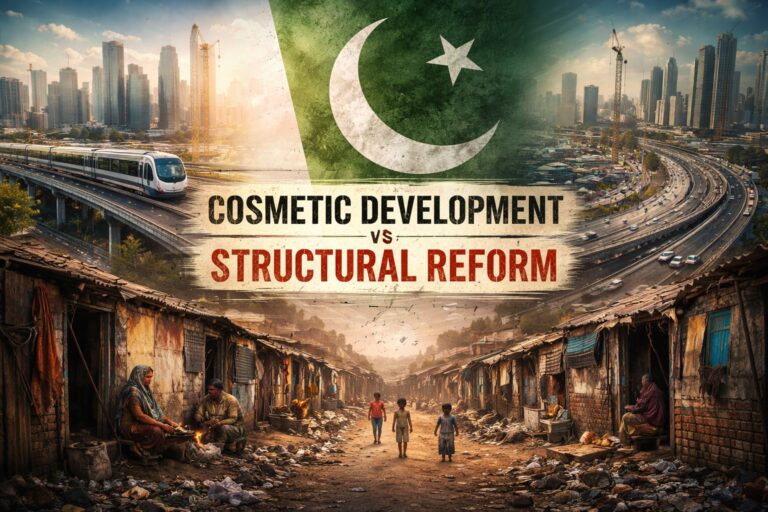
The government, including its ministries and office bearers, is morally and constitutionally bound to enact policies that prioritize the welfare of all citizens, particularly the marginalized and underserved. In Pakistan, this obligation is rooted in the democratic principles of the 1973 Constitution and Islamic values of justice and equity, such as the concept of maslaha (public interest). People-friendly policies—such as equitable resource allocation, affordable healthcare, and support for small farmers—ensure inclusive development and social cohesion. However, this duty is often undermined by elite capture, where policies favor influential groups, and by a lack of accountability among office bearers. For instance, excessive focus on infrastructure projects benefiting urban elites often overshadows rural development needs, leaving 37% of Pakistan’s agricultural workforce without adequate support. This failure erodes public trust, deepens inequality, and fuels social unrest. To fulfill its moral mandate, the government must prioritize transparency, engage with citizens, and align policies with the collective good, ensuring no one is left behind.
Negative Effects
- Social Inequality: VIP culture and unequal pay structures widen the gap between elites and the lower classes.
- Economic Stagnation: Inadequate agricultural reforms perpetuate rural poverty, hindering food security and growth.
- Erosion of Trust: Preferential treatment and neglect of public needs undermine confidence in institutions.
- Social Fragmentation: Sectarian hatred and unequal resource distribution deepen societal divisions.
Comparing Societies
Societies Prioritising Public Interest
- Malaysia: Islamic finance promotes equitable wealth distribution, aligning with public interest.
- Canada: Universal healthcare and environmental protections ensure inclusivity and sustainability.
Societies Neglecting Public Interest Viscosity
- Pakistan (in certain contexts): VIP culture and inadequate agricultural reforms prioritise elites over the public.
- Yemen: Lack of public interest policies fuels humanitarian crises and displacement.
Recommendations for Pakistan
To strengthen public interest:

- Curb VIP Culture: Enforce equal treatment, limiting protocol services to ensure public access to resources.
- Equitable Pay Structures: Implement fair wage policies, prioritising lower-class workers.
- Agricultural Reforms: Invest in irrigation, modern farming, and fair pricing for small farmers.
- Combat Tax Evasion: Strengthen tax enforcement to fund public services.
- Promote Civic Education: Encourage citizens to prioritise collective welfare.
- Expand Islamic Finance: Leverage Sharia-compliant banking for equitable wealth distribution.
Conclusion
Public interest is a cornerstone of equitable societies, rooted in philosophical, legal, and Islamic principles. In Pakistan, while PIL reflects a commitment to public welfare, violations like VIP culture, lopsided pay increases, and inadequate agricultural reforms exacerbate inequality and erode trust. By implementing inclusive policies and aligning with the Islamic principle of maslaha, Pakistan can foster a just and prosperous society.
Final Word: For Pakistanis, embracing public interest is a moral and practical necessity. By addressing violations and promoting inclusive governance, Pakistan can realise its vision as an equitable Islamic Republic.
References:
- Strategic Analysis: Islam and the Ideology of Pakistan
- Understanding Sharia: The Intersection of Islam and the Law
- Public Interest – Wikipedia
- Public Interest Litigation in Pakistan: Islamic Constitutional Manifestation
- Pljlawsite
- Public Interest Litigation in Pakistan: Quarterly Journal
- Islamic Banking and Finance – Wikipedia
- Islamic Law, the Nation State, and the Case of Pakistan
- Pakistan – United States Department of State
- A Sacred Duty: Islam and Social Justice