
Power, Double Standards, and the Crisis of the Global Rules-Based Order: Rules for Others?
The Birth of the Modern Global Order
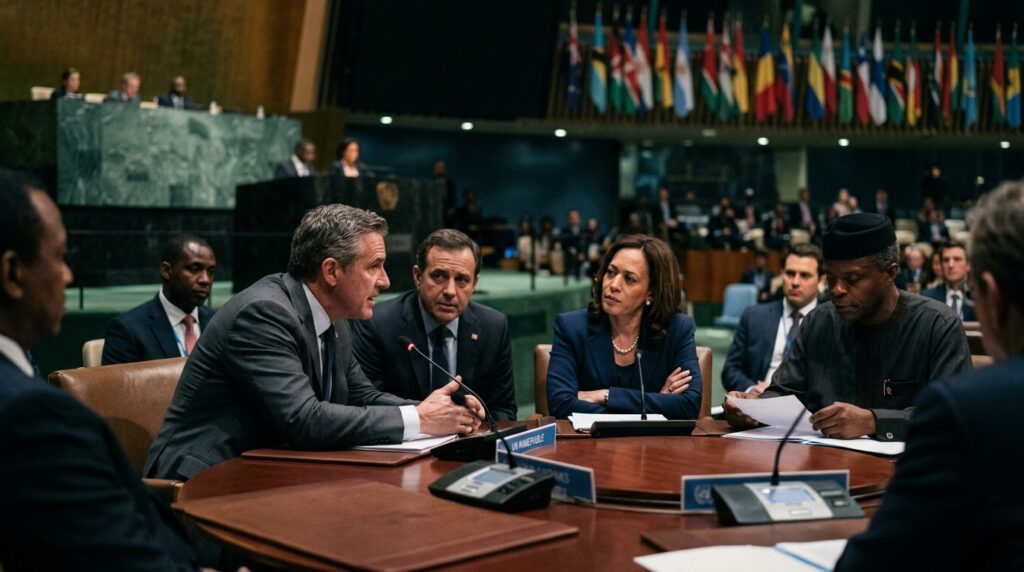
After the devastation of World War II, institutions like the United Nations, International Monetary Fund, and World Bank were created to prevent war, encourage development, and resolve disputes diplomatically.
“Imagine a system built to save humanity, but designed by the winners of the last war—does fairness survive such a design?”
The Security Council structure ensured stability but created built-in inequality, giving permanent members veto power and shaping global decisions around their interests.
International Law’s Crisis of Faith: Double Standards from North to South
From Venezuela to Gaza, the selective application of international law by powerful states and their critics alike is draining the post-1945 order of its last reserves of legitimacy.
International law has always rested more on faith than force. Unlike domestic law, it lacks a global police; its influence depends on states believing in, and voluntarily abiding by, shared rules. Today, that faith is faltering. The lofty principles of the post-1945 order, sovereign equality, universal human rights, and the rule of law ring hollow when major violations are rationalised in the language of law itself.
Nietzsche warned that a moral order dies not when attacked from outside, but when it loses legitimacy in the eyes of its believers. International law now faces just such a crisis of belief. If enough countries conclude the “rules-based order” is really a tool of power, not a restraint on it, the result will not be anarchy overnight but something in some ways worse: a cynical shell, treaties and courts still in place, yet devoid of moral authority.
This crisis came into sharp relief with the United States’ recent intervention in Venezuela. On 3 January 2026, US special forces seized Venezuelan leader Nicolás Maduro in a unilateral operation. The UN secretary-general, António Guterres, warned that the raid “constitutes a dangerous precedent,” stressing the imperative of “full respect, by all, of international law”.
The Organisation of American States likewise urged all actors to “fully respect international law and the applicable inter-American legal framework”, calling for de-escalation, civilian protection, and a Venezuelan-led return to constitutional order.
https://www.socialeurope.eu/international-laws-crisis-of-faith-double-standards-from-north-to-south
Nuclear Governance: A System of Two Rules
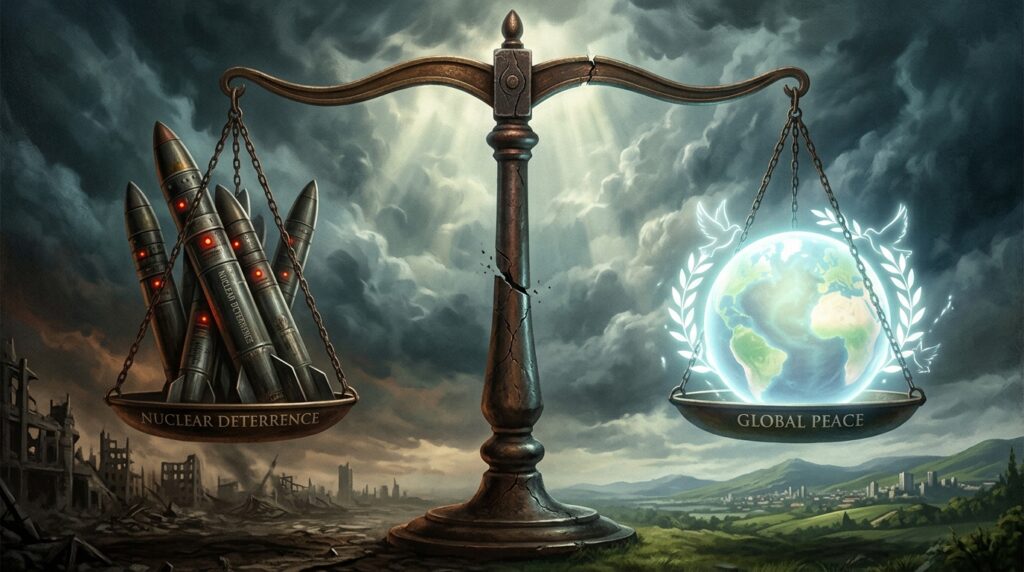
The Non-Proliferation Treaty (NPT) recognises only five official nuclear states: the United States, Russia, China, France, and the United Kingdom. Meanwhile, countries like Iran and North Korea face extreme sanctions and military pressure.
“Nuclear weapons are treated as forbidden fruit for some but birthday cake for others.”
The Deterrence Paradox
- Nuclear weapons prevent war through Mutually Assured Destruction (MAD).
- They also maintain strategic inequality, making enforcement feel selective.
Historical Examples
- North Korea’s nuclear program triggers global sanctions.
- Israel, India, and Pakistan remain largely unpressured despite nuclear arsenals.
Military Interventions and Selective Legitimacy
Powerful democracies frequently intervene militarily:
- Iraq War
- Afghanistan War (2001–2021)
- 2011 NATO intervention in Libya
“If the rules are broken by the powerful, what lesson do they teach the rest of the world?”
Critics argue that interventions often occur without full international consent, leading to long-term instability while raising questions about the credibility of international law.
Human Rights vs Strategic Interests
Organisations like Human Rights Watch and Amnesty International document abuses worldwide. Yet, enforcement depends heavily on alliances and strategic value, creating visible double standards.
International Justice: Unequal Accountability
The International Criminal Court prosecutes war crimes and crimes against humanity. Powerful states often bypass the court, while smaller nations face more scrutiny, reinforcing perceptions of selective justice.
Economic Sanctions: Power or Principle?
Sanctions are used by the United States and the EU to enforce norms or influence behaviour.
“Sanctions can save lives or crush them—depending on who wields them.”
Critics argue that sanctions sometimes hurt civilians more than governments.
Media Narratives and Global Perceptions
Media shapes global understanding. Outlets like BBC and CNN influence perspectives, while alternative networks offer counter-narratives.
“Information itself can become a tool of power, deciding whose story gets told.”
Is the International System Losing Legitimacy?
Many scholars believe the global system is facing a credibility challenge. Institutions such as the UN, ICC, ICJ, and UNEP depend heavily on cooperation from powerful states. When major countries ignore rulings, the legitimacy of these bodies weakens.
The Theory of Institutional Decline
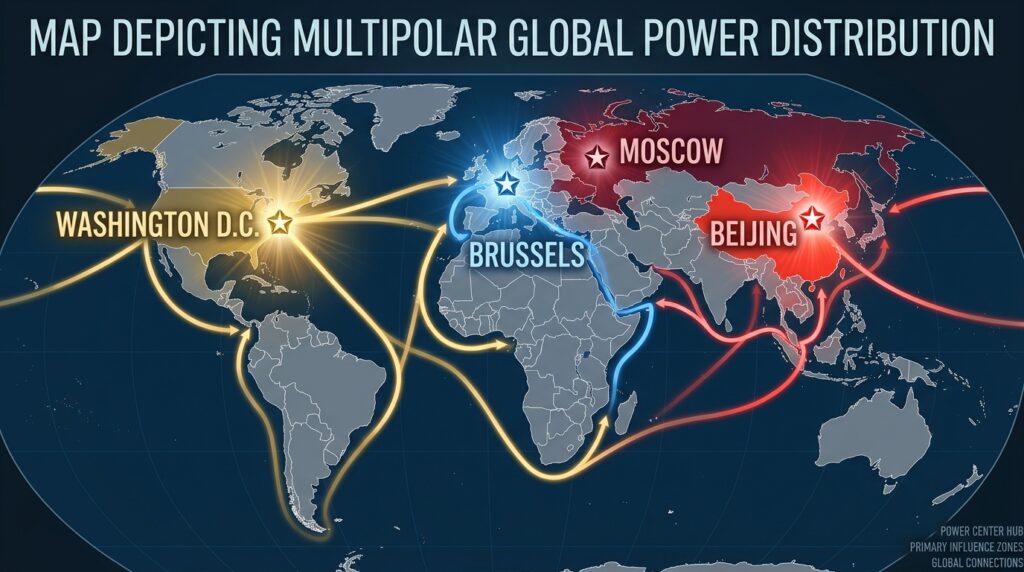
Some analysts believe the world may be witnessing the gradual weakening of the post-1945 global order. Indicators include:
- Rising geopolitical rivalry
- Declining trust in global institutions
- Increasing unilateral military actions
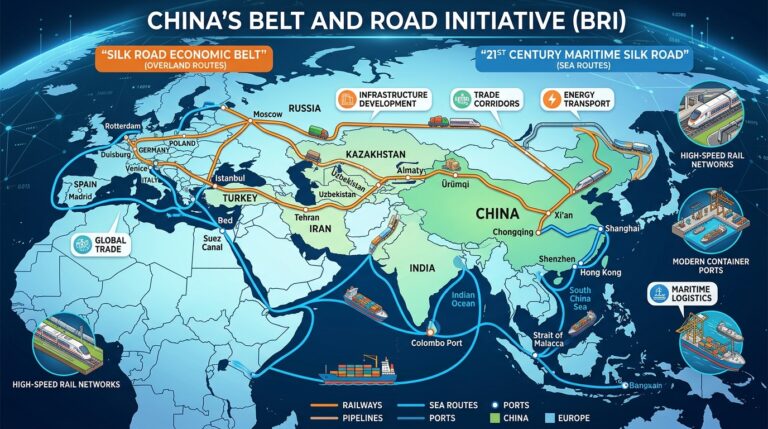
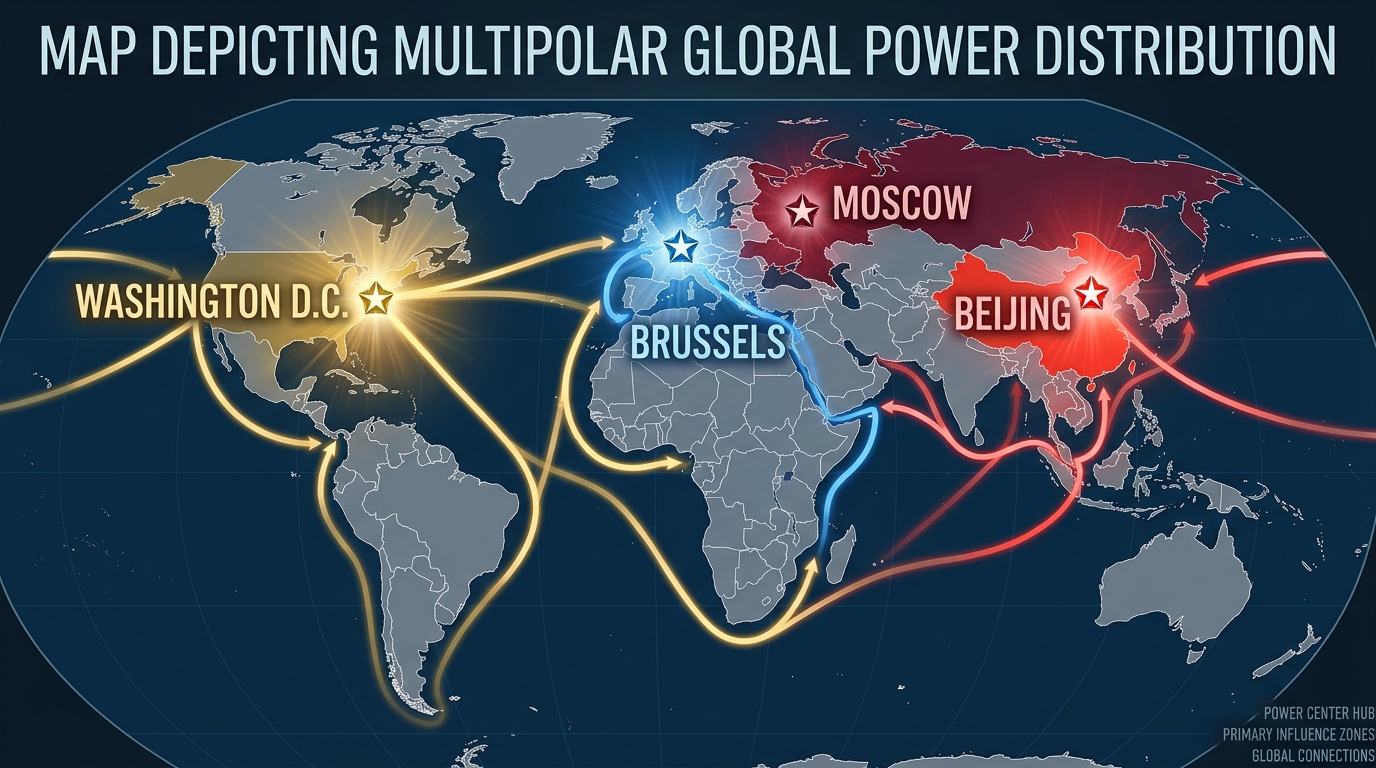
Emerging powers like China and Russia call for reforms, hinting at a multipolar world.
Counterarguments: Why Defenders Say “Don’t Throw the Baby Out”
- No global war between nuclear superpowers since WWII.
- UN and other institutions facilitate diplomacy, disaster relief, and development.
- Reform, not collapse, may preserve the system’s core function.
Conclusion: A System at a Crossroads
The global rules-based order is at a historic turning point. Selective enforcement, double standards, and geopolitical power politics test its legitimacy.
“Rules are meaningless if they only apply to those who obey. The question is: can global governance survive inequality, or will power write its own rules?”
FAQs
What is a rules-based international order?
A system where international law and treaties guide global relations, instead of raw military power.
Why do critics say the system has double standards?
Powerful states often bypass rules that weaker states are expected to follow.
What is the Nuclear Non-Proliferation Treaty?
A treaty aiming to limit the spread of nuclear weapons while promoting peaceful nuclear technology.
Why is North Korea often mentioned?
North Korea withdrew from the treaty and built nuclear weapons, triggering sanctions.
Is the UN losing legitimacy?
Some analysts argue that major powers ignoring rulings erode credibility, though the UN still plays a diplomatic role.
What is a multipolar world?
A global system where several major powers influence international politics rather than a single superpower.
Expert Statement
“This article is written to provide an informed analysis of the current global rules-based order, highlighting patterns of selective enforcement, double standards, and the challenges faced by international institutions. Drawing on official data from the United Nations, the International Atomic Energy Agency, Human Rights Watch, and other credible sources, it aims to present a balanced perspective on the crises, successes, and evolving dynamics of global governance. The insights are intended for readers seeking a critical understanding of how power, law, and policy interact on the world stage.”
References
- United Nations Charter – UN official documents
- International Atomic Energy Agency (IAEA) reports
- Stockholm International Peace Research Institute – nuclear data
- Human Rights Watch & Amnesty International reports
- UN Security Council archives
- Academic analyses of international relations and nuclear deterrence