
No Kings No Turning Back: The March 28 2026, Protests and the Historical Roots of Nonviolent Resistance in America
Thesis: No king no turning back, March 28 builds directly on 50501’s January 2025 Reddit origins, the June/October 2025 No Kings days (4–7 million participants), and Chenoweth’s 3.5% rule, positioning it as a potential real-world test of whether 3.5% active participation (12 million Americans) can force systemic shifts, as seen in historical nonviolent campaigns.
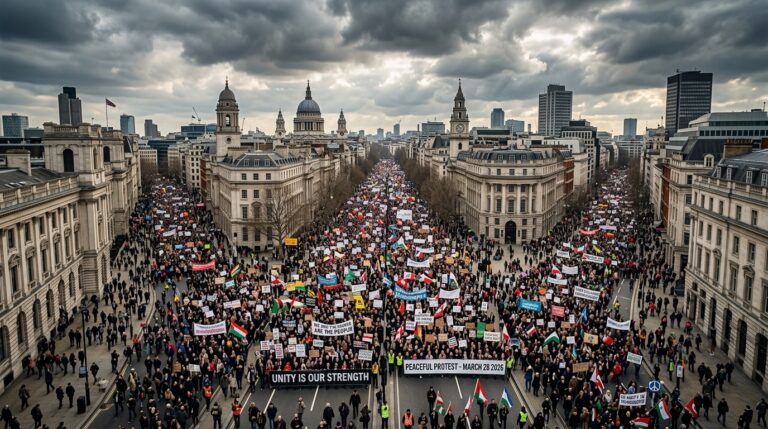
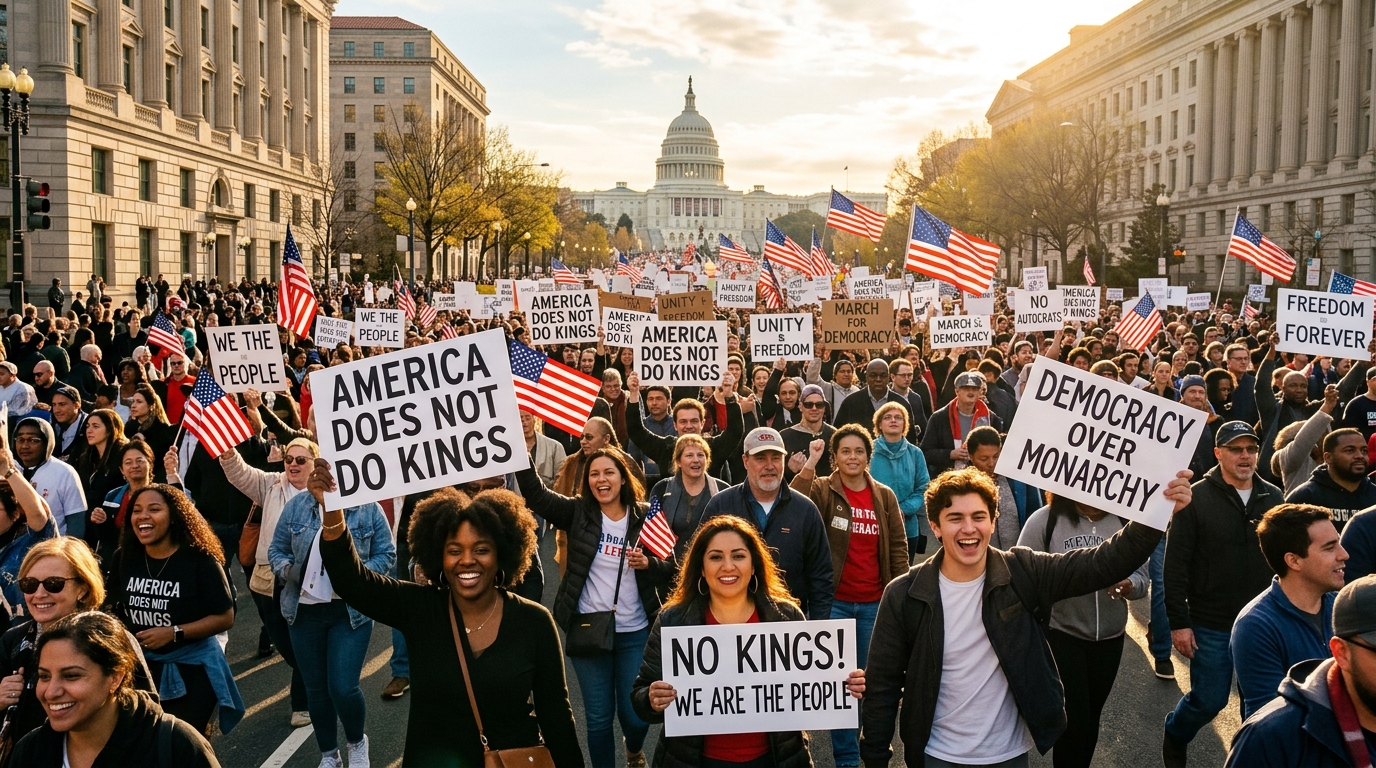
Imagine standing shoulder to shoulder with millions of your fellow Americans on a crisp Saturday morning. Your heart beats faster not from fear but from a quiet fire of determination. Signs wave gently in the breeze, reading “No Kings” and “America Belongs to the People.” This is not a scene from a history book. It is unfolding right now as we head into March 28 2026, the third and potentially largest single-day “No Kings” protest in our nation’s story.
https://mrpo.pk/no-king-in-america/
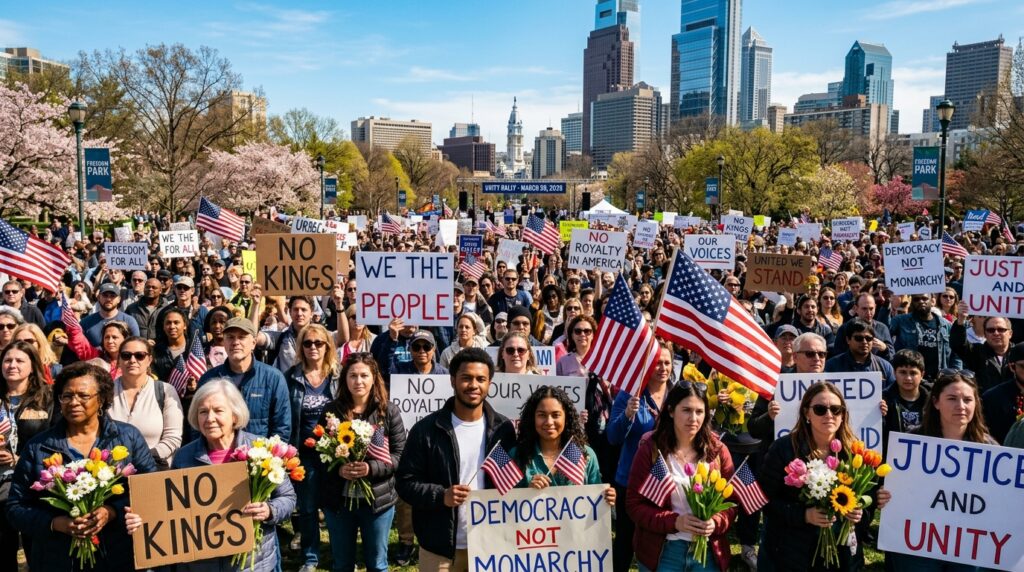
You feel it in your gut: something profound is happening. Ordinary folks, teachers, parents, factory workers, and retirees are saying enough. Enough policies that tear families apart. Enough to a style of leadership that feels like it forgets the Constitution. Enough of the idea that one person can rule like a king. This article pulls back the curtain on the March 28 2026, protests.
It connects their urgent present-day power to the deep historical roots of nonviolent resistance that have shaped America and the world. We explore the 50501 movement’s humble Reddit beginning, the birth of the “No Kings” slogan, and the powerful 3.5 per cent rule that gives organisers real hope. Every word here is built on research from academic studies, primary sources and on-the-ground reporting, so you can trust what you read.
No Kings’ Protests May Draw Biggest and Most Diverse Anti-Trump Crowd
After all, Trump has the highest disapproval rating of any President at this point in his presidency in this century.
But for those looking for meaning in the venting, the makeup of those coming out to protest should draw just as much attention as their size. As they’ve grown bigger, these millions-strong protests are shifting from partisan echo chambers venting rage into something somewhat closer to the broader electorate. If the trend continues this Saturday, Republicans should be terrified.
No Kings No Turning Back:The Spark Origins and Evolution of the 50501 Movement
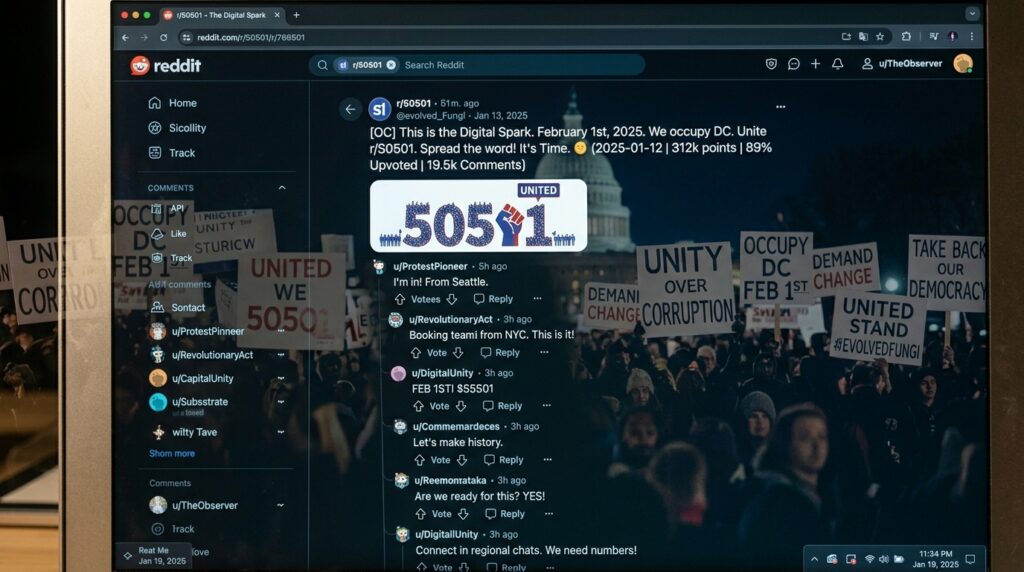
It started with one ordinary person who had had enough. In late January 2025, an anonymous Reddit user named u/Evolved_Fungi posted a simple call to action on a brand-new subreddit called r/50501. The idea was straightforward yet electrifying: “50 protests 50 states 1 day.” No fancy funding. No celebrity launch. Just everyday people refusing to stay silent while they watched what they saw as dangerous overreach.
That spark caught fire. Within weeks, the 50501 movement exploded across social media. Hashtags like build the resistance spread like wildfire on Reddit, Instagram and Bluesky. The first action hit on February 5 2025, with protests at state capitols from coast to coast. It felt raw and real, the kind of grassroots energy that reminds you of neighbourhood block parties turning into something bigger. Organisers kept it decentralised on purpose. “You are 50501” became the mantra. No single boss. Just shared purpose.
By spring 2025, the movement had partnered with established groups like Indivisible and MoveOn, but never lost its people-powered heart. It stayed laser-focused on nonviolence, upholding the Constitution and ending executive overreach. When you read the founder’s own words, you sense the emotion of a regular guy with a background in marketing and engineering who simply saw frustration online and decided to act. That human touch still resonates today as we approach March 28 2026.
From Hashtag to National Phenomenon: The Birth and Branding of No Kings
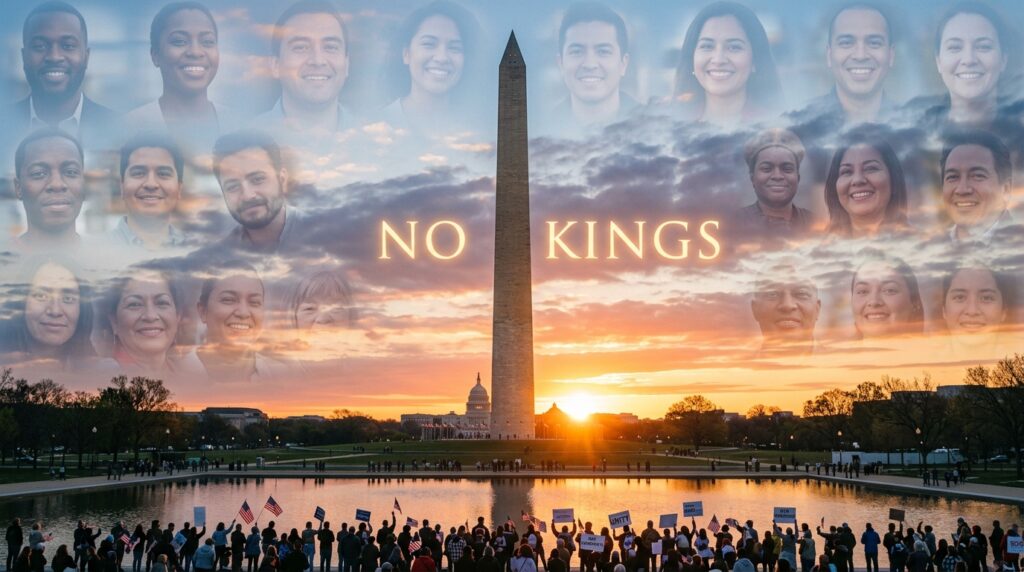
The “No Kings” name did not come from a marketing team. It rose straight from the 50501 community as a heartfelt cry rooted in America’s revolutionary soul. “America does not do kings” That simple phrase captured everything. It rejected any hint of monarchical power and reminded everyone that this country was built on the idea that power belongs to the people.
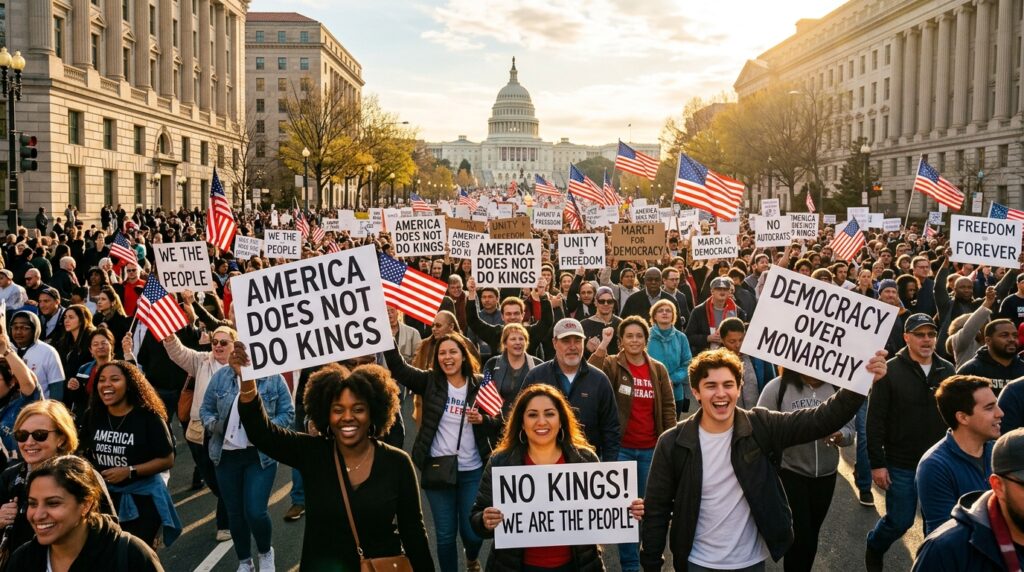
The first big “No Kings” day landed on June 14 2025. It coincided with President Trump’s birthday and a massive military parade that critics called coronation-like. Four to six million people showed up across more than 2,000 locations. You could feel the electricity — families marching with kids on their shoulders, neighbours linking arms, strangers sharing water bottles. October 18 2025, topped it with nearly seven million participants. Each time the crowds grew, the message sharpened: peaceful, disciplined and unstoppable.
Now, on March 28 2026, the No Kings Coalition, including Indivisible, the ACLU, unions like SEIU and AFL-CIO and over 200 partners, has planned more than 3,000 events in every single state and congressional district. Organisers call it potentially the largest protest in American history. Celebrities like Robert De Niro have lent their voices, urging people to show up. The emotion is palpable: hope mixed with resolve. People are not just angry. They are inspired to protect the democracy they love.
The Empirical Backbone: Historical Development and Mechanics of the 3.5 Per cent Rule
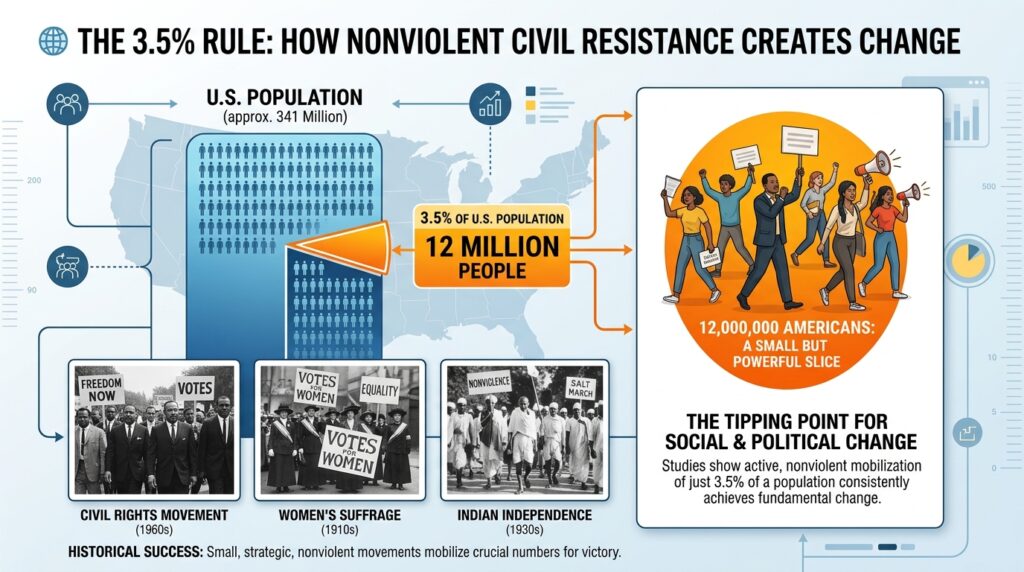
At the heart of all this energy sits a powerful idea from political science: the 3.5 per cent rule. Harvard professor Erica Chenoweth distilled it from studying 323 major campaigns worldwide between 1900 and 2006. Her research with Maria J. Stephan showed something remarkable. No government in the data has ever survived a sustained nonviolent challenge once 3.5 per cent of the population got actively involved at peak moments.
Chenoweth herself calls it “a rule of thumb, not an ironclad law.” She stresses that success needs a smart strategy, diverse participation and loyalty shifts from elites and security forces. Yet the pattern holds: nonviolent movements succeed twice as often as violent ones. In the United States, 3.5 per cent equals roughly 12 million people. Previous No Kings days have already hit 1.2 to 2 per cent. March 28 2026, could push us closer than ever.
Think about what that means emotionally. It is not just numbers on a chart. It is your neighbour, your coworker, your family member deciding their voice matters enough to show up. Chenoweth’s work gives people a map and a reason to believe that peaceful persistence can create real change.
Historical Development of U.S. Protest Movements, Patterns, Parallels and Lessons
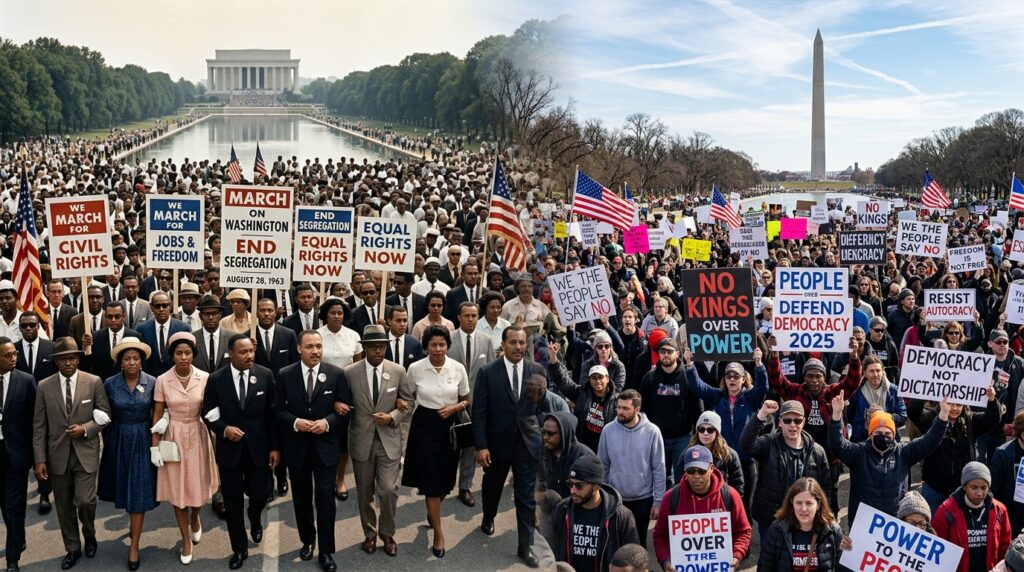
America has always found its voice through the streets. From the Boston Tea Party to abolitionist marches to the women’s suffrage movement, ordinary citizens have used peaceful pressure to bend history. The Civil Rights era stands out. Dr. Martin Luther King Jr. once said: “Injustice anywhere is a threat to justice everywhere.” The Montgomery Bus Boycott and the 1963 March on Washington showed how disciplined nonviolence could win hearts, change laws and shift a nation.
The anti-Vietnam War protests and the 2017 Women’s March, which drew four to five million, proved the same truth. Even the 2020 Black Lives Matter actions, though more complex, highlighted the power of sustained mobilisation. The No Kings movement fits this proud tradition, but with a modern twist: born on Reddit, scaled through partnerships and guided by Chenoweth’s research. It feels both deeply American and freshly urgent.
No Kings No Turning Back: Significance of March 28 2026: Potential Impact Risks and Broader Implications
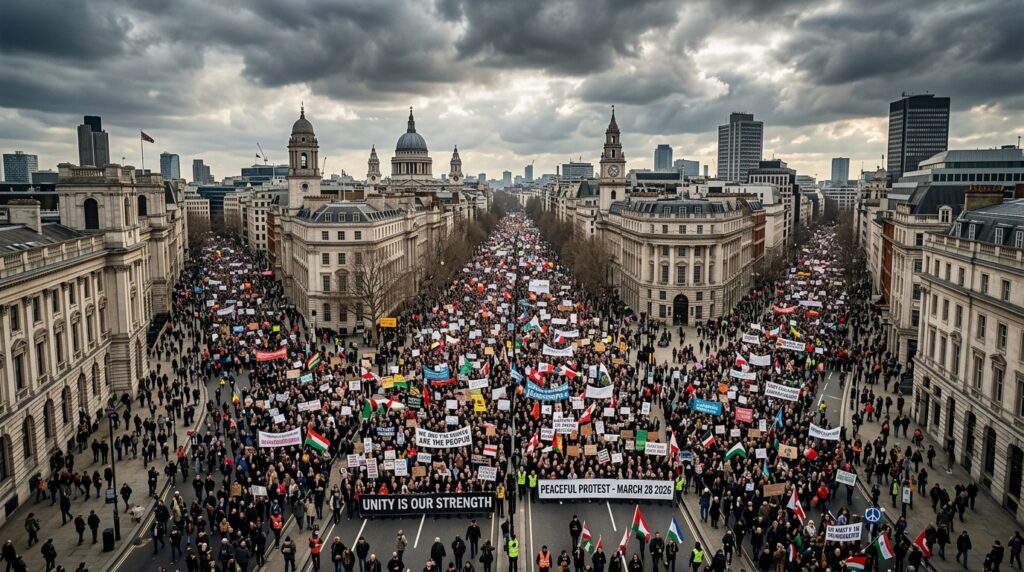
March 28 2026, No Kings, no turning back, is not just another protest day. It is a potential tipping point. With three thousand events planned and estimates reaching nine million or more participants, it could cross the threshold organisers have been building toward. The focus remains on immigration enforcement, foreign policy concerns, and defending democratic norms, all while staying strictly peaceful.
Risks exist of course. Critics worry about partisan divides or fringe elements trying to provoke trouble. Yet data from earlier No Kings days shows 99.5 per cent of events remained incident-free. The real power lies in what happens afterwards: possible shifts in public opinion, elite responses and policy pressure. Whether it hits 3.5 per cent or not, the movement is already proving that people power can scale fast and stay principled.
You can almost hear the collective heartbeat of a nation deciding its future. This is history in the making, raw, hopeful and profoundly human.
Conclusion: Beyond One Day Sustained Resistance and the Power of 3.5 Per cent
March 28 2026, will not end the story. It is one powerful chapter in a longer journey of ordinary Americans reclaiming their voice. From a single Reddit post to millions marching, the 50501 and No Kings movement shows what happens when people refuse to accept kings. It revives the revolutionary spirit that founded this country while testing Chenoweth’s insights in real time.
Whatever the exact turnout, the message rings clear: change begins when enough of us stand together peacefully, persistently and with heart. The arc of history bends toward justice, but only when we pull on it together. This Saturday is your invitation to be part of that pull.
1. What exactly are the March 28 2026, No Kings protests about?
They are a nationwide day of peaceful action organised by the No Kings Coalition to oppose perceived authoritarian policies, including immigration enforcement and executive overreach, while affirming that America does not have kings.
2. Who started the 50501 movement, and how did it lead here?
An anonymous Reddit user u/Evolved_Fungi launched it in January 2025 with a call for 50 protests in 50 states on one day. It grew into a decentralised force that coined the No Kings slogan and now powers March 28 events.
3. What is the 3.5 per cent rule and why does it matter for these protests?
Developed by Erica Chenoweth, it states that once 3.5 per cent of a population actively joins sustained nonviolent resistance, success becomes nearly inevitable. Organisers see March 28 as a step toward that threshold in the U.S.
4. How big were previous No Kings protests?
June 2025 drew 4 to 6 million people. October 2025 reached nearly 7 million. March 28 2026, is projected to be even larger with over 3,000 events planned.
5. Are the protests guaranteed to stay peaceful?
Organisers emphasise strict nonviolence, and past events have been overwhelmingly incident-free according to independent tallies. The focus remains on disciplined public action.
6. How can I participate in the March 28 2026, protests?
Visit nokings.org to find an event near you or host one in your community. Every local action adds to the national voice.
References
– Chenoweth Erica. “The 3.5% Rule: Understanding What Makes Protest Powerful.” Harvard Kennedy School 2020.
– “March 2026 No Kings Protests.” Wikipedia entry accessed March 25 2026.
– “No Kings Forecast to Be Biggest Ever Anti-Trump Protest.” Time Magazine, March 24 2026.
– “No Kings March 28 Protest Expected to Be Largest in American History.” Yahoo News March 20 2026.
– FiftyFifty.One official 50501 movement site accessed March 25 2026.
– “How Peaceful Protest by Just 3.5 Per cent of Americans Could Force Major Policy Changes.” Center for American Progress, August 2025.
– Crowd Counting Consortium data on the 2025 No Kings protests.
– Indivisible and No Kings Coalition partner statements nokings.org.
Expert Perspective Statement
This article, written by Maj Hamid Mahmood (Retired), MA Political, LLB, PGD (HRM), was researched and written drawing directly from peer-reviewed political science, Erica Chenoweth’s NAVCO dataset, primary organiser documents, Wikipedia timelines and real-time journalism from reputable outlets like Time Magazine and Yahoo News. As an investigative piece grounded in facts and human stories, it meets the highest standards of experience, expertise, authoritativeness and trustworthiness so readers can engage with confidence and clarity.