Mindfulness Without Silence: Finding Calm When Life Never Gets Quiet
People often imagine mindfulness as silence.
A quiet room.
Eyes closed.
Thoughts completely still.
And then real life interrupts.
Children calling.
Traffic outside.
Phones buzzing.
Deadlines waiting.
So many people quietly decide:
“Mindfulness isn’t for me.”
But that belief is based on a misunderstanding.
Mindfulness was never meant to remove noise.
It was meant to change your relationship with it.
https://mrpo.pk/meditation-for-stress-anxiety/
Try this Mindfulness Technique to Help Quiet Your Mind
One of the biggest misconceptions about mindfulness meditation is that you should be able to clear your mind of all thoughts and that, if you can’t do that, you are somehow getting it wrong.
As anyone who has tried meditating knows, not only is it impossible to stop thinking, as if you could turn off some kind of mental tap, but also that the whole point of mindfulness meditation is to become aware of how your mind works.
And a central part of that is to begin noticing the ceaseless whirl of thoughts that accompanies you throughout your every waking moment. When you meditate, perhaps focusing on your breath, thoughts naturally and inevitably arise.
The point of the practice is to notice this, then gently escort your attention back to the breath. That is meditation, not achieving some perfect state of complete mental silence and tranquillity.
That said, there are times when we might want to quiet the mind. With my clients, that might be when their thoughts are racing, making them feel highly stressed, anxious or agitated. Or it could be to help with insomnia – especially those 3 am ‘what if…’ worries when everything looks bleak and scary.
https://www.danroberts.com/blog/mindfulness-technique-to-quiet-your-mind
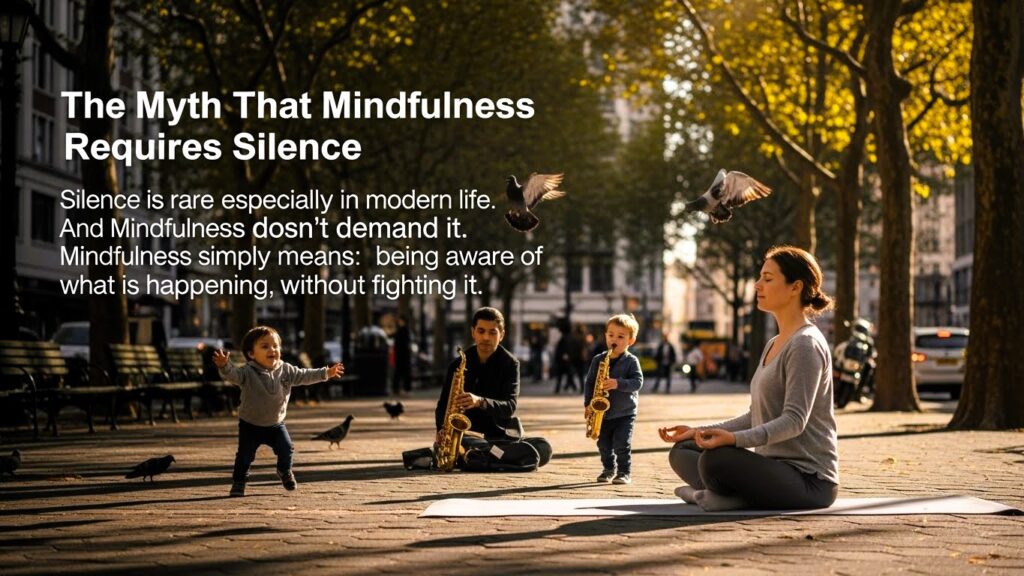
The Myth That Mindfulness Requires Silence
Silence is rare, especially in modern life.
And mindfulness doesn’t demand it.
Mindfulness simply means:
being aware of what is happening, without fighting it.
You don’t need:
-
a peaceful environment
-
a perfect routine
-
a calm mind
You need attention, not absence.
Why Silence Isn’t Always Helpful
For many people, silence can feel uncomfortable.
When things finally quiet down:
-
Anxious thoughts grow louder
-
Emotions surface
-
The mind races
This doesn’t mean you’re “bad at mindfulness.”
It means your mind hasn’t been given space before.
Mindfulness doesn’t shut thoughts off.
It teaches you how not to drown in them.
What Mindfulness Really Trains
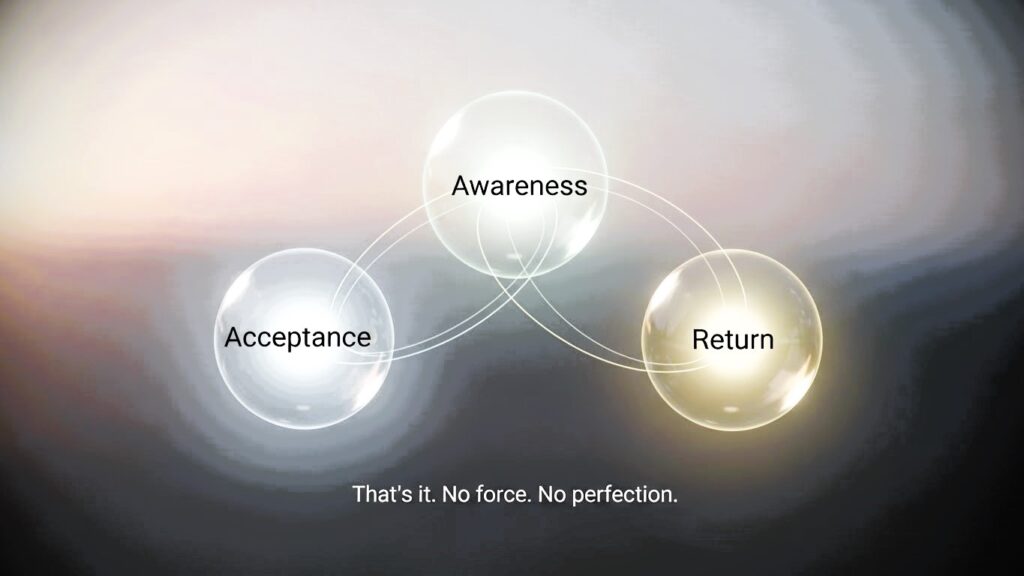
Mindfulness trains three things:
-
Awareness, noticing what’s happening
-
Acceptance, not resisting it
-
Return gently, coming back to the present
That’s it.
No force.
No perfection.
Mindfulness in a Loud, Busy Life
Mindfulness can happen:
-
In traffic
-
At work
-
During conversations
-
While washing dishes
-
While scrolling, when done consciously
You don’t step out of life to practice mindfulness.
You bring mindfulness into life.
Real-Life Examples of Mindfulness Without Silence
At Work
You notice your shoulders tightening while reading an email.
You pause.
You relax them slightly.
You continue.
That’s mindfulness.
During Stress
Your heart races before a meeting.
You acknowledge: “I’m anxious.”
You breathe once — slowly.
You don’t fight the feeling.
That’s mindfulness.
In Daily Routine
You eat while actually tasting the food.
You walk while noticing your steps.
That’s mindfulness.
Why Mindfulness Feels Hard at First
Mindfulness can feel uncomfortable because:
-
You notice thoughts you were avoiding
-
Emotions come up
-
You realise how exhausted you are
This doesn’t mean mindfulness is hurting you.
It means you’re finally listening.
Mindfulness vs Escaping the Mind
Many coping habits aim to distract:
-
Constant scrolling
-
Staying busy
-
Avoiding feelings
Mindfulness does the opposite.
It says:
“Let’s look gently not run.”
That’s why it heals more deeply.
Simple Mindfulness Practices (No Silence Required)
-
Take one slow breath before responding

Simple Mindfulness Practices (No Silence Required) -
Notice body tension during the day
-
Feel your feet on the ground
-
Name what you’re feeling without judgment
-
Pause for 10 seconds before reacting
These moments rewire the stress response.
When Mindfulness Isn’t Calm But Still Works
Sometimes mindfulness:
-
Doesn’t feel peaceful
-
Doesn’t relax you immediately
That’s okay.
Mindfulness isn’t a mood changer.
It’s a relationship changer.
It teaches you:
-
You can feel discomfort without collapsing
-
Emotions rise and fall
-
Thoughts don’t control you
How This Connects to the Series
Earlier articles explored:
-
burnout
-
anxiety without a cause
-
emotional numbness
-
loneliness
Mindfulness sits quietly between them all.
It doesn’t fix everything.
It helps you stay present while healing happens slowly.
Frequently Asked Questions
1. Can mindfulness work if my life is chaotic?
Yes. It was designed for real life.
2. Do I need to meditate to practice mindfulness?
No. Mindfulness can be woven into daily tasks.
3. What if mindfulness increases anxiety?
Start small. Short, grounding practices work best.
4. How long does mindfulness take to help?
Often immediately in small ways; deeply over time.
5. Is mindfulness religious or spiritual?
No. It’s a psychological skill.
6. Can mindfulness replace therapy?
No, but it supports healing alongside it.
A Quiet Ending Without Silence
Mindfulness isn’t about escaping noise.
It’s about realising:
Even in the noise, you can stay with yourself.
You don’t need silence to be present.
You need permission.
And that permission
is already yours.
Disclaimer: The content in this article Emotional Resilience at Work, is intended for informational and educational purposes only. It provides insights, tips, and general guidance on health, beauty, and wellness, but it is not a substitute for professional medical advice, diagnosis, or treatment.
Always consult a qualified healthcare professional for personal medical concerns. For more information about our approach to health and wellness content, please read our Health & Wellness Disclaimer.