
Why Iran’s Nuclear Negotiations Failed Before the Bombs Fell: The Deal That Never Was
Why Iran’s nuclear negotiations failed before the bomb fell, the deal that never was. For twenty years, Iran insisted its nuclear program was for peaceful purposes, medical isotopes, energy research, and national pride. The world squinted at underground facilities, watched enriched uranium percentages creep upward, and tried to negotiate a leash. They failed. Again and again. Until February 28, when the bombs finally fell, and the talking stopped.
The ayatollah didn’t want a bomb. At least, that’s what everyone kept saying.
https://mrpo.pk/the-commanders-burden/
Iran was nowhere close to a nuclear bomb, experts say
Although President Trump has claimed Iran was weeks away from developing a nuclear weapon, much more work was needed for the country to do so
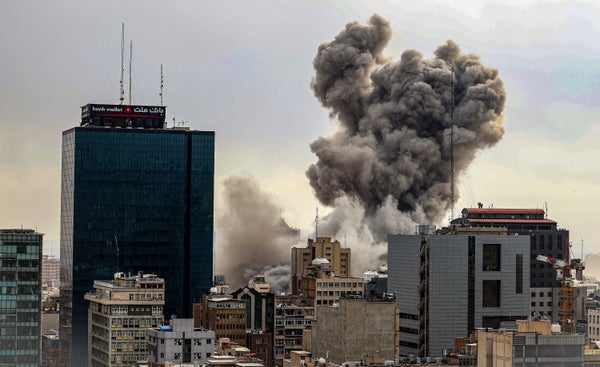
Tehran on March 02, 2026. Contributor/Getty Images
Confusion on whether Iran truly needed only “two weeks to four weeks” to make a nuclear weapon, as President Donald Trump suggested on Monday, hangs over the ongoing U.S. and Israeli war on the Persian Gulf nation. Nuclear experts call this claim unlikely, but the confusion may stem from some basics of atomic chemistry.
Here’s what actually happened at those tables. And why nobody could close a deal.
The Original Agreement That Worked Until It Didn’t
Let’s rewind to 2015. Iran and the P5+1 (the US, UK, France, Russia, China, and Germany) signed the Joint Comprehensive Plan of Action. It was elegant, really. Iran would cap its uranium enrichment at 3.67 per cent, fine for power plants but useless for bombs. It would rip out centrifuges, dilute stockpiles, and let International Atomic Energy Agency inspectors crawl all over its facilities. In exchange, the world would lift sanctions, and Iran could rejoin the global economy.
It worked for exactly three years.
Why Iran’s nuclear negotiations failed: The American Walkout That Broke Everything
May 2018: President Trump pulls the US out, calling it “the worst deal ever.” Sanctions snap back. Iran glares, waits a year, then starts inching past the limits. By 2021, they’re enriching to 60 per cent, a technical hair’s breadth from weapons-grade. They’re also blocking inspectors and spinning centrifuges that the JCPOA had mothballed.
The deal wasn’t dead. It was zombie legislation—shambling along with no pulse.
The June 2025 Attack That Changed the Game
Last summer, things got literal.
Israel launched a surprise attack. The US followed with “Operation Midnight Hammer,” dropping 30,000-pound bunker-busters on Fordow, Natanz, and Isfahan. President Trump declared Iran’s nuclear program “completely and totally obliterated,” pushed back by decades.”
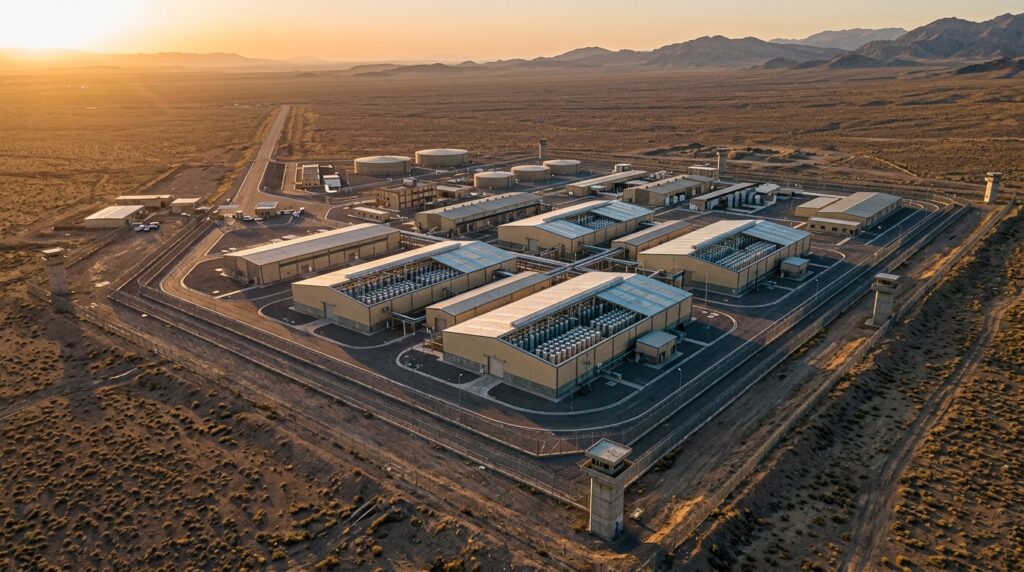
Except it wasn’t.
IAEA chief Rafael Grossi said “very considerable” damage, sure, but “annihilated” oversold it. Iranian officials shrugged: you can’t bomb knowledge. Scientists remember how to spin centrifuges even when the buildings fall. And roughly 400 kilograms of enriched uranium? Vanished under rubble. Or maybe moved. Nobody actually knew.
What everyone knew: cooperation with the IAEA collapsed. Iran kicked inspectors out, banned cameras, and declared wartime protocols. The nuclear program went dark.
The Final Negotiation Round: Three Attempts in Early 2026
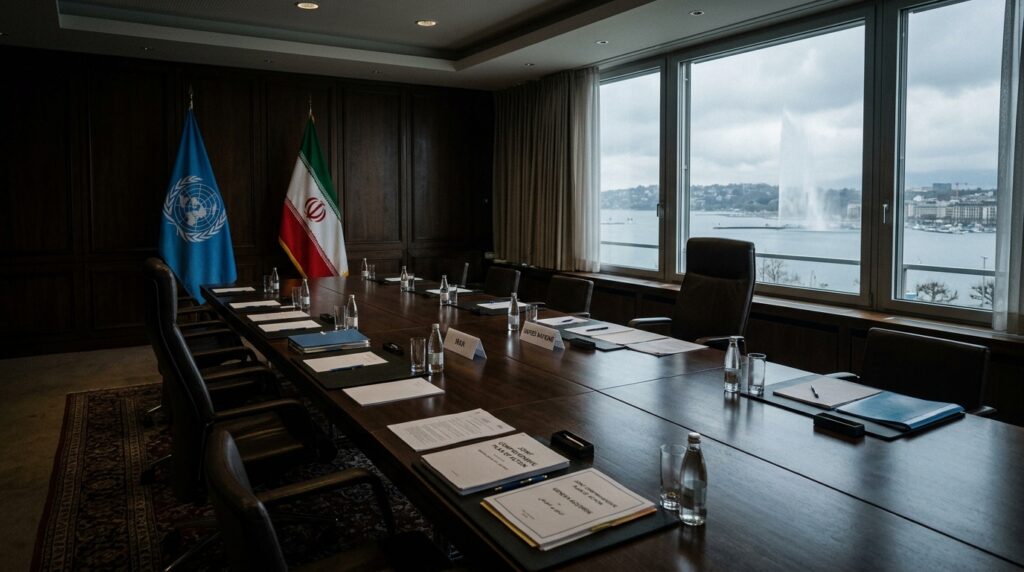
Fast forward to February 2026. Two carrier strike groups loom in the Gulf. A hundred fighters wait in silos. And diplomats sit down anyway.
Round One: Muscat, Early February
Oman played host. Iran’s foreign minister, Abbas Araghchi, led the Tehran team; Steve Witkoff and Jared Kushner represented Washington. The vibe? “Positive atmosphere,” per Araghchi, with a heavy side of caution.
But right out of the gate, Araghchi opened with what US officials called “a threat dressed as negotiation.” He asserted enrichment as Iran’s “inalienable right.” Not a bargaining chip, a birthright. Then he noted that 460 kilograms of 60 per cent enriched uranium was enough material for eleven bombs. And warned the US would “pay dearly” to retrieve it.
He later tried to walk that back. You can’t un-ring a bomb bell.
Iran drew its red line clearly: only the nuclear program. No missiles. No regional proxies. No human rights. The US had its own list: indefinite verifiable caps, facility dismantlement, and enriched uranium shipped out of the country.
They weren’t negotiating the same deal.
Round Two: Geneva, February 17
Switzerland this time. Both sides claimed progress on “guiding principles.” But Washington had asked Tehran to submit a written draft proposal within five or six days. Iran agreed.
No document arrived.
One US official put it bluntly: “We have an aircraft carrier out there that they’re complaining about, a second one on the way, and we can’t get a draft agreement out of them. What does that tell you about their intentions?”
Iran, meanwhile, staged live-fire drills in the Strait of Hormuz and briefly closed the waterway. Negotiation by escalation, a classic Tehran move.
Round Three: Geneva, February 26
This was the big one. Oman’s foreign minister announced “significant progress.” Araghchi called it “the most serious and longest” round yet, with talks entering “the elements of an agreement very seriously.” Technical teams were scheduled for Vienna the following week.
Then Iran tabled its proposal: a “needs-based agreement” linking enrichment levels to projected civilian requirements. Translation: we want to keep enriching. Let us know how much you’ll tolerate.
US officials couldn’t even take the document for analysis. One described it as “Swiss cheese”—full of holes. The sticking point: Iran’s Tehran Research Reactor, supposedly for medical isotopes, justifying enrichment up to 20 per cent. The IAEA found that the reactor already had seven to eight years’ worth of unused fuel and that “no meaningful medical isotope production” was occurring.
The US tried a “free fuel test”: we’ll give you unlimited nuclear fuel at no cost, just stop enriching. Iran called it an insult to national dignity.
“They twisted themselves into pretzels to explain why enrichment was their national right and their national pride,” one US official said.
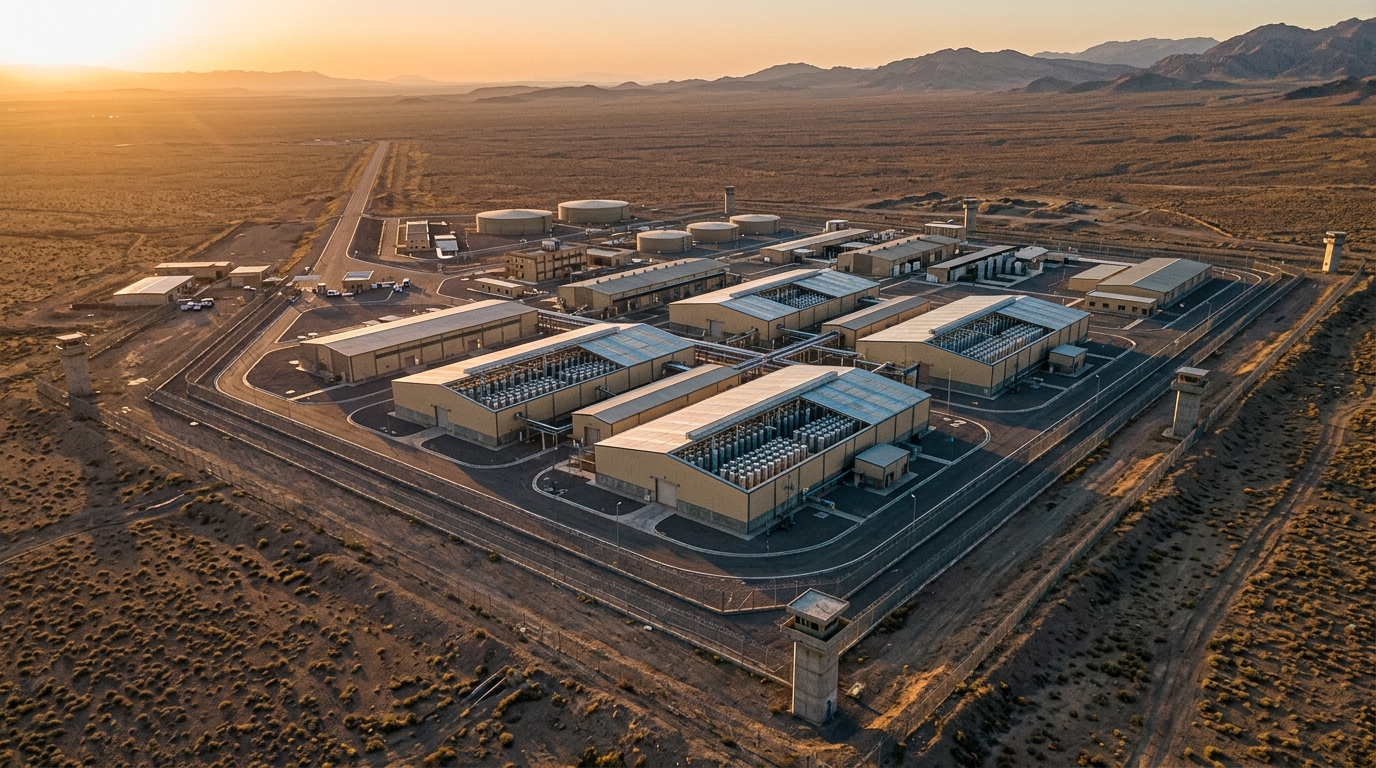
Meanwhile, intelligence showed Iran relocating nuclear and ballistic assets underground—new facilities designed to survive bunker-busters.
Why Iran’s nuclear negotiations failed
The failure wasn’t complicated. It was just incompatible.
What Iran Actually Wanted
Iran sought a return to JCPOA-style limits, confined strictly to nuclear issues, with sanctions lifted and enrichment rights preserved. They wanted legitimacy without surrender, recognition that enrichment was theirs to keep.
What the US Demanded Instead
The US wanted dismantlement of key facilities, removal of enriched uranium, indefinite verifiable caps, and expansion into missiles and proxies. They wanted guarantees, not trust.
Neither budged.
US officials briefed President Trump after Geneva: “If you want us to make an Obama-style deal, maybe an Obama-plus deal, we could probably get one done. But if you’re asking whether we’d be able to look you in the eye and say we’ve actually solved the issue, no.”
The gap between “a deal” and “the problem” swallowed diplomacy whole.
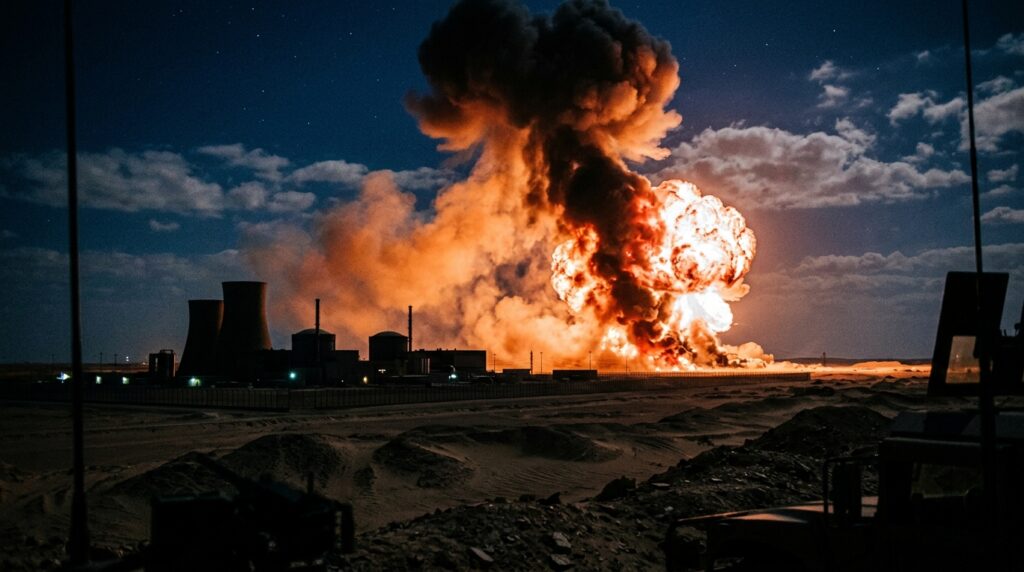
On February 28, Operation Epic Fury began. Missiles hit Tehran. Ayatollah Ali Khamenei died. The negotiating tables burned.
Where Iran’s Nuclear Program Stands Today
Iran’s program exists in a fog. The IAEA has no access to enrichment facilities, no knowledge of stockpile locations, no verification of centrifuge inventories. What we don’t know could fill a silo.
The new supreme leader, Mojtaba Khamenei, inherited a shattered command structure and a defiant message: the Strait remains closed, US bases remain targeted, and revenge remains on the menu. President Trump claims Iran was building a new granite-protected site when the bombs hit.
The diplomats are gone. The inspectors are gone. The centrifuges? Probably still spinning somewhere, underground, in the dark.
Nobody won at that table. They just ran out of time.
Frequently Asked Questions
What exactly is Iran’s nuclear program capable of producing?
Before the June 2025 strikes, Iran had enriched uranium to 60 per cent, a short technical step from weapons-grade 90 per cent. The IAEA estimated this stockpile, roughly 440 kilograms, was enough material for about ten nuclear weapons if further enriched. But US intelligence consistently assessed that Iran wasn’t actively building a bomb and Supreme Leader Khamenei hadn’t reauthorised the weapons program suspended in 2003. The capability existed; the weapon didn’t.
Why did the 2015 JCPOA fail to hold?
The deal worked technically but collapsed politically. The US withdrawal in 2018 broke the bargain: sanctions relief for nuclear limits. Iran waited a year, then gradually exceeded caps. European efforts couldn’t compensate for US sanctions. By 2021, the JCPOA’s constraints were theoretical. The snapback mechanism, triggered by France, Germany, and the UK in August 2025, reimposed UN sanctions but couldn’t restore the deal itself.
What was Iran’s position in the final negotiations?
Iran insisted on confining talks strictly to its nuclear program—no missiles, no regional activities, no human rights. It demanded recognition of its right to enrich uranium for peaceful purposes and wanted sanctions lifted. Crucially, it rejected any requirement to ship enriched uranium out of the country or reduce enrichment to zero. The “needs-based” proposal tabled in February 2026 sought to justify continued enrichment through civilian requirements.
What did the US demand that Iran wouldn’t accept?
Washington demanded indefinite, verifiable guarantees that Iran would never develop nuclear weapons. Specifics included dismantling three key nuclear facilities, transferring enriched uranium out of the country (likely to Russia or US custody), capping enrichment far below current levels, and extending negotiations to cover ballistic missiles and support for proxy groups like Hezbollah. Iran viewed missiles as a defensive “red line” never subject to negotiation.
Could a deal have been reached if talks continued?
Iranian officials expressed public optimism, with Araghchi stating that a deal was “within reach” days before the final round. US officials reached a different conclusion: that a cosmetic deal might be possible, but “solving the issue” wasn’t. The fundamental incompatibility: Iran wanted rights preserved; the US wanted capabilities dismantled. Mediator Oman reported “unprecedented openness to creative ideas,” but creativity couldn’t bridge that gap.
Where is Iran’s nuclear program now after the strikes?
No one knows with certainty. The IAEA lost all access after June 2025 and hasn’t regained it. Enriched uranium stockpiles are unverified. Facilities may be damaged, in the process of rebuilding, or operational. Iran maintains a policy of strategic ambiguity. Analysts suggest the “knowledge wheel” keeps turning; scientists remember, even if hardware is destroyed. The program is effectively a black box.
References
- USNI News, Congressional Research Service report
- Xinhua, Geneva talks coverage
- News18, Araghchi statement on US dismissal
- Anadolu Ajansı, nuclear program status analysis
- Anadolu Ajansı, pre-talks Iranian statements
- The Conversation, negotiation failure analysis
- Washington Times, Trump press conference
- CGTN, negotiation timeline
- Deccan Chronicle, US officials’ background briefing
- Responsible Statecraft, verification challenges