
Holistic Digital Wellness: Habits That Support Digital Therapy
Why Apps Work Better When Life Does Too
The Missing Piece People Don’t Talk About
Digital therapy is helping millions.
But here’s a quiet truth few admit:
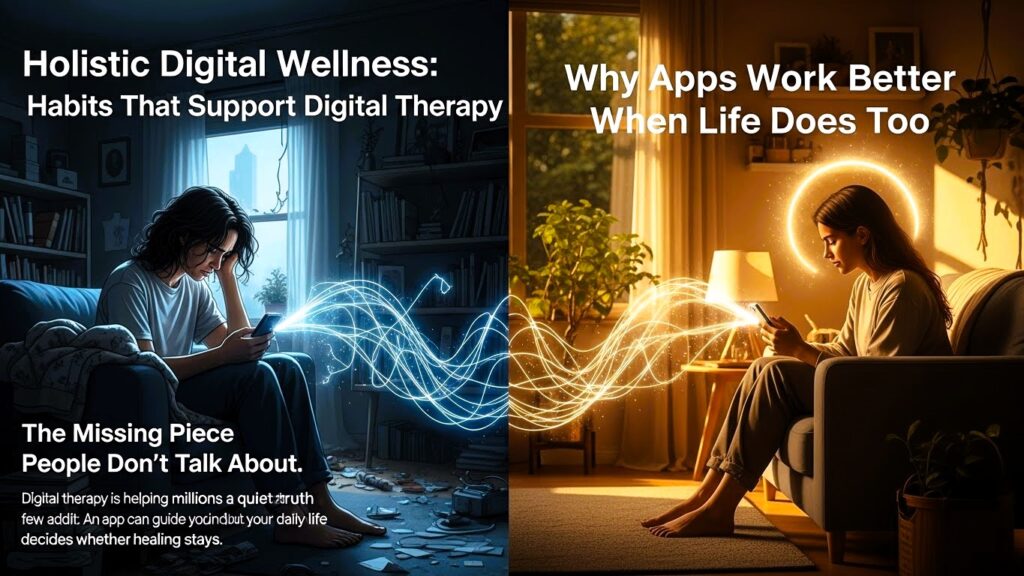
An app can guide your mind but your daily life decides whether healing stays.
Many people start online therapy hopeful…
and stop being frustrated.
Not because therapy “didn’t work”
But because life outside the screen stayed chaotic.
This article is about what actually makes digital therapy work better:
small, human, holistic habits that support the process instead of silently fighting it.
https://mrpo.pk/daily-habits-that-quiet-the-mind/#google_vignette
Understanding Digital Wellbeing
Digital wellbeing refers to the impact technology has on our mental, emotional, and physical health. It is about making conscious decisions about how, when, and why we use technology. While digital devices are essential for modern living, unchecked usage can lead to eye strain, disrupted sleep, reduced productivity, and even social isolation. The aim is not to remove technology entirely but to manage it in a way that supports, rather than undermines, our overall wellbeing.
Holistic Digital Wellness, Therapy Is Support, Not a Substitute for Living
Online counselling, AI tools, and mental-health apps are powerful.
They offer:
- Privacy
- Structure
- Language for emotions
- Early intervention
But they cannot:
- Fix sleep deprivation
- Replace human warmth
- Calm a body stuck in survival mode
Healing accelerates when digital care meets real-life balance.
The Body Listens Before the Mind Does

One overlooked truth:
You can’t think your way out of exhaustion.
Digital therapy often works on thoughts.
Holistic habits work on the body that carries those thoughts.
Habit 1: Protect Sleep Like It’s Medicine
People often say:

“Therapy isn’t helping my anxiety.”
Then you ask:
- How many hours do you sleep?
- When do you put your phone down?
Sleep regulates:
- Mood
- Emotional resilience
- Nervous system recovery
Even 30 minutes earlier sleep makes therapy insights easier to apply.
Habit 2: Gentle Structure Beats Motivation
You don’t need discipline.
You need predictability.
Simple routines help the brain feel safe:
- Same wake-up window
- Fixed meal times
- One daily anchor habit (walk, tea, prayer)
Example:
A person using an anxiety app improves faster once mornings stop feeling rushed and chaotic.
Structure is silent therapy.
Habit 3: Move the Body Don’t Punish It

Exercise doesn’t mean gyms or pressure.
It means:
- Walking
- Stretching
- Slow breathing with movement
Movement tells the nervous system:
“We are not in danger.”
Digital tools teach coping skills.
Movement activates them.
Habit 4: Reduce Noise Before Adding Tools
More tools, more healing.
Constant:
- Notifications
- News
- Scrolling
- Comparison
Keeps the mind alert, not calm.
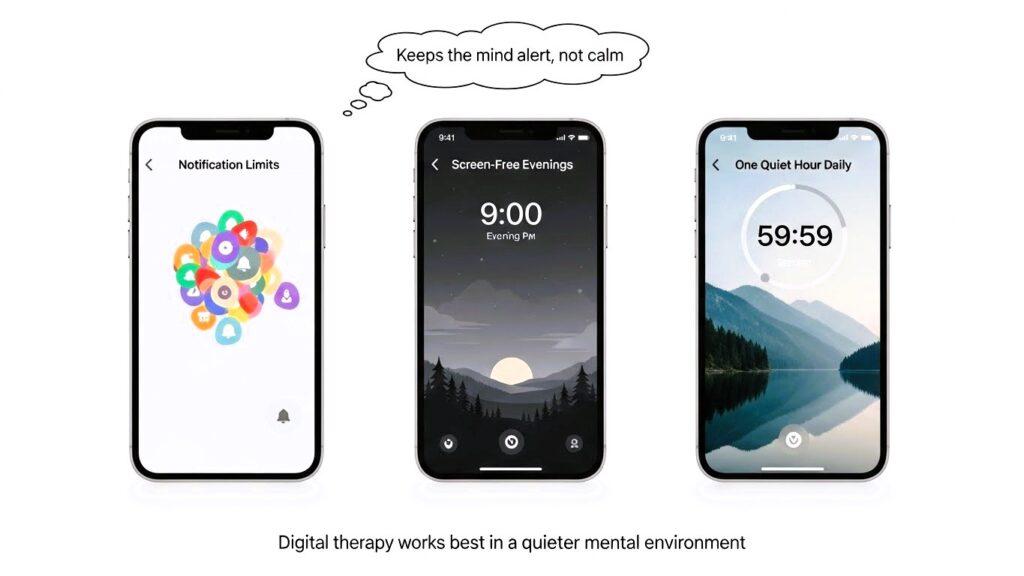
Try:
- Notification limits
- Screen-free evenings
- One quiet hour daily
Digital therapy works best in a quieter mental environment.
Habit 5: Human Connection Still Matters
Apps help you understand feelings.

People help you feel human again.
Connection doesn’t require deep talks:
- With family
- Shared meals
- Familiar voices
Even one safe relationship improves therapy outcomes.
Real-Life Section: What Actually Helps (Simple Examples)
- A student using online counselling improves after fixing their sleep
- A working parent benefits once evening phone use is reduced
- Someone tracking moods feels better when daily walks begin
The pattern is clear:
Digital therapy opens the door.
Holistic habits keep you inside the room.
When Digital Therapy Alone Feels “Not Enough”
It doesn’t mean you failed.
It means your system needs support.
Signs to add holistic habits:
- Therapy insights feel hard to apply
- Progress feels short-lived
- Emotional exhaustion remains
Healing is layered, not linear.
How This Article Fits the Series
Earlier articles explored:
- Anxiety without a cause
- Emotional numbness
- Loneliness
- Burnout
- Digital mental health tools
This piece connects them all by saying:
Healing doesn’t happen on screens or in routines
it happens where they meet.
FAQs
1. Can holistic habits replace therapy?
No. They support it especially in moderate struggles.
2. Do I need all habits at once?
No. One small change is enough to start.
3. What if I’m too tired to do anything?
Rest is a habit. Start there.
4. Is digital therapy effective without lifestyle change?
It helps, but progress may be slower.
5. How long before habits show impact?
Often within weeks, sometimes days.
6. What’s the easiest habit to begin with?
Sleep consistency.
Gentle Closing
You don’t need to heal perfectly.
You need to heal kindly.
Let technology guide you.
Let life support you.
And remember:
Healing isn’t about doing more —
it’s about making space for yourself to feel better.
Disclaimer: The content in this article, Holistic Digital Wellness, is intended for informational and educational purposes only. It provides insights, tips, and general guidance on health, beauty, and wellness, but it is not a substitute for professional medical advice, diagnosis, or treatment.
Always consult a qualified healthcare professional for personal medical concerns. For more information about our approach to health and wellness content, please read our Health & Wellness Disclaimer.