
Healthy Screen Habits for Children: Protecting Kids’ Mental Health
Learn how to create healthy screen habits for children without conflict. A practical parenting guide to protect mental health in the digital age.
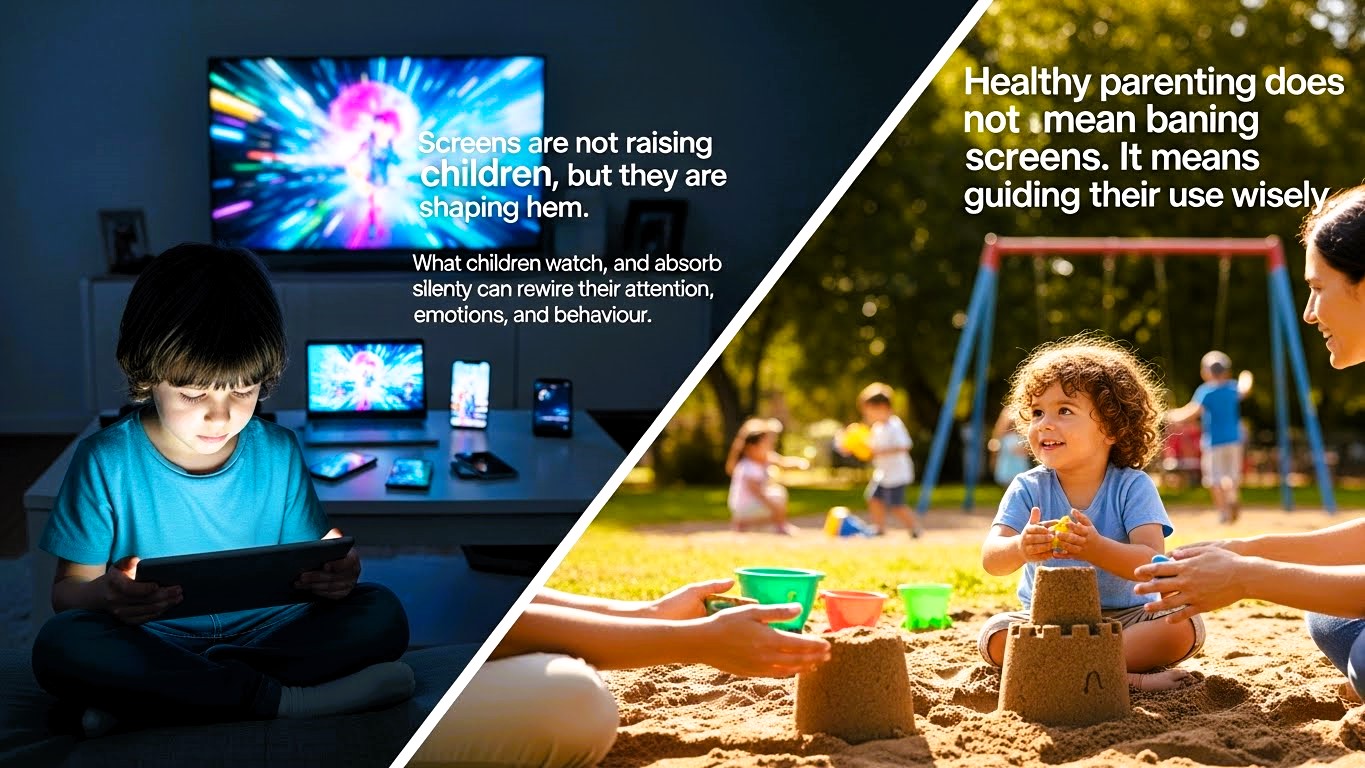
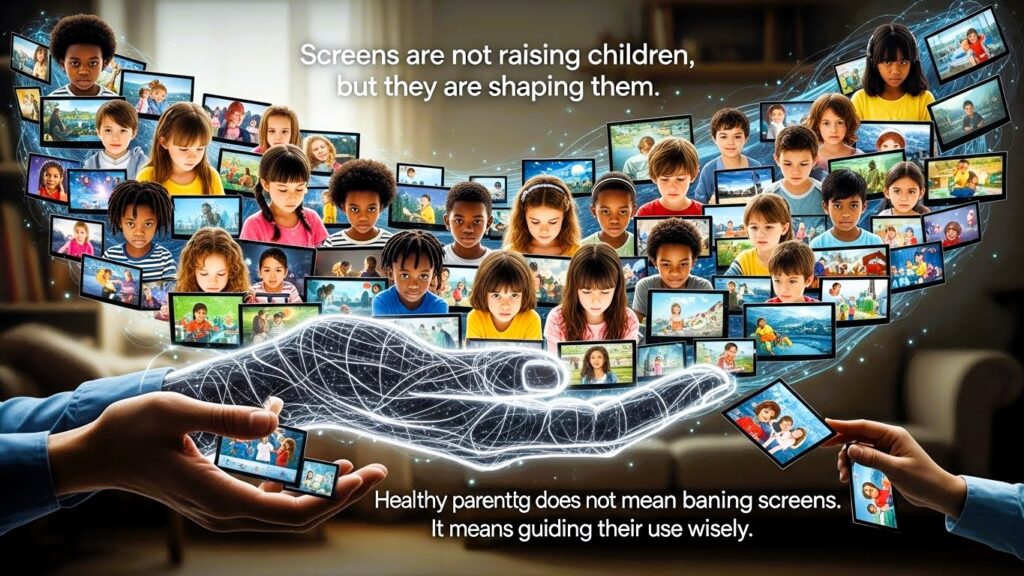
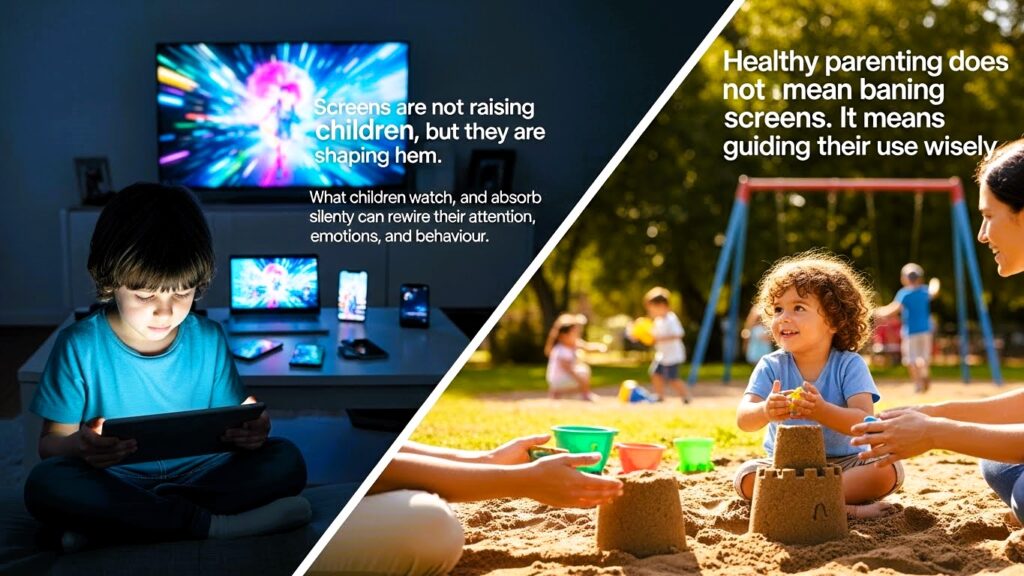
Screens are not raising children, but they are shaping them.
What children watch, swipe, and absorb silently can rewire their attention, emotions, and behaviour.
Healthy parenting does not mean banning screens.
It means guiding their use wisely.
Reality
Many parents feel trapped between:
- “Screens are harmful”
- “Everyone else allows it”
Our elders never faced screens, but they understood balance:
Too much of anything weakens the mind.”
Building Healthy Screen Habits
Below you will find some key tips for balancing tech use. These tips will help you to fit tech use in around your family’s interests and priorities. They’ll also show you how to model healthy tech habits.
Screen time and screen quality
As parents and caregivers we all know that screen time – the amount of time your child spends on screens – is important to consider when we talk about technology use.
But, just as important is the quality of the content your kids are watching and consuming. This can have as much of an impact on your child’s mental health and well-being as the amount of time on screens.
What Are Healthy Screen Habits?
Healthy screen habits mean:
- Age-appropriate content
- Limited daily screen time
- Active parental involvement
- Screens not replacing sleep, play, or connection
Screens should be tools, not babysitters.
How Screens Affect Children’s Minds
Excessive screen time can:
- Reduce attention span
- Increase irritability
- Disrupt sleep
- Increase anxiety
- Delay emotional development
Balanced use can:
- Support learning
- Encourage creativity
- Build digital literacy
The difference lies in how and how much.
Age-Wise Screen Guidelines (General)
- Toddlers: Minimal, supervised use
- Preschoolers: Short, educational content
- School-age children: Clear limits, no late-night screens
- Teenagers: Boundaries, not total bans
Our elders practised this principle:
Access grows with responsibility.
Setting Screen Boundaries Without Conflict
- Set rules in advance
- Explain the “why”
- Be consistent
- Avoid using screens as emotional rewards
- Model healthy screen behaviour yourself
Children often follow what their parents do, rather than what they say.
What Screens Replace (If Unchecked)
Uncontrolled screen use replaces:
- Outdoor play
- Family conversations
- Imagination
- Boredom (which fuels creativity)
Our elders valued boredom:
“An idle mind learns to think.”

- Outdoor play
- Reading together
- Family board games
- Creative hobbies
- Shared household activities
Connection competes better than restriction.
Warning Signs of Screen Overuse
- Anger when screens are removed
- Sleep disturbances
- Loss of interest in offline activities
- Emotional withdrawal
These signs call for adjustment, not punishment.
Screens will be part of your child’s future.
Your guidance will shape how safely they navigate it.
Healthy screen habits do not isolate children
They protect their minds while keeping families connected.
FAQs
1. Should parents completely ban screens?
No. Guidance works better than bans.
2. Is educational content always safe?
Only when time and context are controlled.
3. Do screens affect emotional health?
Yes, especially with excessive or unsupervised use.
4. Should screens be removed as punishment?
Not regularly, consistency matters more.
5. Can parents model healthy screen habits?
Yes, and it is essential.
6. Is screen addiction real in children?
Yes, behavioural dependence can develop.
https://mrpo.pk/healthy-parenting/
Disclaimer: The content in this article is intended for informational and educational purposes only. It provides insights, tips, and general guidance on health, beauty, and wellness, but it is not a substitute for professional medical advice, diagnosis, or treatment.
Always consult a qualified healthcare professional for personal medical concerns. For more information about our approach to health and wellness content, please read our Health & Wellness Disclaimer.