

The Happiness Illusion: Why the Rich World Feels Empty in 2025
Updated: April, 2026
Happiness, in the wealthiest societies on Earth, something deeply unsettling is happening.
People across the United States, Europe, and Canada have more money, more convenience, and more freedom than ever before… yet they feel increasingly lonely, anxious, and disconnected.
Why?
Because happiness was never just about wealth.
What the Latest Research Reveals (2025 Update)
The latest global research confirms a powerful truth: happiness depends far more on trust, relationships, and kindness than income alone.
- Strong social connections = higher life satisfaction
- Generosity and trust directly increase happiness
- Loneliness is rising sharply in wealthy nations
- Economic growth alone does not guarantee well-being
Nordic countries continue to rank highest, while parts of the Western world are stagnating despite economic strength.
The Western Paradox: Rich but Restless
Across the West, a quiet crisis is unfolding:
- United States: Rising loneliness, social isolation, and “deaths of despair”
- Europe: Declining community cohesion and institutional trust
- Canada: High quality of life, but increasing mental health pressures
This is not a crisis of wealth; it is a crisis of connection.
What Actually Makes People Happy
Research consistently highlights six core drivers of happiness:
- Social support
- Trust in society
- Freedom of life choices
- Generosity
- Health
- Economic stability
Only one of these is purely financial.
The Real Crisis: Disconnection
Fewer shared meals. Less face-to-face interaction. More digital substitution.
The result? A growing sense that something is missing, even when everything looks “fine.”
Real Lives, Real Struggles: Who Is Losing Happiness, and Why?
1. Young Adults (18–30): Connected Online, Alone in Reality
Example: Emma, 24, in New York, active online, but eats most meals alone.
Causes:
- Social media comparison
- Delayed life milestones
- Weak real-world connections
- Future anxiety
Remedies:
- Join micro-communities
- Limit passive scrolling
- Engage in shared activities
- Volunteer for a purpose
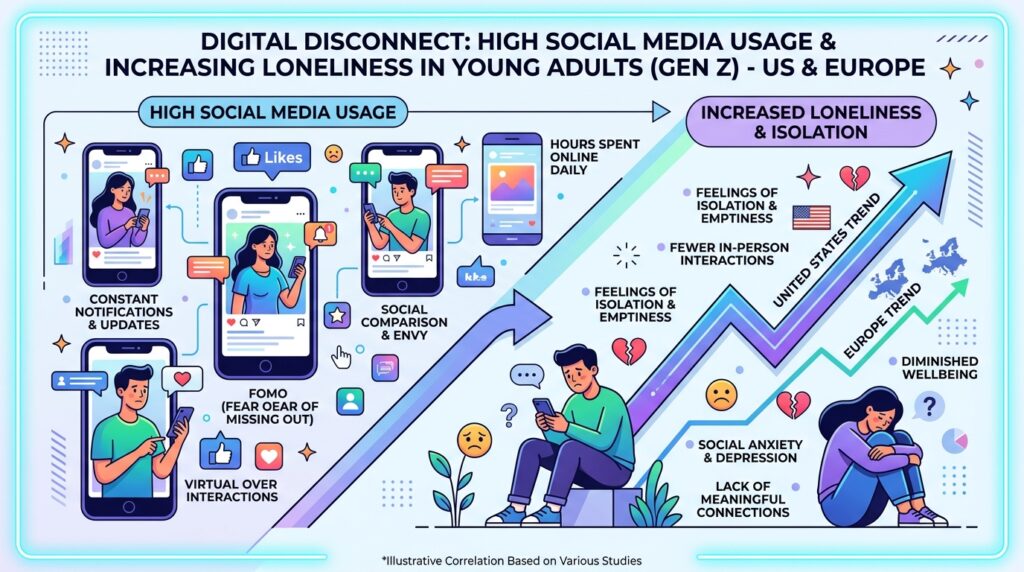
Happiness.Correlation between high social media usage and increased loneliness among young adults in the United States and Europe,
2. Married Couples: Together, Yet Emotionally Distant
Example: A working couple in London sharing responsibilities, but not an emotional connection.
Causes:
- Work stress
- Digital distractions
- Routine replacing intimacy
- Financial pressure
Remedies:
- Scheduled quality time
- Emotional check-ins
- Shared goals
- Therapy normalization
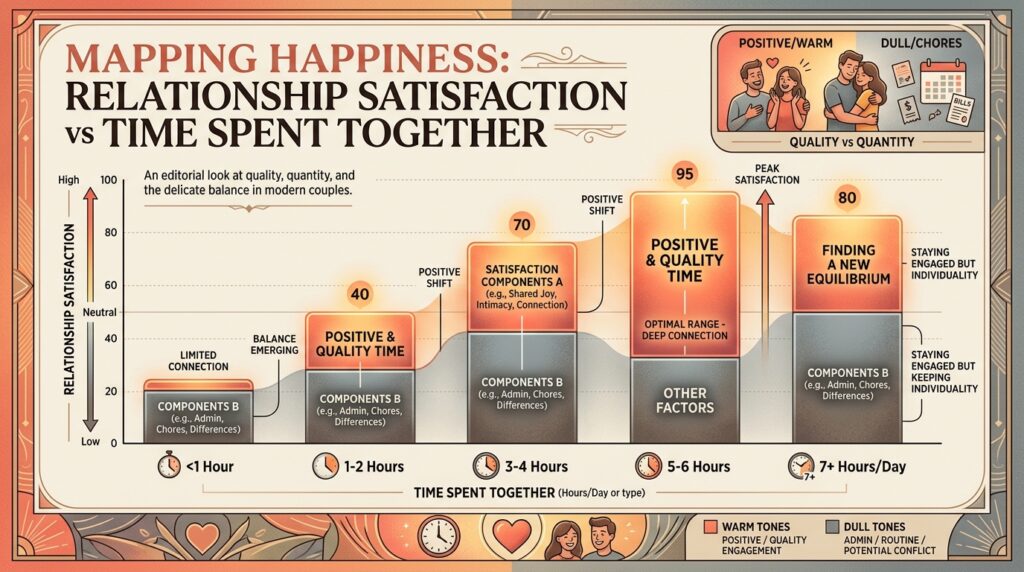
Married Couples: Together, Yet Emotionally Distant
3. Singles & Post-Divorce Adults: Freedom with a Cost
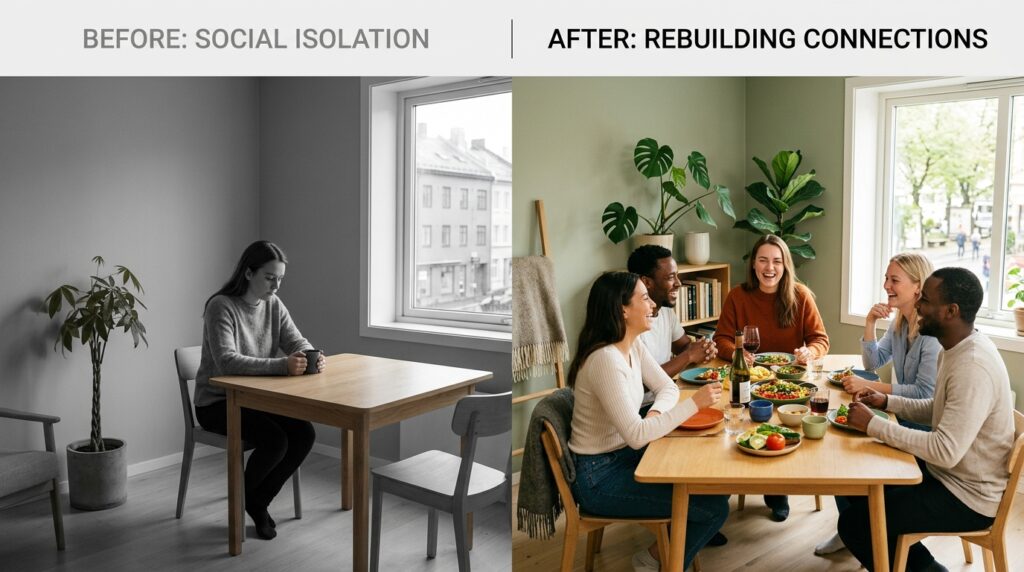
Example: Merry, 30, in Toronto, newly divorced, experiencing quiet isolation.
Causes:
- Loss of structure
- Shrinking social circles
- Fear of dating again
- Identity shift
Remedies:
- Rebuild identity
- Join structured groups
- Seek coaching/therapy
- Re-enter relationships gradually
4. Seniors (65+): The Silent Loneliness Epidemic
Example: Margaret, 72, in Chicago, living alone with minimal interaction.
Causes:
- Loss of a spouse
- Reduced mobility
- Family distance
- Lack of purpose post-retirement
Remedies:
- Community engagement
- Intergenerational interaction
- Digital inclusion
- Purpose roles
Causes vs Solutions
A Realistic Roadmap for the West
- Rebuild social trust
- Encourage real-world interaction
- Promote volunteering
- Redefine success beyond income
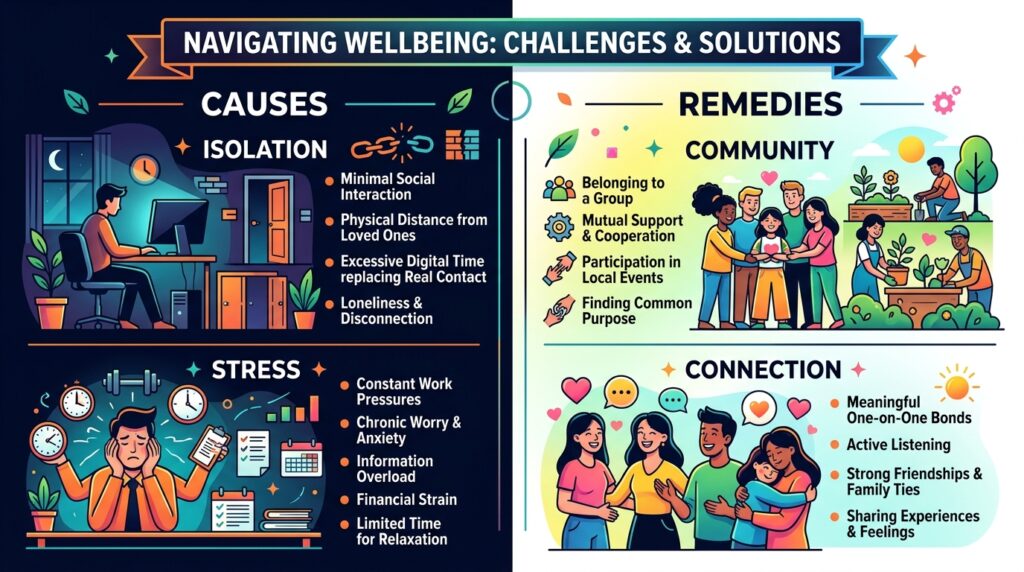
Happiness: Causes vs Solutions
Final Thought
The modern world chased wealth and lost something along the way.
Happiness was never about having more.
It was always about connection, meaning, and belonging.
Until that truth is rediscovered, even the richest societies will continue to feel empty.
Happiness 2025: Cultivating Inner Peace in a World of Materialism
Happiness is an electrifying and elusive state. Philosophers, theologians, psychologists, and even economists have long sought to define it. And since the 1990s, a whole branch of psychology positive psychology has been dedicated to pinning it down. More than simply a positive mood, happiness is a state of well-being that encompasses living a good life, one with a sense of meaning and deep contentment.
Discover the true essence of happiness, a state of being that transcends material possessions and external validation. Embark on a journey of self-discovery and cultivate inner peace amidst the distractions of modern life.

2. Happiness: Unveiling the Illusion of Material Possessions
In a world obsessed with material possessions, social status, and fleeting pleasures, the pursuit of happiness often leads to a misguided chase after external validation. We seek happiness in the form of new gadgets, extravagant vacations, and the admiration of others, believing that these fleeting achievements will bring us lasting fulfilment. However, true happiness lies not in the things we can see, touch, or possess, but rather in the depths of our being. It is a state of inner peace, contentment, and gratitude that arises from within, independent of external circumstances.
2. Illusion of Material Possessions
The notion that happiness can be found in material possessions is a carefully crafted illusion. The media bombards us with images of celebrities and influencers enjoying lavish lifestyles, perpetuating the belief that happiness is synonymous with wealth and possessions. We fall prey to this marketing ploy, constantly seeking the next material acquisition to fill the void of our unmet emotional needs.
However, the pursuit of material happiness is a never-ending cycle of dissatisfaction. As soon as we acquire one desired object or experience, our attention shifts to the next, leaving us feeling empty and unfulfilled. The thrill of a new purchase fades quickly, replaced by a nagging sense of emptiness.
3. The Enduring Power of Patience and Gratitude: Keys to Cultivating Inner Peace

In our quest for happiness, we often overlook two fundamental qualities that hold immense power in shaping our well-being – patience and gratitude. These virtues, often intertwined, form the bedrock of inner peace, allowing us to navigate life’s challenges and appreciate the blessings that surround us.
4. Patience: The Anchor of Inner Peace
In a world that demands instant gratification and immediate success, patience often seems like an outdated virtue. However, it is in the depths of patience that we find the resilience to weather life’s storms and emerge stronger.
Patience is not about passive resignation; it is an active choice to embrace the present moment, to accept the unfolding of events without resistance. It allows us to approach setbacks with composure, view challenges as opportunities for growth, and find solace in the knowledge that every situation has its unique rhythm.
5. The Role of Gratitude: Cultivating a Heart of Contentment
Gratitude, the art of acknowledging and appreciating the good in our lives, is a powerful antidote to discontent and dissatisfaction. It shifts our focus from what we lack to what we already possess, reminding us of the abundance that surrounds us.
When we cultivate gratitude, we become more aware of the simple joys in life – a warm cup of coffee, the laughter of loved ones, and the beauty of nature. These small blessings, once overlooked, become sources of immense joy and contentment.
6. The Synergy of Patience and Gratitude
Patience and gratitude work in tandem to foster inner peace. Patience provides the framework for acceptance and perseverance, while gratitude nurtures a sense of contentment and appreciation. Together, they enable us to navigate life’s challenges with resilience and find joy in the present moment.
7. Embrace Patience and Gratitude in Daily Life
Integrating patience and gratitude into our daily lives can be as simple as acknowledging the beauty of the sunrise, expressing appreciation for a helpful gesture, or practising mindfulness during moments of frustration.
As we cultivate these virtues, we begin to see life through a different lens, one that is marked by acceptance, appreciation, and inner peace. We discover that true happiness lies not in external achievements or material possessions, but in the depths of our being, nurtured by the enduring power of patience and gratitude.
8. The Path to Inner Peace and True Happiness
The key to unlocking true happiness lies not in acquiring more, but in cultivating inner peace and contentment. This requires a shift in our perspective, moving away from the materialistic mindset that society has instilled in us. It involves recognising that true happiness comes from within, not from external sources.
To cultivate inner peace, we must first acknowledge the presence of our soul, the spiritual essence that resides within each of us. This soul yearns for connection to a higher power, a source of love and guidance that transcends the confines of the material world.
9. Nurturing the Soul with Spiritual Nourishment

Just as our bodies require physical nourishment to thrive, our souls need spiritual nourishment to flourish. This nourishment comes from connecting with our inner selves, engaging in activities that bring us joy and meaning, and cultivating a sense of gratitude for the blessings in our lives.
10. The Importance of Selflessness
Selflessness is an essential ingredient in the recipe for true happiness. When we focus on the needs of others, we automatically shift our attention away from our ego and desires. This act of giving to others fosters a sense of connection and purpose, contributing to our overall well-being.

11. Blaming Others: A Hindrance to Happiness
Taking responsibility for our thoughts, actions, and emotions is crucial for cultivating inner peace. Blaming others for our misfortunes only serves to disempower us and prevent us from taking control of our own lives. Instead, we should focus on identifying our shortcomings and working towards self-improvement.
FAQs
Why are rich countries less happy?
Because social connection matters more than income beyond a certain point.
What is the biggest cause of loneliness?
Reduced real-world interaction and overreliance on digital communication.
Which country ranks happiest?
Finland consistently ranks at the top.
How can individuals improve happiness?
By building strong relationships and engaging in meaningful activities.
Are young people more affected?
Yes, especially due to social media and uncertainty about the future.
What helps seniors most?
Regular social interaction and a sense of purpose.
Conclusion
Happiness is not a destination, but rather a journey of self-discovery and inner growth. It requires a conscious effort to cultivate peace, contentment, and gratitude within ourselves. By shifting our focus away from material pursuits and embracing the spiritual aspects of our being, we can unlock the true essence of happiness, a state of being that transcends the limitations of the material world.