
Emotional Resilience at Work: How to Stay Steady in a World That Never Slows Down
The Exhaustion Nobody Sees
Why stress management isn’t about becoming stronger but becoming wiser
You wake up tired.
You go to work tired.
You come home tired.
But you’re still functioning.
So no one asks if you’re okay
And you don’t think you’re allowed to ask either.
Here’s the quiet truth:
Most people don’t burn out because they’re weak.
They burn out because they never learned how to recover.
That’s where emotional resilience begins.
What Is Emotional Resilience?
Emotional resilience is your ability to recover quickly from stress, conflict, or setbacks. It doesn’t mean ignoring emotions about recognising them, regulating them, and moving forward constructively.
In the workplace, resilience shows up when you:
- Stay composed during difficult conversations.
- Adapt quickly to unexpected changes.
- Maintain focus under heavy workloads.
- Support your team even when under stress.
Resilience doesn’t remove challenges, but it equips you to handle them more effectively.
https://nationaltraining.edu.au/emotional-intelligence-101-mastering-self-awareness/
What Emotional Resilience Really Means (Not the Instagram Version)
Emotional resilience is often misunderstood.

It does not mean:
- staying positive all the time
- ignoring stress
- pushing through no matter what
Real emotional resilience means:
- bending without breaking
- responding instead of reacting
- knowing when to pause before you collapse
It’s not toughness.
It’s flexibility.
Why Work Stress Hits So Deep
Work doesn’t just take time.
It takes mental presence.
Deadlines, expectations, financial pressure, office politics, job insecurity —
They keep the nervous system on constant alert.
And when stress becomes constant, your body stops asking:
“Is this dangerous?”
It assumes:
“Everything is.”
That’s why:
- Small tasks feel heavy
- Patience disappears
- Sleep doesn’t refresh you
- Weekends don’t feel enough
This isn’t laziness.
It’s chronic stress.
Stress Management Isn’t About Removing Stress
Here’s the mistake most people make:

They wait for life to slow down before they rest.
But life rarely does.
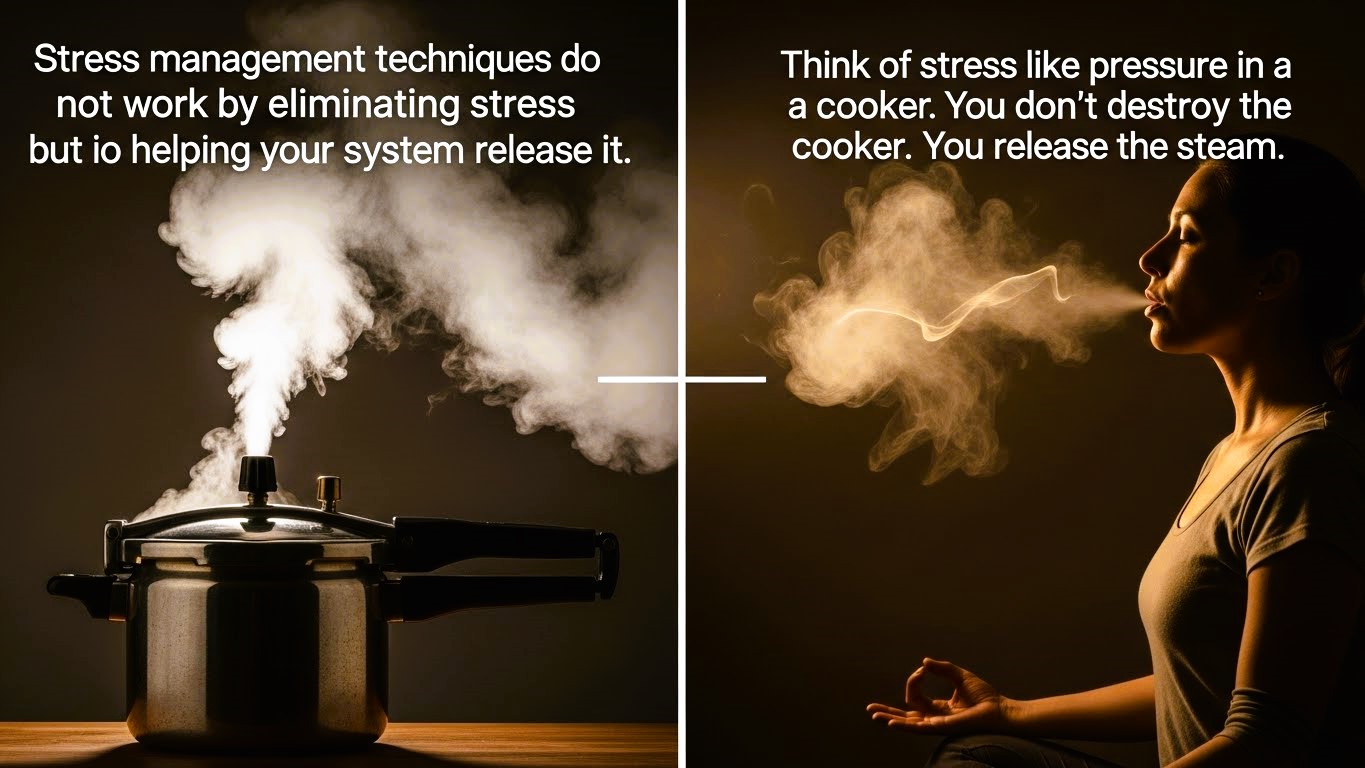
Stress management techniques do not work by eliminating stress
But by helping your system release it.
Think of stress like pressure in a cooker.
You don’t destroy the cooker.
You release the steam.
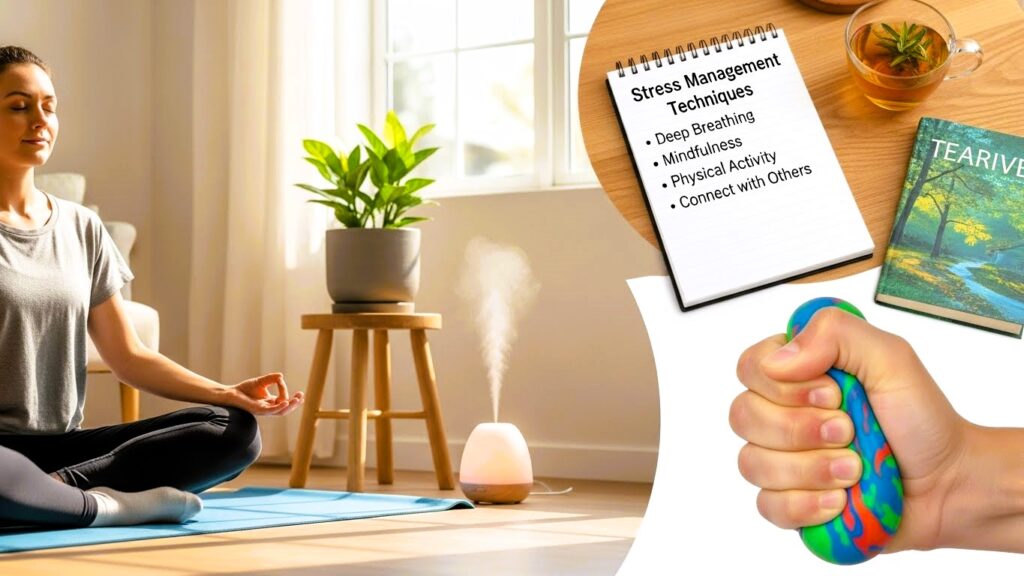
Simple Stress Management Techniques That Actually Work
No complicated routines.
No expensive tools.
-
Micro-pauses during the day
60 seconds of deep breathing resets the nervous system more than scrolling does.
-
Mental boundaries, not just time boundaries
You may leave work physically, but does your mind leave too?
-
Body-based release
Simple Stress Management Techniques That Actually Work
A short walk, stretching, or even standing in sunlight tells your body:
“We’re safe now.”
-
Saying “good enough” more often
Perfection is one of the biggest hidden stressors at work.
These aren’t habits of laziness.
They’re habits of sustainability.
Emotional Resilience in Real Life (Not Theory)
- A teacher still feels pressure, but no longer takes it home emotionally
- An office worker still works hard but rests without guilt
- A freelancer still worries, but doesn’t spiral
Resilience doesn’t remove stress.
It shortens its grip.
Why Mental Health Days Aren’t a Luxury
In many cultures, especially ours, rest is misunderstood.
If you’re sick physically, rest is allowed.
If you’re sick mentally, rest feels like weakness.
But here’s reality:
Mental health days prevent breakdowns —
they don’t cause laziness.
They are not:
- Excuses
- Indulgence
- Lack of commitment
They are maintenance.
Just like machines need servicing,
Humans need pauses.
Workplace Wellness Isn’t Just an HR Term
Workplace wellness isn’t yoga posters or motivational quotes.
Real workplace wellness looks like:
- Realistic expectations
- Permission to disconnect
- Psychological safety
- Respect for personal limits
Even if your workplace doesn’t offer this,
You can practice personal workplace wellness by:
- Protecting rest
- Separating identity from performance
- Asking for help before a crisis
How This Connects With Healing That Feels Slow
If healing feels slow, it’s often because:
You’re still surviving daily stress without release.
Resilience doesn’t rush healing.
It supports it.
And slowly, quietly:
- Reactions soften
- Exhaustion eases
- Balance returns
Not dramatically.
But sustainably.
Frequently Asked Questions
1. Can emotional resilience be learned?
Yes. It’s a skill, not a personality trait.
2. Is stress always bad?
No. Unreleased stress is.
3. How do I manage stress without changing my job?
By changing how stress exits your system.
4. Are mental health days necessary?
Yes — especially before burnout begins.
5. Does resilience mean ignoring emotions?
No. It means listening without drowning.
6. What’s the first step to workplace balance?
Rest without guilt.
A Quiet, Honest Ending
You don’t need to become tougher.
You need to become kinder to your nervous system.
Emotional resilience isn’t about surviving harder.
It’s about recovering better.
And when stress is managed gently,
healing doesn’t feel so far away.
It feels possible.
https://mrpo.pk/daily-habits-that-quiet-the-mind/
Disclaimer: The content in this article Emotional Resilience at Work, is intended for informational and educational purposes only. It provides insights, tips, and general guidance on health, beauty, and wellness, but it is not a substitute for professional medical advice, diagnosis, or treatment.
Always consult a qualified healthcare professional for personal medical concerns. For more information about our approach to health and wellness content, please read our Health & Wellness Disclaimer.