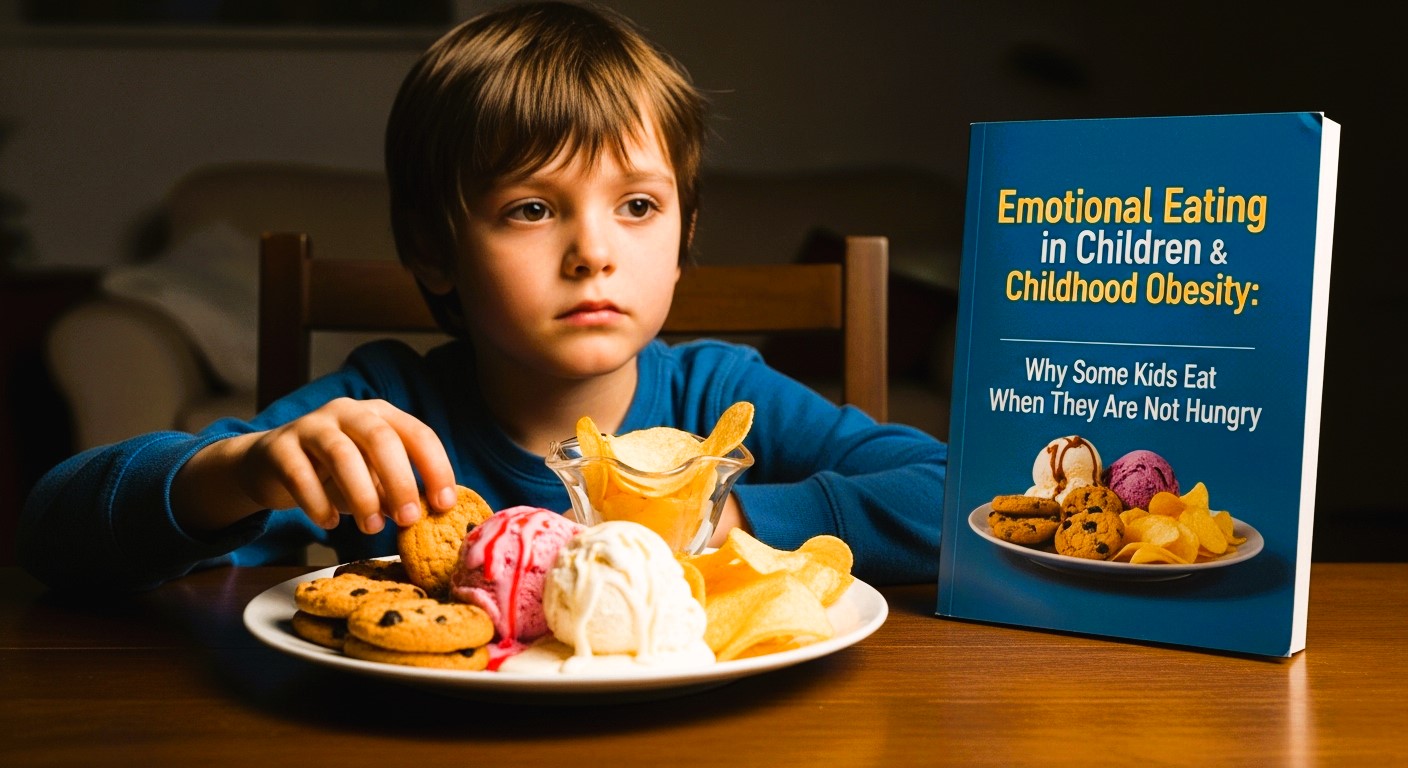

Emotional Eating in Children & Childhood Obesity: Why Some Kids Eat When They Are Not Hungry
Emotional eating in children can lead to obesity and mental health issues. Learn why kids eat emotionally, warning signs parents miss, and healthy ways to respond.
https://mrpo.pk/childhood-obesity/
Childhood obesity rates are high in both developed and developing countries [1]. It is likely that the most important contributors are the increased availability of energy-dense foods and a reduced need for physical activity—the current obesogenic environment. Many individual characteristics could be relevant for explaining the differential susceptibility to the development of obesity among individuals in the same environment. One example is emotional eating (EE), which refers to a tendency to eat more in response to negative emotions [2,3].
Sometimes a child is not hungry for food; they are hungry for comfort.
When snacks become a response to stress, boredom, sadness, or loneliness, eating slowly turns into an emotional habit. Many parents mistake this for “good appetite” until weight gain and emotional changes appear.
Emotional eating is quiet, misunderstood, and deeply connected to childhood obesity.
A child comes home from school upset.
A parent offers food to calm them.
The child feels better — temporarily.
This pattern repeats daily in many homes, unknowingly teaching children to associate food with emotional relief instead of hunger.
Shift in Childhood Health: Emotional Eating in Children
Is Childhood Obesity Increasing Worldwide?
Yes. Childhood obesity is increasing in both Asia and Europe, though the reasons and patterns differ.
- Europe faces long-standing obesity trends
- Asia is seeing a faster rise, especially in urban areas
Economic growth, urbanisation, and lifestyle changes play a major role.
Understanding the Asian Pattern
Childhood Obesity in Asia
In many Asian countries, obesity was once rare. Today, it is rising rapidly due to:
- Increased fast food consumption
- Sugary drinks replacing traditional beverages
- Reduced outdoor play
- Academic pressure is limiting physical activity
In some cultures, a “chubby child” is still seen as healthy, delaying early intervention.
The European Experience
Childhood Obesity in Europe
Europe has dealt with childhood obesity for a long time. Major contributing factors include:
- High consumption of processed foods
- Sedentary lifestyles
- High screen usage
- Socioeconomic inequalities
Some European countries have better awareness, but the problem persists.
What Children in Both Regions Have in Common
Shared Risk Factors Across Asia and Europe
Despite cultural differences, children in both regions face:
- Excessive screen time
- Poor sleep routines
- High-calorie food availability
- Limited physical activity
Modern childhood looks surprisingly similar worldwide.
Does Environment Play a Role?
Environmental and Urban Impact
Urban environments:
- Limit safe outdoor play
- Encourage reliance on vehicles
- Promote convenience foods
Air pollution and unsafe neighbourhoods further reduce physical activity.
Are Governments Responding?
How Developed Countries Are Addressing the Issue
Some European countries have:
- Restricted junk food advertising
- Improved school meal standards
- Promoted physical education
Asian countries are beginning similar initiatives, but implementation varies.
Emotional Eating in Children: What Parents Everywhere Can Learn
Lessons for Parents Across Regions
- Obesity is not a “Western” problem
- Early lifestyle habits matter
- Cultural beliefs should not delay action
- Prevention is easier than treatment
Parents play the most critical role, regardless of geography.
Childhood obesity does not respect borders, income levels, or cultures.
A child’s health today depends less on where they live and more on how modern life shapes their habits. Recognising this global pattern is the first step toward protecting the next generation.
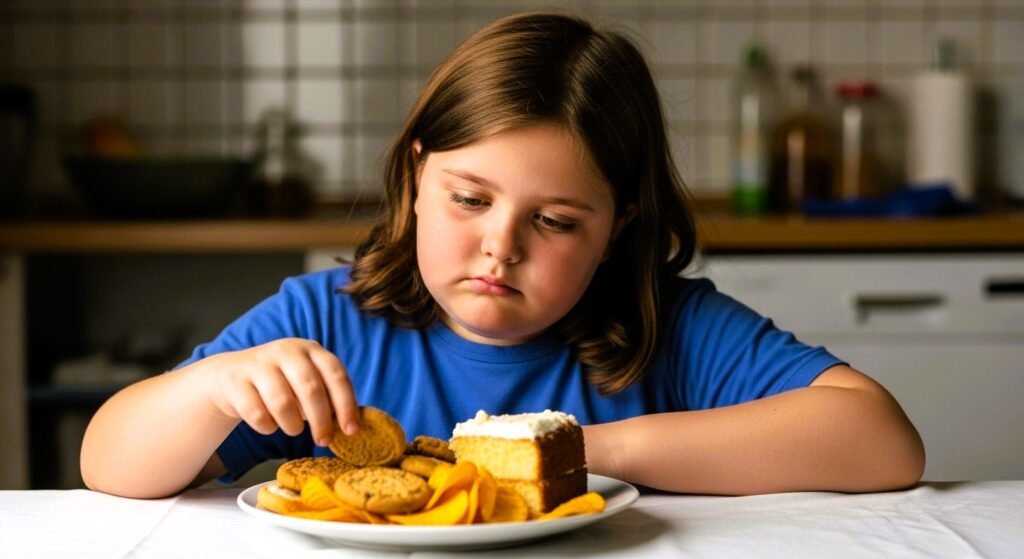
What Is Emotional Eating in Children?
Emotional eating happens when a child eats in response to emotions rather than physical hunger. Food becomes a coping tool instead of nourishment.
Unlike normal hunger, emotional hunger:
- Appears suddenly
- Craves specific foods (usually sugary or salty)
- Continues even after fullness
Why Emotional Eating in Children Is Increasing
Why Are More Children Eating Emotionally?
Modern childhood brings emotional pressures that previous generations did not face, including:
- Academic stress
- Parental expectations
- Social comparison
- Screen overload
- Reduced family interaction
Children often lack the emotional vocabulary to express feelings, so they turn to food.
The Hidden Triggers Parents Miss
Common Causes of Emotional Eating
- Stress and Anxiety
School pressure, exams, or fear of failure can trigger overeating.
- Boredom and Loneliness
Children with limited play or social interaction may eat to fill emotional gaps.
- Family Environment
Using food as a reward, comfort, or distraction teaches emotional dependency.
- Screen Time and Mindless Eating
Screens disconnect children from hunger signals, leading to overeating.
How to Spot Emotional Eating Early
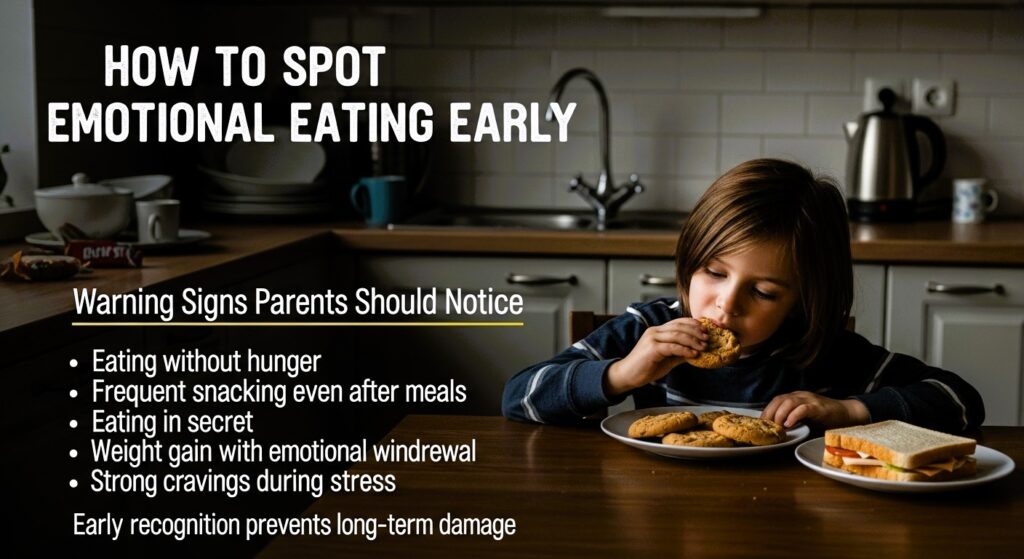
Warning Signs Parents Should Notice
- Eating without hunger
- Frequent snacking even after meals
- Eating in secret
- Weight gain with emotional withdrawal
- Strong cravings during stress
Early recognition prevents long-term damage.
The Link With Childhood Obesity
How Emotional Eating Leads to Obesity
Emotional eating often involves:
- High-calorie foods
- Large portions
- Frequent snacking
Over time, this disrupts metabolism and contributes significantly to childhood obesity.
This is why emotional eating deserves attention separate from general diet advice.
What Parents Can Do Instead of Offering Food
Healthy Ways Parents Can Respond

Talk Before You Feed
Ask how the child feels before offering snacks.
Teach Emotional Awareness
Help children name emotions like sadness, anger, or fear.
Predictable meals reduce emotional grazing.
Offer Non-Food Comfort
- Hugs
- Conversation
- Play
- Quiet time
Create Structured Meal Times
When Professional Help Is Needed
Should Parents Seek Counselling?
Professional support may be helpful if:
- Emotional eating is frequent
- Weight gain is rapid
- The child shows anxiety or depression
- Family stress is high
Mental health support can prevent obesity and emotional disorders.
Emotional eating is not a lack of discipline; it is a signal.
A signal that a child is struggling to manage feelings in a fast, demanding world. When parents replace food with understanding, children learn healthier ways to cope.
And when emotions are handled with care, both mental and physical health improve together.
FAQs
1. Is emotional eating normal in children?
Occasional emotional eating is normal, but frequent patterns need attention.
2. Does emotional eating always lead to obesity?
Not always, but it significantly increases the risk over time.
3. Should parents stop snacks completely?
No. Balanced snacks are fine when linked to hunger, not emotions.
4. Can emotional eating affect mental health?

Yes. It can worsen anxiety, guilt, and low self-esteem.
5. How early can emotional eating start?
It can begin as early as preschool years.
6. Can emotional eating be reversed?
Yes, with emotional support, routine, and awareness.
7. Is childhood obesity rising faster in Asia than in Europe?
Yes. Asia is seeing a quicker rise, especially in urban areas.
8. Are European children healthier than Asian children?
Not necessarily. Both face obesity risks, though patterns differ.
9. Does urban living increase obesity risk?
Yes. Limited play spaces and sedentary routines increase risk.
10. Are governments doing enough?
Some are taking steps, but parental awareness remains key.
11. Can traditional diets help prevent obesity?
Yes, when maintained and balanced.
12. Is childhood obesity preventable worldwide?
Yes, with early awareness and lifestyle changes.
Disclaimer: The content in this article is intended for informational and educational purposes only. It provides insights, tips, and general guidance on health, beauty, and wellness, but it is not a substitute for professional medical advice, diagnosis, or treatment.
Always consult a qualified healthcare professional for personal medical concerns. For more information about our approach to health and wellness content, please read our Health & Wellness Disclaimer.