Childhood Obesity: Causes, Risks, and Practical Solutions for Parents
Childhood obesity is rising worldwide. Learn its causes, physical and mental health risks, and practical steps parents can take to protect their child’s health and future.
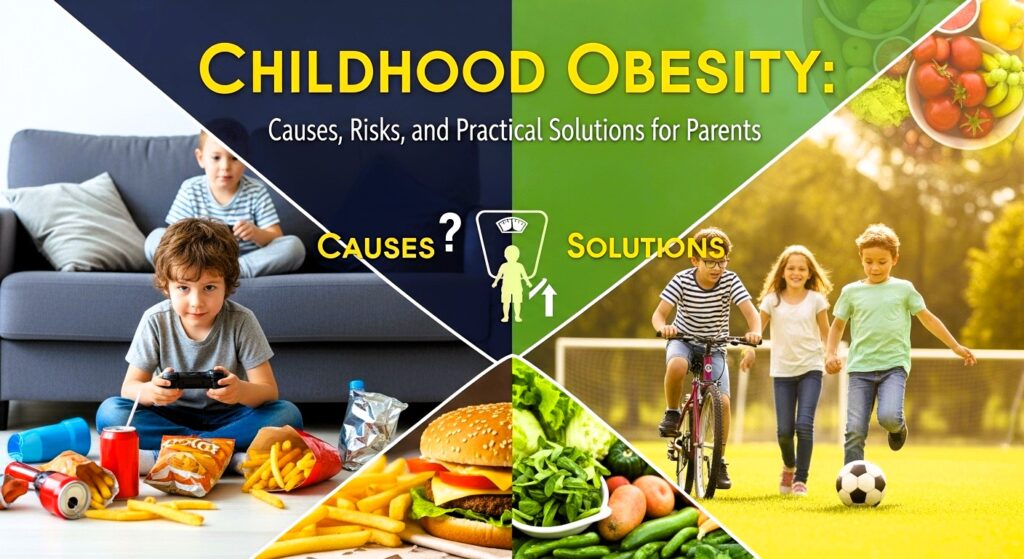
Your child may be eating well, going to school daily, and sleeping at home, yet still moving silently toward obesity.
Childhood obesity does not announce itself loudly. It grows quietly, hidden behind busy routines, screen time, emotional stress, and food habits that modern life has normalised.
This article is not about fear or blame. It is about awareness and about stopping a problem before it shapes a child’s entire life.
The medical definition of childhood obesity is having a body mass index (BMI) at or above the 95th percentile for age and sex in children aged 2 years and older.
Children’s BMI factors differ from adults. For children, BMI is age- and sex-specific because their body compositions naturally change as they age. Healthcare providers use special growth charts to assess a healthy BMI for children.
How common is childhood obesity?
Obesity is one of the most common childhood chronic conditions.
According to studies, the U.S. Centres for Disease Control and Prevention (CDC) conducted from 2017 to 2020, obesity affected about 19.7% of children and adolescents aged 2 to 19 years in the United States. That’s about 14.7 million children and adolescents.
Childhood obesity affects the following age groups:
- 12.7% of children aged 2 to 5.
- 20.7% of children aged 6 to 11.
- 22.2% of adolescents aged 12 to 19.
Childhood obesity is more common among certain populations. It affects:
- 26.2% of Hispanic children.
- 24.8% of non-Hispanic Black children.
- 16.6% of non-Hispanic white children.
- 9.0% of non-Hispanic Asian children.
Social Reality
Across homes and classrooms, parents are noticing the same signs: children move less, snack more, and spend hours glued to screens. Many families only realise something is wrong when a doctor mentions weight concerns or a child becomes emotionally withdrawn.
By then, obesity is no longer just about the body; it is affecting confidence, hormones, and mental health.
Introduction
Childhood obesity is one of the fastest-growing health problems worldwide. Children today are gaining excess weight at much younger ages than previous generations. What was once considered an adult condition now affects children as young as five.
Obesity in childhood increases the risk of lifelong health complications. Early understanding and timely action can prevent serious physical and emotional consequences.
Understanding the Problem
What Is Childhood Obesity?
Childhood obesity occurs when a child has excess body fat that negatively impacts health. Doctors assess this using Body Mass Index (BMI) adjusted for age and gender.
It is important to understand:
Obesity is not about appearance.
It is a medical condition that affects organs, metabolism, and emotional well-being.
Why This Is Becoming Common Everywhere
Why Is Childhood Obesity Increasing?
Modern childhood looks very different from the past. Outdoor play has been replaced by indoor entertainment, and traditional meals have been replaced by processed food.
Key reasons include:
- Increased availability of fast and packaged foods
- High consumption of sugary drinks
- Reduced physical activity
- Excessive screen exposure
- Irregular sleep routines
This trend is visible in Asia, Europe, and developed nations alike.
The Causes Parents Often Overlook
Main Causes of Childhood Obesity
1. Unhealthy Eating Habits
Many children regularly consume high-calorie foods that lack essential nutrients. Portion sizes have also increased, leading to excessive calorie intake.
2. Lack of Physical Activity
Children who spend most of their time sitting in school, at home, or on screens burn fewer calories and lose muscle strength.
3. Excessive Screen Time
Screen time encourages inactivity, disrupts sleep, and often leads to mindless eating, increasing obesity risk.
4. Genetics and Family Lifestyle
While genetics can increase susceptibility, family habits largely determine whether obesity develops.
5. Emotional Eating
Stress, boredom, loneliness, and anxiety can push children toward food as emotional comfort.
The Real Price of Ignoring the Issue
Health Risks of Childhood Obesity
Physical Health Risks
- Type 2 diabetes
- High blood pressure
- Heart disease risk
- Joint and bone problems
- Early puberty and hormonal imbalance
Psychological and Emotional Risks
- Low self-esteem
- Depression and anxiety
- Bullying and social isolation
- Poor academic performance
These emotional effects can persist into adulthood.
What Happens If Nothing Changes?
How Childhood Obesity Affects the Future
An overweight child is more likely to:
- Remain obese as an adult
- Develop chronic illnesses earlier in life
- Struggle with mental health
- Experience reduced quality of life
Prevention during childhood is far more effective than treatment later.
What Parents Can Start Doing Today
What Parents Can Do: Practical Solutions
Focus on Health, Not Weight
Avoid criticism or comparison. Emphasise energy, strength, and overall well-being.
Improve Family Eating Habits
- Serve home-cooked meals
- Increase fruits and vegetables
- Limit sugary beverages
- Practice portion control
Children learn by example.
Encourage Daily Physical Activity
At least 60 minutes of movement daily through play, sports, or simple activities.
Limit Screen Time
- Set consistent screen rules
- Avoid screens during meals
- Promote offline hobbies
Balance works better than strict bans.
Address Emotional Well-Being
- Communicate openly
- Listen without judgment
- Seek professional help if emotional eating persists
A Responsibility Beyond Parents
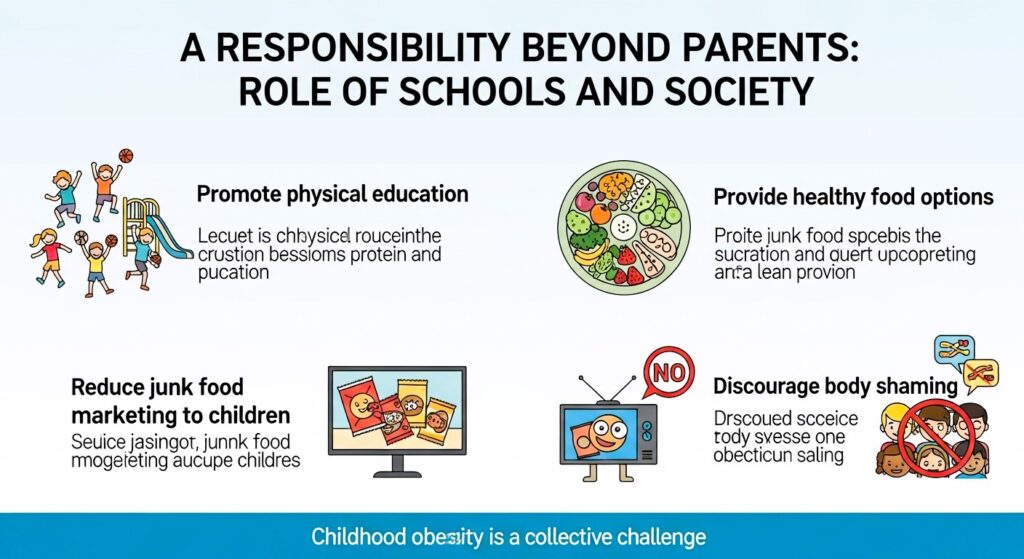
Role of Schools and Society
Schools, media, and communities must:
- Promote physical education
- Provide healthy food options
- Reduce junk food marketing to children
- Discourage body shaming
Childhood obesity is a collective challenge.
Knowing When to Seek Help
When Should Parents Consult a Doctor?
Medical guidance is important when:
- Weight gain is rapid
- Breathing or mobility issues appear
- Early puberty signs emerge
- Emotional distress becomes noticeable
Early intervention leads to better outcomes.
Childhood obesity is not a failure it is a warning sign.
A warning that a child needs better habits, emotional support, and a healthier environment. When parents choose understanding over blame and consistency over control, children don’t just lose weight.
They gain confidence, health, and a stronger future.
FAQs
1. Is childhood obesity reversible?
Yes, with healthy habits and family support, many children return to a healthy weight.
2. Should children follow strict diets?
No. Balanced nutrition is safer and more effective than restriction.
3. Can emotional stress cause weight gain in children?
Yes. Stress can lead to overeating and hormonal changes.
4. Is obesity only caused by junk food?
No. Lack of activity, sleep problems, and emotional factors also contribute.
5. At what age does obesity become dangerous?
Health risks can begin at any age if obesity is untreated.
6. How should parents talk about weight?
Focus on health and habits, never appearance or blame.
Disclaimer: The content in this article is intended for informational and educational purposes only. It provides insights, tips, and general guidance on health, beauty, and wellness, but it is not a substitute for professional medical advice, diagnosis, or treatment.
Always consult a qualified healthcare professional for personal medical concerns. For more information about our approach to health and wellness content, please read our Health & Wellness Disclaimer.
https://mrpo.pk/self-care-isnt-selfish-ways-to-calm-the-mind-in-a-loud-world/