Butterfly Pea “Magical” Blue Flower: How Butterfly Pea Farming is Turning Gardens into Gold!
Have you ever seen a drink that looks like a liquid sapphire? Or a tea that magically turns from bright blue to royal purple with just a squeeze of lemon? No, it’s not a movie special effect; it’s the Butterfly Pea flower.
Known scientifically as Clitoria ternatea (and locally as Aparajita), this stunning vine is the newest “blue gold” in the world of agriculture. While it may resemble a delicate garden ornament, it is actually a powerhouse of profit and health that is transforming the lives of small-scale farmers across South Asia.
‘Magical’ Blue Flower Changing Farmers’ Fortunes in India
“The global demand for natural colourants is exploding,” explained Varshika Reddy, the founder of THS Impex, which exports natural dyes and additives.
Behind that demand is consumer appetite for natural ingredients and tighter controls in the US and Europe on synthetic food dyes.
In 2021, the US Food and Drug Administration (FDA) approved butterfly pea flower as a food additive.
However, in 2022, the European Food Safety Authority (EFSA) raised safety concerns about using the flower.
Both the EU and the UK classify butterfly pea flower as a “novel” food, meaning it still needs approval for widespread use.
Nevertheless, Indian entrepreneurs still see potential and want to develop India’s market.
“The crop is still seen as a backyard ornamental or medicinal plant rather than a commercial commodity,” said Reddy. “There is no structured market awareness, no government classification, and no standard pricing mechanism, making farmers uncertain about returns.”
https://english.aawsat.com/varieties/5227190-magical-blue-flower-changing-farmers-fortunes-india
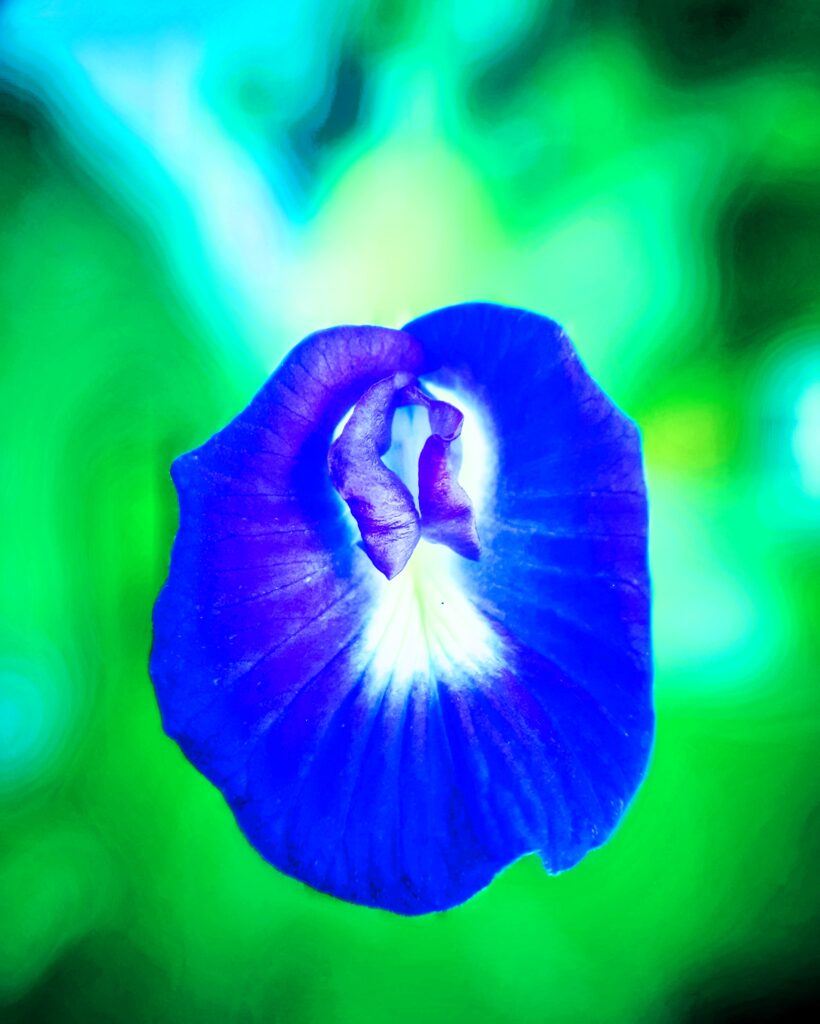
What is the Butterfly Pea?
The Butterfly Pea is a hardy, fast-growing climbing vine. It is famous for its vivid blue petals, which contain high levels of anthocyanins, the same healthy antioxidants found in blueberries.
Why Everyone is Obsessed:
-
The Colour Change: It is pH-sensitive. Add something acidic (like lemon), and it turns purple!
-
Natural Dye: With the world moving away from chemical food colours, big industries are paying top dollar for this natural blue pigment.
-
Nitrogen Fixer: It actually makes your soil healthier by pulling nitrogen from the air and putting it into the ground.
How to Grow Your Own “Blue Gold”
Growing this plant is surprisingly easy—it’s basically a fancy bean vine! Here is how to get started:
1. The Setup (Techniques)
-
Sunlight: These flowers are sun-worshippers! They need at least 6 to 8 hours of direct sunlight daily.
-
Soil: They aren’t picky, but they hate “wet feet.” Use well-draining soil so the roots don’t rot.
-
The Trellis: Since it’s a climber, give it a fence, a string, or a bamboo stick to climb. It loves to reach for the sky!
2. The Care (Love & Water)
-
Watering: Keep the soil moist but not soggy. Once the plant is older, it can survive a little bit of dry weather, but thirsty plants don’t make many flowers.
-
Food: A little compost or organic fertiliser every few weeks will make your blooms go from “okay” to “WOW.”
3. The Harvest (Picking the Profits)
-
Daily Routine: You can start picking flowers about 3 months after planting. The more you pick, the more the plant grows!
-
Gentle Touch: Pluck the flowers in the morning when they are fresh and vibrant.
Growing this plant is surprisingly easy; it’s essentially a high-value bean vine!
1. Planting & Setup
-
Sunlight: These flowers are sun-worshippers. They need 6 to 8 hours of direct sun.
-
Soil: They need well-draining soil. They don’t like “wet feet” (waterlogging).
-
Support: Since it’s a climber, provide a fence, string, or bamboo trellis.
2. Daily Care
-
Watering: Keep the soil moist but not soggy.
-
Pruning: The more you harvest the flowers, the more the plant produces. Regular picking keeps the vine active!
3. Harvesting like a Pro
Harvest your flowers between 8:00 AM and 10:00 AM. This is when the moisture level and colour concentration are at their peak.
The Business Blueprint: How to Earn $50+ Per Harvest
To get the maximum value from your harvest, don’t just sell fresh flowers. Drying them is the secret.
-
Shade Drying: Never dry flowers in direct sunlight, or they will fade to grey. Dry them in a breezy, shaded area until they are “potato chip” crispy.
-
Storage: Store in dark, air-tight glass jars.
-
Market Value: While fresh flowers perish quickly, Grade A Dried Flowers can sell for a premium in the international organic tea and cosmetic markets.
| Product Form | Profit Potential | Best Use |
| Dried Whole Flowers | High | Premium Loose-Leaf Tea |
| Blue Tea Powder | Very High | “Blue Matcha” & Baking |
| Value-Added Kits | Highest | Gift Sets (Flowers + Recipes) |
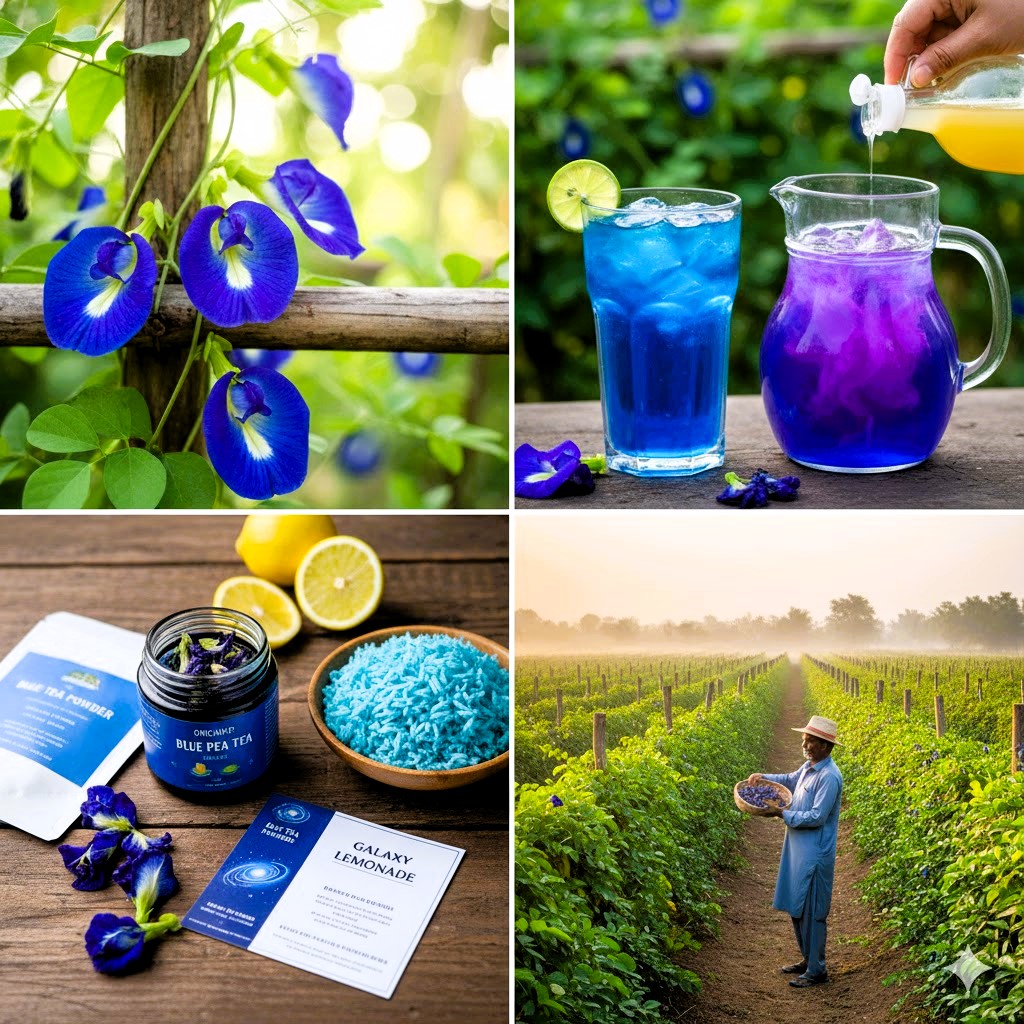
Health Benefits: A Spa Day in a Cup
Drinking “Blue Tea” isn’t just a trend; it’s a medicinal powerhouse:
-
Brain Booster: Helps improve memory and focus.
-
Anti-Ageing: Packed with antioxidants that protect skin and hair.
-
Stress Relief: A natural “adaptogen” that helps the body stay calm.
-
Eyesight: Increases blood flow to the eyes for sharper vision.
The “Zero Waste” Garden Benefit (Green Manure)
For farmers and gardeners, the flower is only half the story. The leaves and stems are equally valuable:
-
Nitrogen Fixation: This plant belongs to the legume family (like beans). Its roots have “nodules” that take nitrogen from the air and put it into the soil.
-
The “Living Mulch”: If your vine gets too big, prune the leaves and drop them at the base of your other plants (like tomatoes or roses). They act as a high-quality, free fertiliser as they decompose.
Livestock Superfood
In many agricultural studies, Butterfly Pea is used as high-protein forage for goats and cattle.
-
It helps animals grow faster and stay healthier.
-
If you have a farm, the parts of the plant you don’t sell as tea can be used to lower your animal feed costs.
The “Pro-Drying” Guide
How to keep that sapphire blue colour without losing the nutrients.
To get the most money (or the best tea), you can’t just toss these in the sun. If they get too much sunlight after being picked, they turn “bleached” and grey.
-
The “Morning Pluck”: Harvest your flowers between 8:00 AM and 10:00 AM. This is when the moisture level is perfect, and the colour is most concentrated.
-
The Wash: Gently rinse them in a bowl of cool water to remove any tiny garden visitors (bugs) or dust.
-
The Shade Method: Spread them out on a mesh tray or a clean cotton cloth. Place them in a room with good airflow but away from direct sunlight.
-
The Dehydrator Shortcut: If you have a food dehydrator, set it to the lowest setting (around 40°C or 105°F). They should be “potato chip” crispy in 3–4 hours.
-
The “Snap” Test: If the base of the flower (the green part) snaps when you bend it, it’s ready! If it feels like rubber, keep drying.
-
Storage: Store in a dark glass jar. Sunlight is the enemy of blue tea!
The Culinary “Secret Weapon”
Professional chefs and home cooks use this flower for more than just drinks. Adding these to your cooking adds “visual luxury” without adding calories:
-
Blue “Smurf” Rice: Toss 5-6 dried flowers into your rice cooker with jasmine rice. You’ll get stunning, bright blue rice that is a staple in Malaysian Nasi Kerabu.
-
Natural Food Colouring: Grind the dried flowers into a fine powder. Use it in cake frosting, pancakes, or bread dough. It’s 100% organic and tasteless, so it won’t ruin the flavour of your sweets!
-
The Ice Cube Trick: Freeze a single flower inside each cube in an ice tray. As the ice melts in a guest’s drink, the colour slowly bleeds out, creating a beautiful gradient.
The “Galaxy Lemonade” Recipe
This is the drink that goes viral on TikTok and Instagram!
This drink has two layers. Because the blue tea is lighter than the heavy sugar-lemon mix, it will float on top until you stir it!
Ingredients:
-
The Blue Base: 5–10 dried Butterfly Pea flowers steeped in 1 cup of hot water (let it cool).
-
The Sweet Layer: 2 tablespoons of honey or sugar syrup mixed with the juice of 1 large lemon.
-
The Sparkle: Ice cubes and sparkling water (or plain water).
The Magic Steps:
-
Prepare the Blue: Soak your dried flowers in hot water for 5 minutes. Watch the water turn a deep, dark blue. Strain the flowers out and let the liquid cool down.
-
The Bottom Layer: Pour your lemon juice and sweetener into a tall glass. Stir well.
-
The Chill: Fill the glass to the very top with ice cubes.
-
The Pour (Crucial Step!): Slowly pour your cooled blue tea over the back of a spoon onto the ice. This helps it sit on top of the lemon juice.
-
The Show: Right before you drink, stir it! You’ll watch the drink transform from Deep Blue to Neon Pink/Purple right before your eyes.
Want to wow your customers or guests?
-
Steep 5 dried flowers in hot water to make a Deep Blue concentrate. Let it cool.
-
In a separate glass, mix lemon juice and honey. Add lots of ice.
-
Slowly pour the blue tea over the ice.
-
The Magic: Stir it! Watch it turn from Sapphire Blue to Neon Purple instantly.
Frequently Asked Questions (FAQs)
1. Can I grow this in a pot on my balcony?
Yes! A 12-inch pot with a small trellis is perfect for home growers.
2. Why did my blue tea turn purple?
It’s science! The flower reacts to the acid in lemon juice, changing its pH level and colour.
3. Is the whole plant edible?
The flowers and young pods are edible. However, the roots and seeds are mostly used for traditional medicine.
4. How long until I see flowers?
You can typically expect to see your first bright blue blooms approximately 90 days after planting.
5. Does it need a lot of pesticides?
No. It is naturally hardy and resistant to many common pests, making it perfect for organic farming.
6. Can I drink it every day?
Yes, it is caffeine-free! However, pregnant women should always consult a doctor before adding new herbal teas to their diet.
https://mrpo.pk/start-your-first-garden/
Conclusion
The Butterfly Pea is more than just a pretty flower; it is a bridge to a healthier lifestyle and a more profitable farm. Whether you are growing it in a small pot or across an acre, the “Blue Gold” of the Butterfly Pea is a sustainable, beautiful, and rewarding venture.
References:
-
BBC News Urdu Agriculture Reports
-
Healthline: Antioxidant Properties of Clitoria Ternatea
-
Agriculture Extension Department Guides