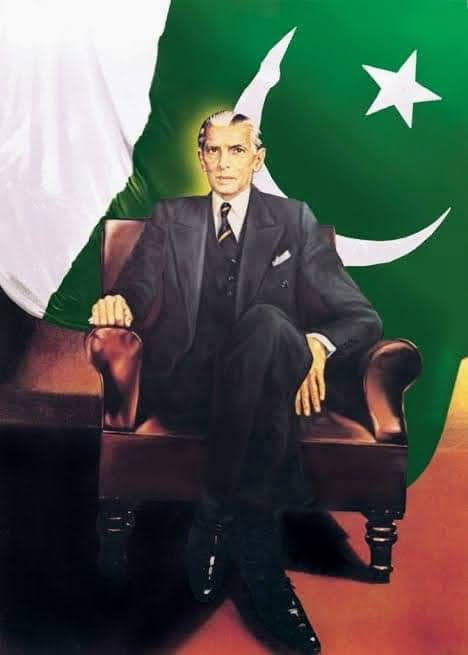
Baba-E-Qaum Quaid-E-Azam Muhammad Ali Jinnah
Baba E Qaum Quaid-e-Azam Muhammad Ali Jinnah, the founder of Pakistan, is remembered as one of the greatest leaders of the modern world. He was not only a brave politician but also a man of strong will, honesty, and dedication. The Muslims of the subcontinent loved him deeply and proudly called him Baba-e-Qaum (Father of the Nation).
https://mrpo.pk/quaid-e-azam-muhammad-ali-jinnah/
Early Life and Education
Muhammad Ali Jinnah was born on 25th December 1876 in Karachi. As a child, he was sharp, disciplined, and hardworking. He studied at Sindh Madrassat-ul-Islam and later at Mission School. From a young age, he dreamed of becoming someone great.
His official biographer, Hector Bolitho, writing in 1954, interviewed surviving boyhood associates, and obtained a tale that the young Jinnah discouraged other children from playing marbles in the dust, urging them to rise, keep their hands and clothes clean, and play cricket instead
Once, his aunt found him studying late at night and asked him, “Why are you studying till late hours at night?”
The young Jinnah replied with confidence, “But to become a big man, one has to work very hard.”
This short dialogue showed his determination and faith in hard work, which remained with him all his life.
Studying Law in England
At the age of 16, Jinnah went to England to study law. He chose Lincoln’s Inn in London to become a barrister. Why Lincoln’s Inn? Jinnah once said that he selected it because he saw the names of great world lawgivers, and among them was the name of the Holy Prophet Muhammad رسول اللہ صلی اللہ علیہ وسلم (PBUH). This deeply inspired him. He worked very hard, completed his studies, and returned to India as a successful lawyer.
In 1895, at age 19, he became the youngest British Indian to be called to the bar in England.[11] Although he returned to Karachi, he remained there only a short time before moving to Bombay
At the age of 20, Jinnah began his practice in Bombay, the only Muslim barrister in the city.
Entering Politics
In the beginning, Jinnah joined the Indian National Congress, believing that Hindus and Muslims could work together for freedom from British rule. Because of his fair and just approach, he was called the Ambassador of Hindu-Muslim Unity.
However, over time, Jinnah saw that the Congress was being dominated by extremist Hindus who followed the ideology of Hindutva. They wanted India to be a Hindu state, ignoring the rights of Muslims. Jinnah realised that the Muslims needed their own separate platform to protect their identity, culture, and future.
Joining the Muslim League
In 1913, Jinnah joined the All-India Muslim League. His leadership gave Muslims a new direction. Under his guidance, the Muslims grew united and stronger. The most significant moment occurred in 1940, when the Muslims passed the Pakistan Resolution in Lahore. They clearly demanded a separate homeland where they could live freely according to their religion and traditions.
In an address to the Gaya Muslim League Conference in January 1938, Jinnah began mapping out his new worldview. He said:
When we say ‘This flag is the flag of Islam’, they think we are introducing religion into politics, a fact of which we are proud. Islam gives us a complete code. It is not only a religion, but it also encompasses laws, philosophy, and politics. In fact, it encompasses everything that matters to a person from morning to night. When we talk of Islam, we take it as an all-embracing word. We do not mean any ill. The foundation of our Islamic code is that we stand for liberty, equality and fraternity.
Offers to Give Up Pakistan
After 1940, the British and Congress leaders made several grand offers to Jinnah. They tried to convince him to withdraw the demand for Pakistan by promising power-sharing and other benefits. But Jinnah never compromised on the future of Muslims. He stood firm and said, “Pakistan is the only solution.”
He spelled out his reasons for reaching out towards the ‘Pakistan’ goal in his Lahore (1940) address in more or less ideological terms, arguing that “Islam and Hinduism… are not religions in the strict sense of the word, but are… different and distinct social orders”, that “the Hindus and Muslims belong to two different religious philosophies, social customs, literature”, “to two different civilizations”, that they “derive their inspiration from different sources of history”… (with) different epics, different heroes and different episodes.” “We wish our people”, he declared, “to develop to the fullest our spiritual, cultural, economic, social and political life in a way that we think best and in consonance with our own ideals and according to the genius of our people.”
He returned to this more extensively in his Id message in September 1945, saying:
“Everyone, except those who are ignorant, knows that the Quran is the general code of the Muslims. A religious, social, civil, commercial, military, judicial, criminal, penal code, it regulates everything from the ceremonies of religion to those of daily life; from the salvation of the soul to the health of the body; from the rights of all to those of each individual; from morality to crime, from punishment here to that in the life to come, and our Prophet Muhammad صلی اللہ علیہ وسلم has enjoined on us that every Musalman should possess a copy of the Quran and be his own priest. Therefore, Islam is not merely confined to the spiritual tenets and doctrines or rituals and ceremonies. It is a complete code regulating the whole Muslim society, every department of life, collectively and individually.”
Struggle Despite Ill Health
During the last years of his life, Quaid-e-Azam’s health was very fragile. He suffered from tuberculosis, but he never let anyone know. Despite his illness, he worked day and night, attending meetings, making speeches, and guiding the Muslims until the dream of Pakistan became reality on 14th August 1947.
Baba-e-Qaum
The Muslims of India had deep love and respect for Jinnah. They proudly gave him the title of Baba-e-Qaum because he was like a father who guided them, protected their rights, and gave them a new homeland.
In February 1948, in a radio talk broadcast addressed to the people of the US,[192] Jinnah expressed his views regarding Pakistan’s constitution in the following way:
The Constitution of Pakistan is yet to be framed by the Pakistan Constituent Assembly. I do not know what the ultimate shape of the constitution is going to be, but I am sure that it will be of a democratic type, embodying the essential principles of Islam. Today, these are as applicable in actual life as they were 1300 years ago.
Islam and its idealism have taught us democracy. It has taught equality of man, justice and fair play to everybody. We are the inheritors of these glorious traditions and are fully alive to our responsibilities and obligations as framers of the future constitution of Pakistan.
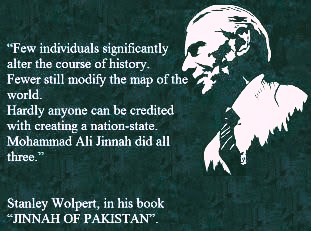
Few individuals significantly alter the course of history. Fewer still modify the map of the world. Hardly anyone can be credited with creating a nation-state. Mohammad Ali Jinnah did all three
His Dreams for Pakistan
Jinnah’s dream for Pakistan was clear:
- A country where Muslims could live freely and practice Islam without fear.
- A state based on justice, equality, and the rule of law.
- A peaceful land where people of all religions would be treated with respect.
He once said, “You are free; you are free to go to your temples, you are free to go to your mosques… You may belong to any religion or caste, that has nothing to do with the business of the State.”
Conclusion
Quaid-e-Azam Muhammad Ali Jinnah’s life is a lesson in hard work, honesty, and determination. From a student in Karachi to the barrister of Lincoln’s Inn, from the Ambassador of Unity to the creator of Pakistan, his journey is truly inspiring. He gave Muslims of the subcontinent their own homeland, and today we live as a free nation because of his tireless efforts. His life teaches us to work hard, stay truthful, and love our country.
That is why every Pakistani proudly says:
“Quaid-e-Azam, Zindabad!”