This item on our list of climate change facts can be hard to comprehend because we are dealing with a volume beyond our comprehension.
Since the mid-1990s, we’ve lost around 28 trillion tons of ice, with today’s melt rate standing at 1.2 trillion tons a year. To help you put that into perspective, the combined weight of all human-made things is 1.1 trillion tons. That’s about the same weight as all living things on earth.
In early 2026, brutal winter storms swept across the United States and Europe.
Cities froze. Power grids failed. Transport collapsed. People died in their homes, not from war or famine, but from cold.
At the same time, a UNEP report revealed a damning truth:
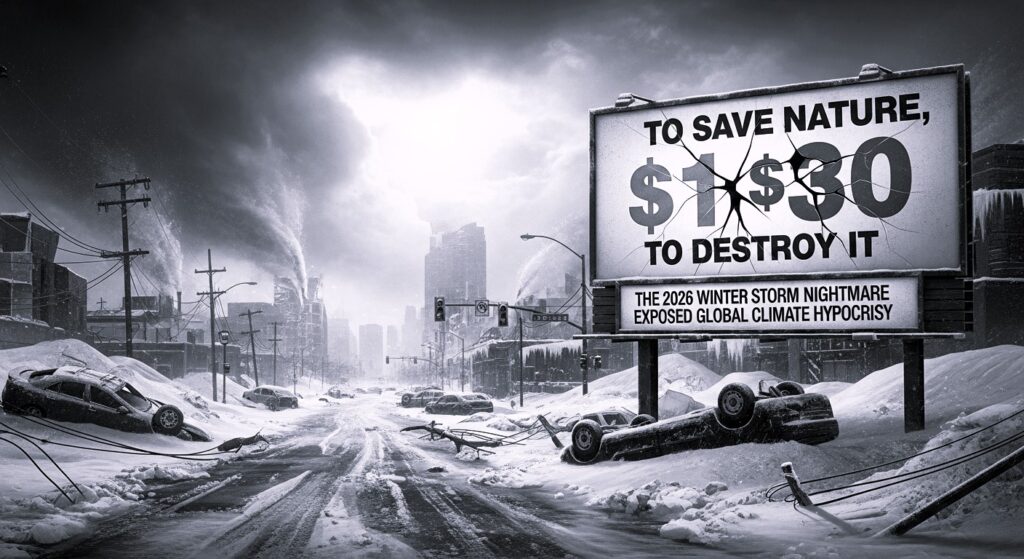
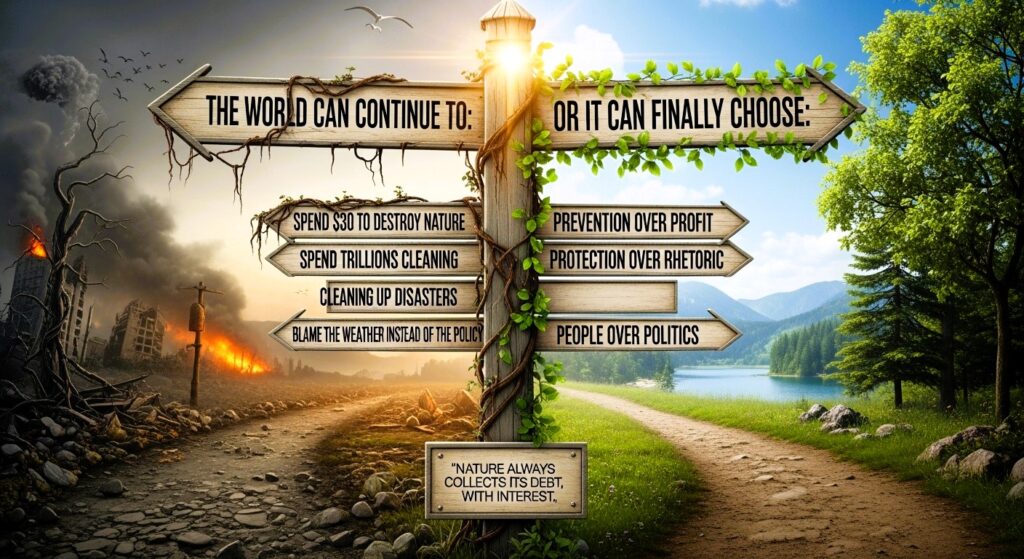
For every $1 the world invests in protecting nature, it spends $30 destroying it.
The storms were not an accident.
They were the invoice.
“Climate change doesn’t arrive as a debate. It arrives as a blackout.”
2026 Winter Storm Nightmare Exposed Global Climate Hypocrisy
What Happened in the 2026 Winter Storms?
Across the US, UK, and large parts of Europe:
Temperatures dropped to historic lows
Snowfall overwhelmed cities unprepared for extremes
Power and gas supplies failed
Flights, trains, and highways shut down
Food prices surged due to supply chain disruption
Thousands were left without heat.
Many never recovered.
This wasn’t a failure of weather forecasting.
It was a failure of priorities.
Why the Rich World Was Still Unprepared
Why the Rich World Was Still Unprepared
The US and Europe like to call themselves global climate leaders.
Yet their infrastructure tells a different story.
Key reasons for the failure:
Power grids built for a stable climate that no longer exists
Continued dependence on fossil fuels
Climate adaptation budgets cut or delayed
Emergency spending is favoured over prevention
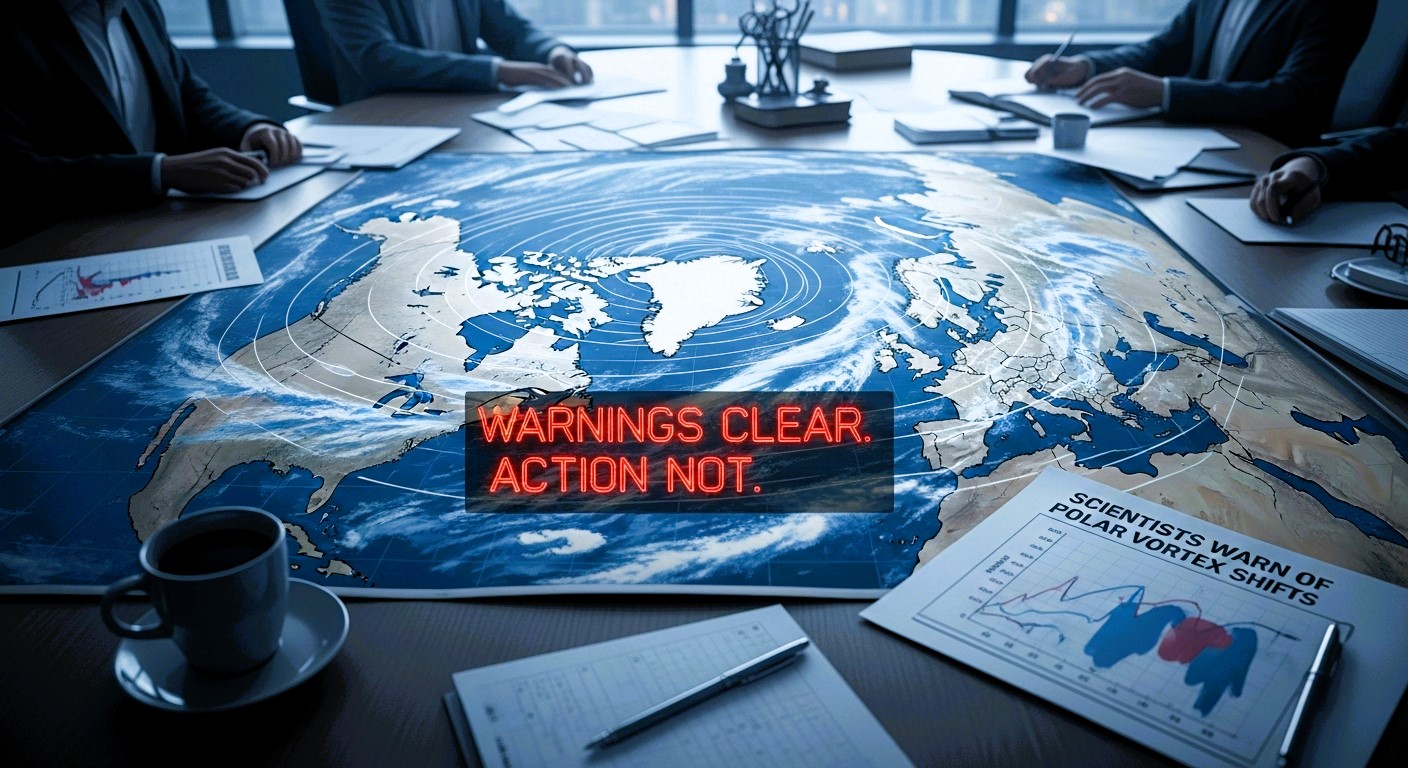
For decades, scientists warned that warming Arctic temperatures weaken the jet stream, allowing polar air to plunge south.
The warnings were clear.
The action was not.
The Spending Imbalance: Prevention vs Destruction
Here’s where the hypocrisy becomes impossible to ignore.
Comparative Global Spending Snapshot
Category
US & EU (Annual Avg)
Global South (Annual Avg)
Fossil fuel subsidies
$500+ billion
~$150 billion
Military & defense spending
$1.3 trillion
~$350 billion
Climate adaptation & resilience
$80–100 billion
~$25 billion
Disaster recovery (after events)
Hundreds of billions
Often donor-dependent
Nature protection & restoration
Limited & fragmented
Critically underfunded
Key irony:
2026 Winter Storm Nightmare Exposed Global Climate Hypocrisy. The countries that caused most emissions invest less proportionally in prevention, yet suffer massive losses, and still refuse to change course.
“Disaster response is the most expensive form of denial.”
The US Role Under President Trump
The Trump administration has moved to withdraw the United States from key United Nations-linked climate change programs and frameworks. These steps represent one of the most significant retreats from international climate cooperation in recent decades. (euronews)
Key Facts
Withdrawal from the UN Framework Convention on Climate Change (UNFCCC):
In early January 2026, the Trump administration signed an executive order that suspends U.S. participation in 66 international organizations, including the UNFCCC, the central UN treaty that provides the framework for global climate negotiations and underpins the Paris Agreement. This is the first time a country has sought to leave the UNFCCC since its creation in 1992. (euronews)
Exit from UN Climate Bodies and Science Panels:
Alongside the UNFCCC, the United States has moved to withdraw from other UN-linked climate bodies including the Intergovernmental Panel on Climate Change (IPCC) the leading global scientific assessment body on climate change. (The Union of Concerned Scientists)
Paris Agreement:
The U.S. previously withdrew from the Paris Agreement in 2025 under an executive order, marking a second exit from the 2015 pact during Trump’s presidency. (Wikipedia)
Climate Finance and Loss & Damage Fund:
Earlier in 2025, the United States also withdrew from the board of the UN’s “loss and damage” climate fund, which was created to help vulnerable countries cope with the damage caused by climate change. (Reuters)
What This Means
The U.S. is stepping back from global climate decision-making frameworks. Traditionally, both Republican and Democratic administrations supported participation in these UN climate processes even if policy goals differed. (euronews)
Critics warn this could weaken global cooperation and funding for climate action, potentially emboldening other countries to delay their own commitments. (The National)
UN officials have stressed that, even with withdrawal, some obligations especially formal financial contributions to the UN system remain legally required under the UN Charter. (apnews.com)
Summary
Under President Trump, the United States has withdrawn from major UN climate change programs and treaties, including the core climate treaty (UNFCCC) and associated science and policy bodies. These moves mark a significant shift in long-standing U.S. participation in global climate governance. (euronews)
The Global South Pays Twice
While winter storms hit the Global North, the Global South faces floods, droughts, heatwaves, and hunger.
And yet:
Developing countries receive less than 10% of global climate finance
Many are pushed to cut emissions while lacking funds to adapt
Climate loans increase debt instead of reducing risk
Those least responsible are most exposed.
This is not climate policy.
It is climate injustice.
The Human Cost Behind the Headlines
The storm did not treat everyone equally.
The worst affected were:
Elderly people living alone
Low-income families choosing between heat and food