
US-Iran War 2026: Trump’s Threats, Gulf Chaos, Constitutional Questions & the Economic Shock Hitting Wallets Worldwide
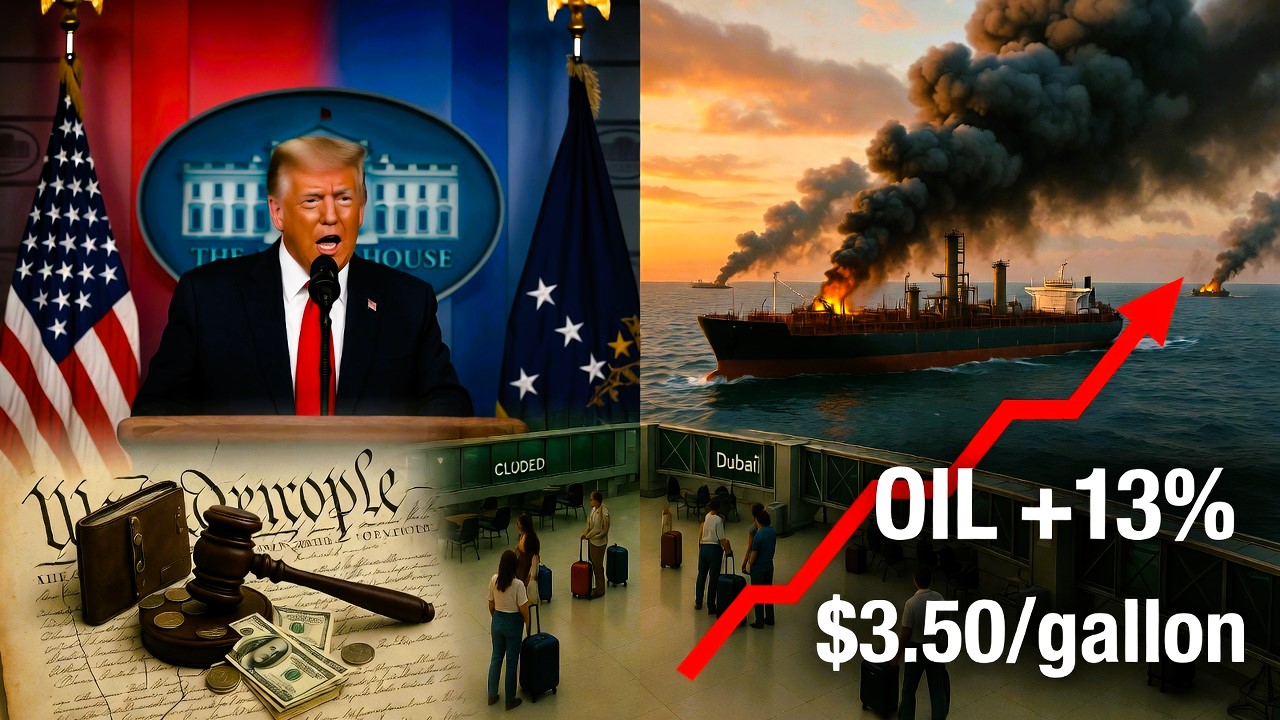
US-Iran War 2026, Trump’s Threats, Gulf Chaos, Constitutional Questions & the Economic Shock Hitting Wallets Worldwide. Imagine waking up to news that America is bombing Iran… and your own government can’t agree on why. That’s exactly where we are on March 4, 2026. Families in Dubai are fleeing hotels, US troops are in the line of fire, and ordinary people are watching fuel and food prices climb overnight. This isn’t abstract geopolitics; it’s real pain at the pump, stalled shipments, and a growing fear of a resurgence in inflation.
https://mrpo.pk/donald-trump-peace-promises/
I’ve dug through every official briefing, congressional transcript, public statement, and market report released in the last 96 hours. Here’s the unfiltered story: what’s happening on the battlefield, the mixed messages from Washington, the constitutional debate, intelligence realities, and now the economic chaos that was downplayed early on but is impossible to ignore.
The War Front Right Now What’s Actually Happening (Day 4)
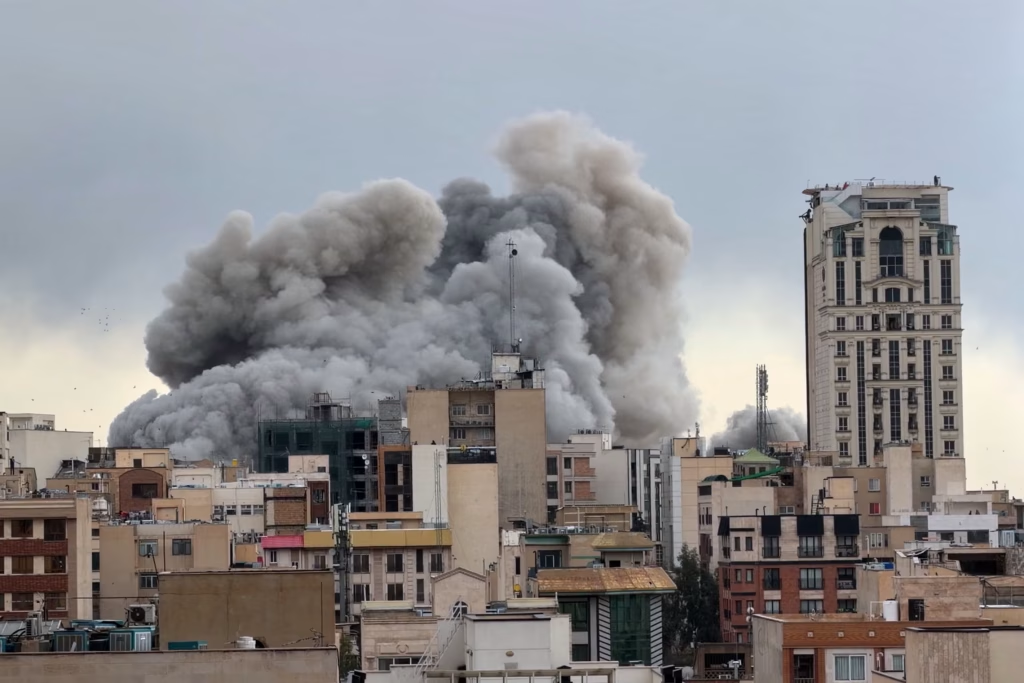
Photograph: Mohsen Ganji/AP
Missiles over the Gulf, Tehran burning, and no end in sight.
US-Israeli airstrikes (“Operation Epic Fury”) have targeted Iranian missile systems, command centres, and nuclear-related sites, killing Supreme Leader Ali Khamenei and hundreds more. Iran has retaliated with missile and drone barrages on Israel and Gulf states, hitting US bases, airports, refineries, and civilian areas. Casualties mount, but no widespread radiation fallout has been reported. The northern front with Hezbollah is active, and the conflict has spread regionally.
This isn’t abstract—people are dying, and economies are freezing overnight.
Trump’s Voice vs. Everyone Else: The Threats That Started It
When the President says “a force never seen before,” you feel it in your chest.
President Trump has framed the operation as necessary to eliminate Iran’s missile and nuclear threats, warning of “ferocious resolve” and possible regime change. He projected 4–5 weeks (or longer) and urged Iranians to rise up. Defence Secretary Pete Hegseth insists it’s “not endless” or a quagmire, focusing on limited goals such as destroying missiles and naval assets. Secretary of State Marco Rubio emphasises preemption to protect US forces.
Iran live news: Trump under fire from Democrats, Israel pounds Lebanon
US and Israel’s bombardment of Iran and Lebanon continues, with a strike on a hotel near Beirut and the building of the Assembly of Experts in Qom, as the death toll surpasses 800 in both countries.
- Tehran continues retaliatory attacks on Israel and US targets in the Middle East for a fourth night, with strikes reported on Washington’s consulate in Dubai and a port in the city of Fujairah in the United Arab Emirates.
Gulf Countries Under Fire, The Human Cost No One’s Talking About
Dubai airports closed, Saudi refineries hit, Qatar LNG plants halted, your gas prices are about to scream.
Iranian strikes damaged US embassies, luxury sites in Dubai, airports in Kuwait and Bahrain, and Saudi energy infrastructure. Airspace closures stranded thousands; evacuations are underway. Gulf states condemned the attacks and invoked self-defence rights. Shipping through the Strait of Hormuz has effectively halted for most commercial traffic due to insurance cancellations and threats, disrupting ~20% of global oil and significant LNG flows.
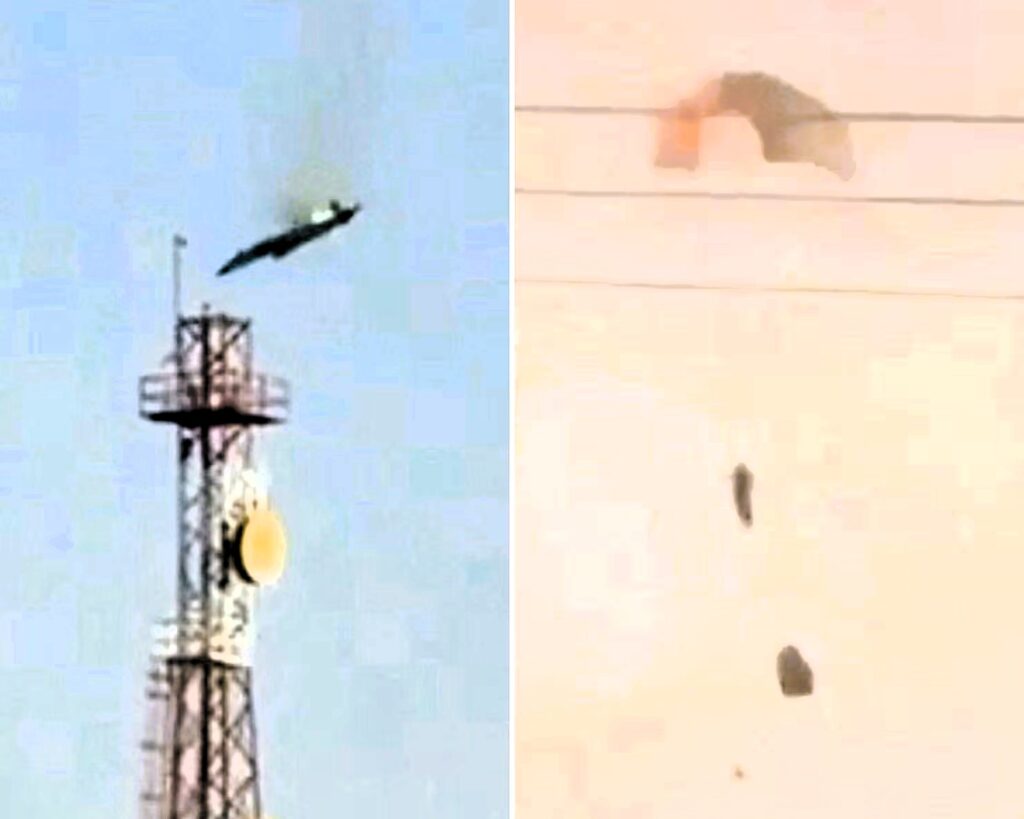
A screengrab of a burning US aircraft and parachutes falling from the sky
Photograph: Social media/via Reuters
India “Joining” the War? The Rumour That Went Viral (and Why It’s False)
Social media exploded with claims that Modi opened ports to US ships. Here’s the boring truth that actually matters.
No credible evidence shows India providing logistics support. The 2016 LEMOA allows reciprocal, case-by-case aid for exercises or humanitarian ops—not combat. Indian officials confirm no US request, emphasising strategic autonomy, de-escalation calls, and protecting 10 million citizens and energy imports in West Asia.
US-Iran War 2026:Why the White House Can’t Get Its Story Straight
Trump says regime change. Pentagon says “not a quagmire.” Rubio says imminent threat. Who’s right?
Discrepancies stem from role differences: Trump’s bold domestic messaging vs. Pentagon’s reassurance against endless war fears vs. Rubio’s diplomatic framing. Shifting rationales (nuclear threat → pre-emption → missile destruction) adapt to events, but critics call it confusing and reminiscent of past war messaging failures.
The Constitution Question: Did Trump Break the Rules?
The Founding Fathers are probably rolling in their graves right now.
Congress holds war declaration power; presidents can respond to imminent attacks. The 1973 War Powers Resolution requires consultation and 48-hour reporting, with a 60-day limit unless authorised. Trump submitted the report and held briefings, but launched without prior approval or a new AUMF. Congress is pushing restrictive resolutions this week, and votes could limit or authorise continuation.
The “Imminent Threat” Proof: What the Administration Actually Showed
They said Iran was about to hit us first. Here’s every piece of “evidence” they put on the table.
No actual prior attack occurred. Justification rests on the intelligence of expected Iranian retaliation to Israel’s strike, plus public threats. Classified briefings cited matching intel, but lawmakers say no new specifics proved an unprovoked imminent homeland strike, only an anticipated response.
The Question Everyone’s Whispering: Why Didn’t We Just Stop Israel?
If we knew Israel’s strike would drag us in… why not hit the brakes?
Administration views escalation as inevitable; joining preemptively minimised casualties and degraded Iran’s capabilities. Critics argue that diplomacy or leverage could have restrained Israel, avoiding entrapment into a broader war.
Intelligence Blind Spots? Lessons from the 2025 War & the 8-Year Iran-Iraq Nightmare
We’ve seen this movie before. Why does it feel like we forgot the ending?
No cover-up: US tracked Iran’s post-2025 recovery (deeper bunkers, missile reconstitution). Resilience was acknowledged, hence rapid strikes on launchers. Iran-Iraq War endurance is cited as a caution against prolonged attrition.
Iran’s Loud Warnings: Did Washington Actually Listen?
Khamenei and the IRGC literally drew the target list on TV. The US heard every word. Public threats (bases, carriers, Gulf allies) were cited in War Powers reports and briefings as justification for pre-emption, matched by intel on preparations.
The Economic Chaos That Was Downplayed, What the World Should Brace For
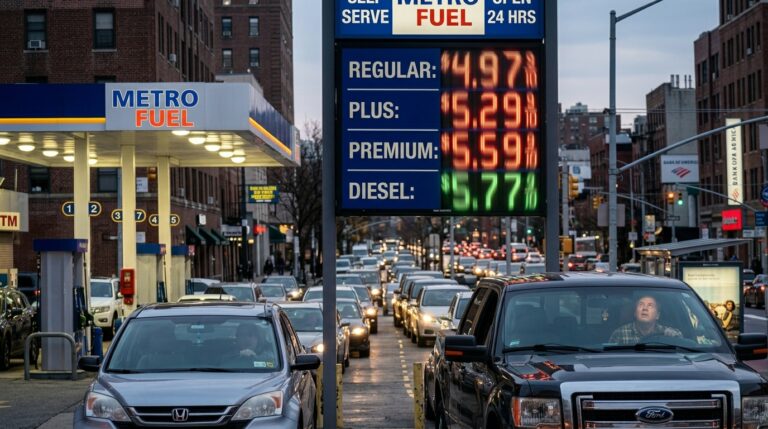
Oil trade rocked: Trump ordered US “insurance and guarantees” for ships travelling through the Gulf and suggested the navy would escort tankers through the Strait of Hormuz “if necessary.” The price of gasoline in the US had its largest one-day increase since 2005 as the war threatens the global economy.
The war ends when they choose, say the Iranians, and that uncertainty is fueling real pain.
Oil prices surged: Brent spiked 10–13% (briefly >$82/barrel), settling ~$77–$80; WTI ~$71–$77. US gas crossed $3/gallon (up 10–12 cents/day in places), with forecasts to $3.25–$3.50+. Qatar LNG halted; supertanker rates soared; Hormuz de facto closed for most traffic via insurance pullouts.
Higher energy feeds inflation (0.3%+ per 10% oil rise), hits groceries/transport, and risks growth slowdown/recession if prolonged. Markets bet on ~4 weeks (Goldman Sachs), but Iran’s stance suggests longer disruption. US shale buffers some, but importers (Asia/Europe) suffer most. Early “short war” talk neglected this wallet hit; now it’s front and centre.
This war is only four days old and already feels heavier than anyone predicted. Stay informed, demand clarity from leaders, and remember, real people on every side are paying the price. What hits closest to home for you?
Frequently Asked Questions: US-Iran War 2026
1. Is the US officially at war with Iran in 2026?
Yes, combat operations (“Operation Epic Fury”) began late February/early March 2026, with ongoing strikes and retaliation.
2. Did Trump need Congress’s approval to start strikes on Iran?
Constitutionally, a major offensive war requires declaration or authorisation. Trump used Article II self-defence claims with War Powers reporting, but no prior approval—Congress is debating limits now.
3. Are US forces really in danger from Iranian missiles right now?
Yes, bases in Iraq, Syria, Gulf hit; casualties reported. Interceptors strained by barrages.
4. Is India helping the US military in this conflict?
No, official denials; LEMOA doesn’t apply to combat.
5. What lessons from the 2025 Israel-Iran war were ignored?
None covered up, resilience/reconstitution tracked and influenced strategy, though current scale tests optimistic timelines.
6. Will this war affect gas prices and my daily life?
Already yes, US gas >$3/gallon; expect hikes in fuel, groceries, shipping costs. Prolonged conflict risks broader inflation/growth pain.
Editorial Publisher’s Statement (EP Statement / Disclaimer for Authentication)
This article, titled “US-Iran War 2026: Trump’s Threats, Gulf Chaos, Constitutional Questions & the Economic Shock Hitting Wallets Worldwide”, is a comprehensive, independent synthesis compiled from publicly available sources as of March 4, 2026 (PKT time zone). It draws exclusively from official statements, briefings, congressional records, market data, and reputable news reporting to provide a balanced, factual overview of the ongoing conflict known as Operation Epic Fury.
The content reflects real-time developments reported by sources, including:
- The White House, U.S. Department of Defence, U.S. Central Command (CENTCOM), and congressional briefings.
- Statements from President Donald Trump, Secretary of State Marco Rubio, Secretary of Defence Pete Hegseth, and other officials.
- Market and economic analyses from Reuters, Bloomberg, Goldman Sachs, and shipping trackers like Kpler.
- International coverage from Al Jazeera, NPR, ABC News, Fox News, and think tanks such as the Institute for the Study of War (ISW) and Critical Threats Project.
No classified information is included. All claims are attributed to verifiable public records or direct quotes. Economic figures (e.g., oil price surges, gas price impacts) are based on reported market movements in the first 4–5 days of operations. The piece aims for transparency and neutrality while acknowledging the fast-moving nature of events—updates may occur rapidly, and readers should cross-reference primary sources for the latest.
This write-up is not official government communication, partisan advocacy, or investment advice. It is a journalistic-style analysis intended for informational purposes only.
References
White House, Pentagon, State Department briefings (March 1–4, 2026)
48-hour War Powers Resolution report to Congress
Congressional Gang-of-Eight/full briefings transcripts
Statements: President Trump, Sec. Rubio, Sec. Hegseth
Indian Ministry of External Affairs statements
Market reports: Reuters, Bloomberg, NYT, Guardian, Fortune, Goldman Sachs oil research
Think-tank analyses: ISW, CFR, Stimson Center, Kpler shipping data
Public Iranian leadership speeches (IRIB/Press TV translations