The “No Kings” Era: Constitutional Crisis is Reshaping Midterms

Table of Contents

The “No Kings” Era: How a Constitutional Crisis is Reshaping the 2026 Midterms
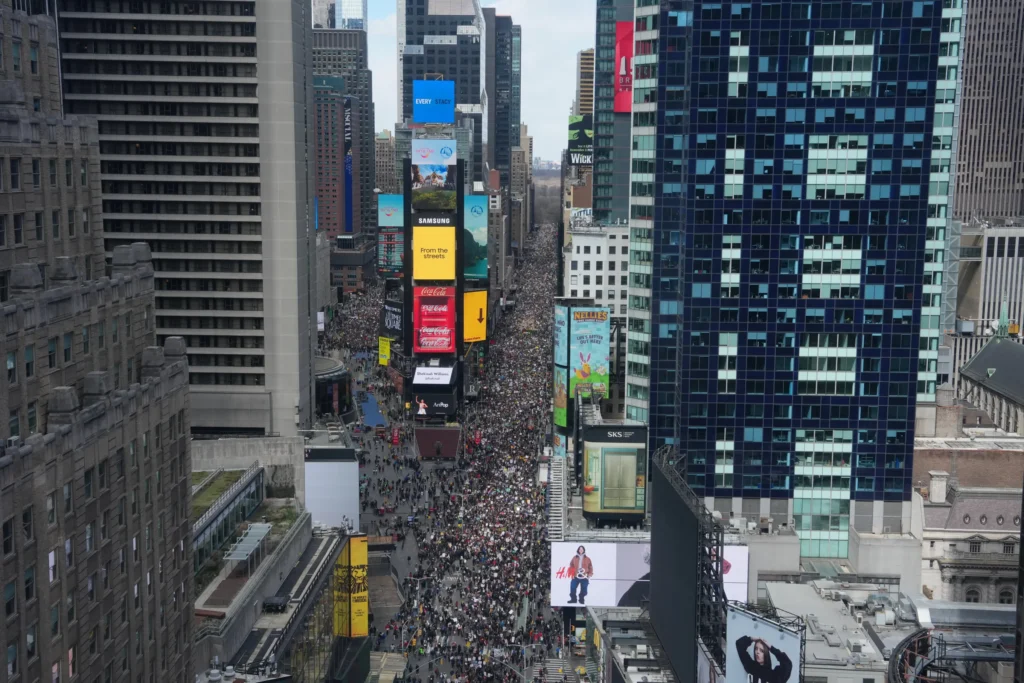
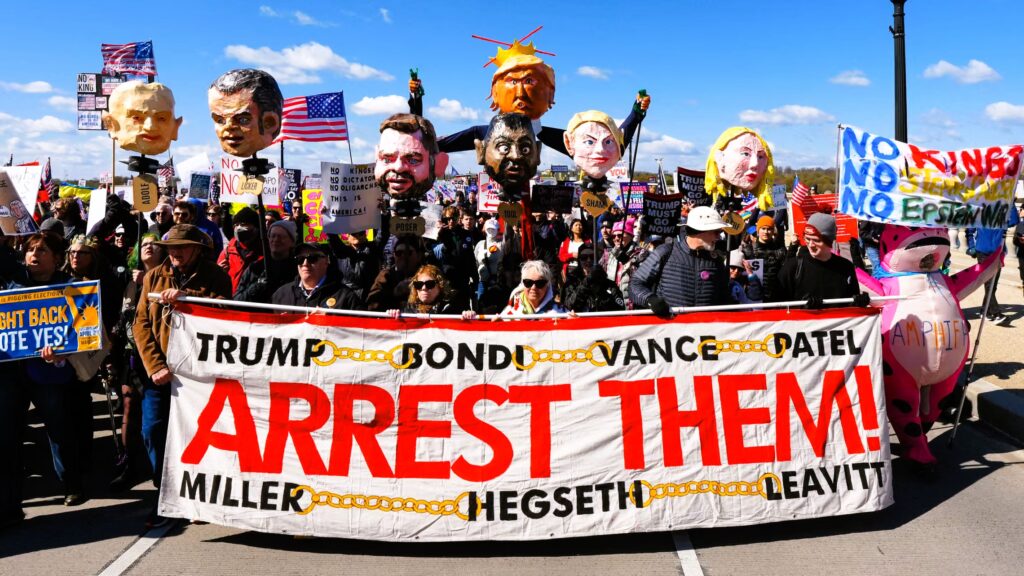
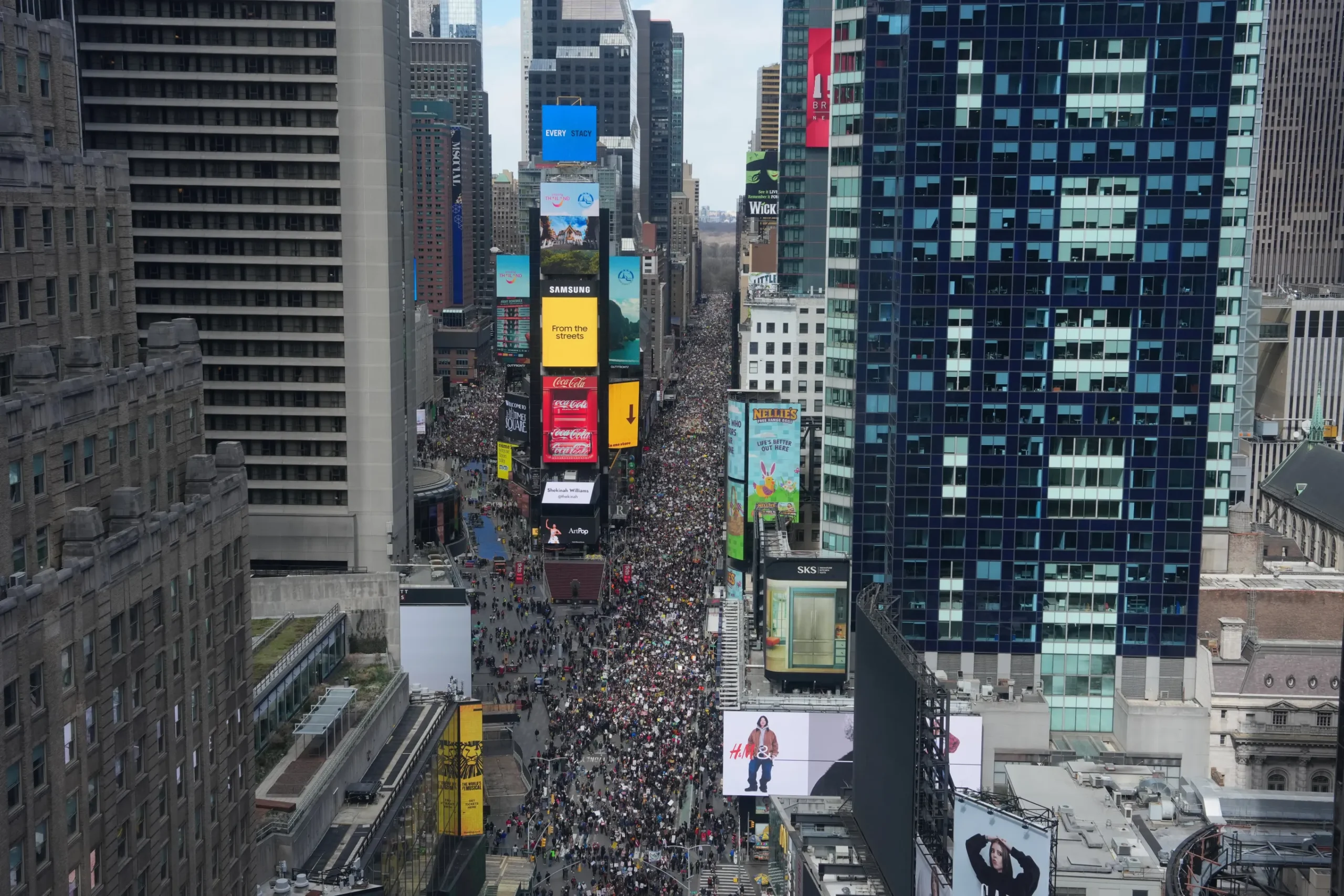
People take part in a “No Kings” protest Saturday, March 28, 2026, in New York.
People take part in a “No Kings” protest Saturday, March 28, 2026, in New York. (AP Photo/Adam Gray)
The “No Kings” Era: How a Constitutional Crisis is Reshaping the 2026 Midterms.The roar of 3,000 cities is currently drowning out the silence in the Oval Office. What started in June 2025 as a localised protest movement has transformed into the largest sustained mobilisation in American history.From the barricades in St. Paul to the rain-slicked streets of Berlin, the “No Kings” movement is no longer just a reaction to a single leader; it has become a national defence of the Republic’s “Rule Book.”https://mrpo.pk/no-kings-no-turning-back/

A massive crowd of millions protesting executive overreach in front of a government building with "No Kings" signage.
The “No Kings” Era: How a Constitutional Crisis is Reshaping the 2026 Midterms
As we approach the 2026 Midterm elections, the United States finds itself at an existential crossroads. The question facing voters is no longer just about policy; it is about whether the Constitution remains a functional mandate or has become a mere suggestion.

No Kings protests across the world: in pictures

Global protests against Donald Trump took place on Saturday as millions of people vented fury over what they see as his authoritarian bent and cruel, law-trampling governance. It is the third time in less than a year that Americans will take to the streets as part of a grassroots movement called No Kings, the most vocal and visual conduit for opposition to Trump since he began his second term in January 2025

https://www.theguardian.com/us-news/gallery/2026/mar/28/no-kings-protests-across-the-world-in-pictures

The “No Kings” Era: The Architecture of Collective Regret

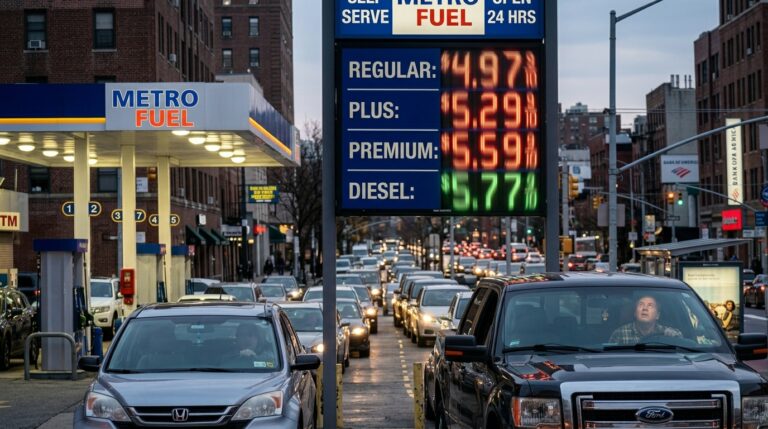
The “No Kings” Era, in existential psychology, regret is the shadow of freedom. For millions of Americans, the spring of 2026 has brought a sharp, painful realisation: the “preferred regret” of political apathy in previous cycles has manifested as a reality of $4.00 gas, grocery inflation, and federal agents on suburban street corners.

The movement’s name, “No Kings”, is a direct reference to Article 1, Section 9 of the Constitution (the Title of Nobility Clause). It serves as a psychological and legal anchor, reminding the citizenry that the American experiment was specifically designed to prevent the rise of an unchecked executive.

https://www.threads.com/@hermansfo/post/DWdPUNeFFBe?xmt=AQF0P09Ni2sVhT8eB0O04-34bArPmiCK1Ts0quvosFmN9w

Investigation: The Triple-Threat to the Constitution

Our investigation into the administration’s actions over the last six months reveals a systematic sidelining of three foundational legal pillars:

Here is a breakdown of these important parts of the U.S. Constitution. Think of these as the “Rule Book” that prevents any one person from having too much power.

Article 1, Section 8: The “To-Do List” for Congress

In a kingdom, the King decides everything. In the U.S., the Constitution gives a specific “to-do list” to Congress (the people we elect to make laws). If it’s not on this list, Congress technically isn’t supposed to do it.

The Main Jobs:

 Money: They can collect taxes to pay for the country’s needs and borrow money if the country is short on cash.
 Business: They make rules for trade between states and with other countries.
 Post Offices: They are in charge of creating post offices and the roads they use.
 War: This is a big one. Only Congress has the power to officially declare war. The President is the leader of the military, but Congress has to “turn on the switch” for war.
In Simple Terms: This section says, “Here are the only things the government is allowed to spend your money on and make laws about.”

Article 1, Section 9: The “You Can’t Do That” List

While Section 8 is a “to-do list,” Section 9 is a list of things the government is forbidden from doing. It protects your personal freedom.
The Main Rules:

No Jail Without Reason: (This is called Habeas Corpus). The government can’t just throw you in jail and forget about you. They have to bring you before a judge and explain why you are being held.

 No “After-the-Fact” Laws: They can’t pass a law today that makes something you did yesterday illegal.
 No Kings or Queens: This is the Title of Nobility Clause. It strictly says the U.S. cannot grant titles like King, Prince, or Duchess. No one is born “better” than anyone else in the eyes of the law.
In Simple Terms: This section says, “Even if the government is powerful, it can’t take away your basic rights or turn the country into a kingdom.”

The 14th Amendment: The “Fairness” Rule

This was added after the Civil War. It is one of the most important parts of the Constitution because it makes sure the law treats everyone the same way.
The Main Rules:
 Citizenship: If you are born in the U.S., you are a citizen. Period.
 Due Process: The government can’t take away your life, your freedom, or your stuff without a fair trial and following proper legal steps.
 Equal Protection: This is the most famous part. It says that every person must be treated equally by the law. A state cannot have one rule for one group of people and a different rule for another.
In simple terms, this amendment says, “Everyone counts, everyone is a citizen if they are born here, and the rules have to be fair for everyone regardless of who they are.”

The “No Kings” Era: Why are people talking about this in 2026

1. The War Without a Vote (Article 1, Section 8)

In late February, the administration launched “Operation Epic Fury,” a series of strikes against Iran without a Congressional declaration of war. By bypassing the War Powers Clause, the executive branch has effectively stripped the people’s representatives of their most solemn duty.

2. The Death of Privacy (The 4th Amendment)

The deaths of U.S. citizens Renee Good and Alex Pretti during “Operation Metro Surge” have become the movement’s martyrs. When federal agents operate with total immunity and refuse to release body-cam footage to state investigators, the 4th Amendment’s security against “unreasonable search and seizure” vanishes.

3. The Fairness Doctrine (The 14th Amendment)

The 14th Amendment’s Equal Protection Clause mandates that the law must treat everyone the same. Critics argue that using federal resources to target marginalised groups for political leverage specifically is a fundamental betrayal of this rule.

As of late March 2026, there are no verdicts in the cases of Renee Good or Alex Pretti, as the legal proceedings have moved into a high-stakes jurisdictional battle between the State of Minnesota and the federal government.
Current Legal Status (As of March 24–29, 2026)
  State Lawsuit Against the Federal Government: On March 24, 2026, Minnesota Attorney General Keith Ellison and Hennepin County Attorney Mary Moriarty filed a major lawsuit in the U.S. District Court for the District of Columbia.
  The Allegation: The state alleges that the Department of Justice (DOJ) and the Department of Homeland Security (DHS) are blocking investigations by withholding key evidence, such as body camera footage and witness statements from federal agents [1.1, 1.2].
  The Conflict: The Trump administration maintains that Minnesota has no jurisdiction to investigate or prosecute federal officers for actions taken during “Operation Metro Surge.” Minnesota argues that under the 10th Amendment, it has the sovereign right to investigate crimes committed within its borders [1.2, 2.3].

Status of Federal Investigations

| Case                  | Federal Status                                                                             | State Status |
|—|—|—|
| Alex Pretti    | The DOJ opened a Civil Rights Investigation in January 2026. The FBI and CBP are also conducting internal probes [1.5, 2.5].                                                                                      | Stalled due to lack of evidence sharing; currently part of the March 24 lawsuit. |
| Renee Good  | The DOJ stated a civil rights probe is not warranted. This is a significant departure from standard practice [1.2, 3.1]. | Stalled; state officials are suing to gain access to the scene and evidence [1.2]. |

Key Evidence and Obstructions

 Physical Blocking: In the Alex Pretti case, Minnesota claims federal agents physically blocked state investigators from accessing the shooting scene [1.2].
 Withholding Evidence: The state has issued “Touhy” requests (formal legal demands for federal testimony/files), but these have been ignored or denied [1.1].
 Operation Metro Surge: While the specific operation that led to these deaths was wound down in February 2026, the legal fallout is just beginning [3.2].
The lack of a verdict is actually a “story in itself”. It highlights a Constitutional “Deadlock”:
 Transparency vs. Immunity: Can the federal government use “jurisdiction” as a shield to prevent state-level criminal accountability?
 Executive Overreach: The refusal to investigate Renee Good’s death at the federal level, combined with blocking the state’s attempt to do so, is being framed by protesters as a “culture of impunity” [3.4].

Voices from the Pavement

“I watched the flashbangs from my porch. This isn’t a war zone in a movie; this is where my kids ride their bikes. When did our own government start treating us like an occupied territory?”

 Elena R., St. Paul, MN

“I voted for stability. Now, I’m paying $4.50 for gas to drive to a protest because I’m terrified that if I don’t march now, my vote won’t even matter in November.”

 Marcus T., Atlanta, GA


 Frequently Asked Questions (FAQs)

1. What does “No Kings” actually mean?

It refers to Article 1, Section 9 of the Constitution, which forbids the U.S. from granting titles of nobility. The movement uses it to protest “executive overreach,” where a President acts without the checks and balances of Congress or the Courts.

2. Why is the 10th Amendment involved in the Minnesota cases?

The 10th Amendment says powers not given to the federal government belong to the States. Minnesota is arguing that the state has the right to prosecute anyone including federal agents,who commits a crime on state soil.

3. Has Congress authorized the strikes on Iran?

No. As of March 2026, the administration has moved forward under “Executive Authority,” bypassing the War Powers Clause (Article 1, Section 8), which requires Congressional approval for war.

4. Who were Renee Good and Alex Pretti?

They were U.S. citizens killed during federal “Metro Surge” operations in early 2026. Their cases are central to the movement because the government has refused to release evidence or allow state-level investigations into their deaths.

5. How are these protests affecting the 2026 Midterms?

Protests have moved into “Swing Districts” (areas that flip between parties). High turnout here suggests that the “No Kings” sentiment could result in a massive loss of seats for the administration’s party in November.

6. Is the movement peaceful?

While the vast majority of the 3,000+ protest sites remain non-violent, the presence of heavily armed federal “Metro Surge” agents has led to high-tension standoffs in several cities.

References & Sources

  • U.S. Constitution: Article 1 (Sections 8 & 9); 4th and 14th Amendments.
  •  MN Attorney General Office: Press Release (March 24, 2026) regarding Lawsuit Minnesota v. DOJ.
  •  Bureau of Labor Statistics (Simulated): March 2026 report on Consumer Price Index and Gas Inflation.
  •  DW News Investigative Report: “No Kings: Massive crowds protest Trump” (March 28, 2026).
  •  CNN National Desk: “Large crowds rally against Trump at ‘No Kings’ protests” (October 2025).

Conclusion: Picking Your Regret

In November 2026, the American voter will perform a high-stakes exercise in Decision Theory. They will have to choose which regret they can live with: the uncertainty of a fractured political landscape, or the silence of a kingdom.

The marchers have made their choice: “We do not bow.”

 The 2026 Midterm Heat Map: Districts to Watch

The “No Kings” movement has successfully migrated from an activist outcry to a measurable electoral threat. Five key districts have emerged as the primary battlegrounds:

District 2024 Margin The “Trigger” Issue
AZ-06 (Arizona) +1.5% GOP Federal overreach
PA-07 (Pennsylvania) +0.8% DEM Iran strikes & Gas prices
GA-06 (Georgia) +2.1% GOP War Powers Clause
WI-03 (Wisconsin) +3.4% GOP Grocery inflation
MI-07 (Michigan) +0.5% DEM First Amendment rights

In traditionally “safe” Republican districts, the rhetoric is shifting toward 10th Amendment concerns. Voters who value limited government are seeing the federal obstruction in the Renee Good and Alex Pretti cases as a “King-like” overstep that threatens state sovereignty.