The “Double Legal Blow” Against Trump: What the Media Isn’t Telling You About the 2026 Constitutional Crisis
The “Double Legal Blow” Against Trump: A chaotic week in Washington that shifted the balance of power. In January 2026, the phrase “double legal blow” refers to a pair of significant setbacks that struck the Trump administration’s agenda within a span of just a few hours.
Latest Update: 15, Jan,2025
1. The Supreme Court Update: The “Waiting Game” Continues
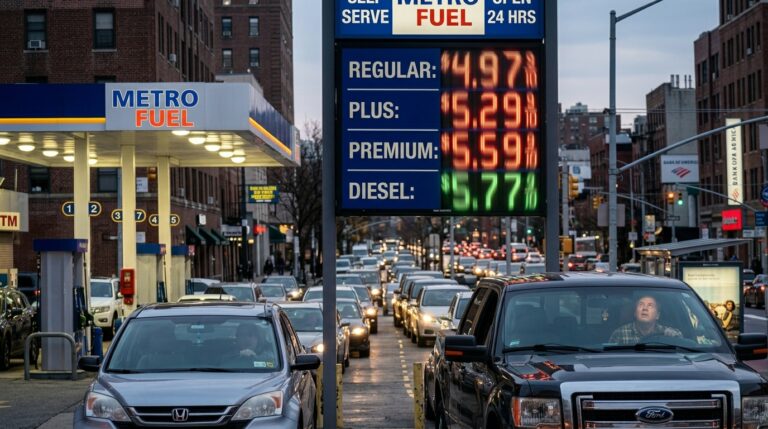
While many expected the Supreme Court to rule on the $150 billion tariff case (Learning Resources, Inc. v. Trump) on January 14, the Court stayed silent on the matter.1
The Decisions: The Court issued three other rulings but skipped the tariffs.2 This has created massive “market jitters” as companies like Costco wait to see if they will get billions in refunds.
The Administration’s Stance: President Trump has warned that a ruling against him would be a “terrible blow” to the economy.3 Meanwhile, Treasury Secretary Scott Bessent says they have a “Plan B” to keep tariffs in place even if the Court says the current method is illegal.
Next Chance: The Court typically releases opinions on Tuesday or Wednesday mornings.4 All eyes are now on Tuesday, January 20.
2. The Renee Nicole Good Investigation: Fact vs. Fiction
The situation surrounding the death of Renee Nicole Good, the 37-year-old poet and mother killed by ICE, has become a “truth war.”
The “Agitator” Claim: President Trump and VP J.D. Vance have publicly claimed Renee was a “professional agitator” and part of a “left-wing network.”5
- The Family’s Response: Renee’s sister-in-law, Morgan Fletcher, broke the family’s silence yesterday to debunk viral rumours about Renee having a criminal history. “She didn’t have one,” Fletcher stated, describing Renee as a peaceful woman whose six-year-old child is now without a mother.
-
The Video Evidence: While the administration claims the agent, Jonathan Ross, acted in self-defence, multiple videos analysed by news outlets show Renee’s SUV turning away from the officer when he opened fire.6
3. The Protests: “ICE Out For Good”
The protests you asked about have officially become a national movement.
-
Turnout: Thousands have marched in Minneapolis, Portland, Phoenix, and New York City.
-
The Sentiment: These aren’t just protests against a shooting; they are protests against Operation Metro Surge. People are carrying “Shame” signs, referencing the witness who screamed the word during the shooting—a witness the President recently labelled a “professional troublemaker.”7
Weight: These protests are the primary reason H.R. 125 is gaining Republican support. Lawmakers are seeing their own constituents, including many who voted for the President, expressing horror at a U.S. citizen being killed on a residential street.
Summary of the Current “Power Struggle”
| The Player | Their Move | The Goal |
| Supreme Court | Delaying the Tariff Ruling | To carefully weigh the “Unitary Executive” power. |
| The President | Defending ICE “Absolute Immunity” | To prevent state oversight of federal agents. |
| The People | Nationwide “Weekend of Action” | To force the passage of H.R. 125 and end masked raids. |
| Minnesota | Demanding BCA (State) Investigation | To break the “Federal Wall” and see the FBI’s evidence. |
Two Courts, One Mom, and a Nation on Edge: The Story Behind the “Double Legal Blow”
Hey there. If you’ve been on social media this weekend, you’ve probably seen the words “Double Legal Blow” trending next to the President’s name. It sounds like something out of a courtroom drama, but for Americans living through January 2026, it’s a real-life turning point.
So, grab a coffee, and let’s talk about what actually happened, and why a mom from Minneapolis is at the centre of it all.
https://mrpo.pk/the-power-syndrome/
What was the “Double Blow”?
On Friday, January 9, the administration’s “tough on everything” approach hit a major brick wall in the courts.
-
Blow 1: The National Guard Retreat: The Supreme Court (6-3) basically told the President he couldn’t use the National Guard as his own personal police force. He wanted to send troops into “blue” cities like Chicago, but the Court ruled that he hadn’t proven it was a real emergency. The Guard stayed home.
-
A tragedy that turned a quiet poet into a national symbol.
-
The “Weekend of Action”: How 1,000 cities are standing up for a mother of three.
-
Blow 2: The $150 Billion Tariff Tease: For weeks, everyone expected the Supreme Court to approve the President’s “Liberation Day” tariffs (new taxes on imports). But instead of a “Yes,” the Court delayed the decision. This is a significant blow because thousands of companies, including Costco and Goodyear, are already suing to recover their losses.1
A Republican lawmaker has introduced a new bill to Congress that would curb President Donald Trump’s executive powers.
Newsweek contacted the White House via email for comment outside of regular business hours.
Why It Matters
Efforts in Congress to curb Trump’s executive and military powers have gained momentum after his administration led a surprise military raid to seize Venezuelan President Nicolás Maduro.
This operation, conducted without advance consultation with congressional leaders, has spurred bipartisan concerns over unchecked presidential authority—particularly regarding foreign entanglements and the use of military force.
Can One Mom Change the Law? The Massive Protests for Renee Nicole Good Explained
This picture of Renee Nicole Good, who was shot and killed on Wednesday by a U.S. Immigration and Customs Enforcement (ICE) agent in Minneapolis, was posted to her mother’s Facebook page. (Donna Ganger/Facebook)
WATCH | Was it self-defence? Breaking down the shooting:
https://www.cbc.ca/player/play/video/9.7039072
A tragedy that turned a quiet poet into a national symbol. The “Weekend of Action”: How 1,000 cities are standing up for a mother of three.
-
Imagine you’re just a normal mom. You write poetry, you love your three kids, and you spend your mornings dropping your 6-year-old off at school. That was Renee Nicole Good.
But this week, Renee’s name isn’t just on a school pick-up list; it’s on protest signs in over 1,000 cities across America. If you’re wondering why this one incident has become a “breaking point” for the country, you’re not alone. Let’s break down why this movement is actually changing the laws in Washington.
1. The “ICE Out For Good” Movement
What started as a small candlelight vigil in Minneapolis has exploded into a nationwide “Weekend of Action.” From New York to Los Angeles, and even in smaller towns like Tallahassee and Albuquerque, thousands of people are marching under the banner “ICE Out For Good.”
These aren’t just random protests. They are organised by a huge group of neighbours, clergy, and teachers who are saying, “This is not normal.” They are demanding that federal agents stop wearing masks and stop using “war-zone” tactics in quiet neighbourhoods.
2. The Power of a Mother’s Story
The reason this carries so much weight is because of who Renee was. The White House tried to call her a “domestic terrorist,” but the public didn’t buy it.
-
The Reality: Renee was a 37-year-old poet with no criminal record.
The Viral Video: Bystander footage showed her sitting in her SUV, looking confused as masked agents surrounded her. She wasn’t an “insurgent”; she was a scared mom.
-
The “Sunshine” Effect: Her friends describe her as “pure sunshine.” When the government tries to demonise someone the community knows and loves, it usually has the opposite effect—it makes the community fight harder.
3. Does This Actually Change Anything? (The “Renee Effect”)
You might wonder: “Do people marching in the streets really affect what a judge or a Senator thinks?” In 2026, the answer is a big YES.
-
Key Republican Co-Sponsors: As of January 2026, a small but influential group of Republicans has crossed the aisle to support the 30-day limit on national emergencies. This group includes:
-
Thomas Massie (R-KY): A frequent critic of executive overreach on constitutional grounds.
-
Don Bacon (R-NE): Representing the “moderate” wing concerned about institutional stability.
-
Marjorie Taylor Greene (R-GA): While an ally of the President, she has historically supported limiting federal agency powers (the “Deep State” argument).
-
Chip Roy (R-TX) & the Freedom Caucus: Several members are signalling support because the bill would prevent future Democratic presidents from declaring “climate emergencies” or “gun violence emergencies.”
-
-
The Veto-Proof Gap: Even with these Republicans, the House is currently roughly 30 to 40 votes short of the 290 needed for an override. Leadership is currently targeting “Frontline” Republicans in swing districts who are feeling the political heat from the recent ICE controversies in their home states.
H.R. 125: The Bipartisan Coalition
While the bill was originally sponsored by Rep. Andy Biggs (R-AZ), its support has shifted into a unique “Left-Right” coalition of constitutionalists and progressives.
-
-
One Big Beautiful Bill Act (OBBBA)
In January 2026, the One Big Beautiful Bill Act (OBBBA) is the primary target of congressional investigations because of the unprecedented scale of funding it provides to ICE, totalling roughly $75 billion specifically for interior enforcement.
The investigation into the lethal shooting in Minneapolis has led lawmakers to scrutinise the following earmarks within the OBBBA, which they argue have created a “militarised” deportation force.
1. The $30 Billion “Enforcement & Removal” Slush Fund
A massive $29.9 billion was allocated for “Enforcement and Removal Operations” (ERO). While some of this is for hiring 10,000 new agents, a significant portion is designated for tactical readiness:
-
Tactical Gear & Armoury: Billions are hidden within “specialised enforcement activities,” covering the procurement of high-grade tactical equipment, including ballistic armour, specialised “non-lethal” but high-force weaponry, and surveillance drones.
-
Fleet Modernisation ($855 million): This funds the acquisition of “upgraded patrol units.” Lawmakers are investigating whether these are being outfitted with military-grade communication and surveillance technology that bypasses standard civilian law enforcement protocols.
2. The “Masked Agent” Provision
A controversial portion of the OBBBA funding for “Personnel Safety and Recruitment” has been used to fund individual tactical kits.
-
The Conflict: These kits include the tactical masks seen in the Minneapolis shooting.
-
The Legal Issue: Congress is investigating whether the administration used “operational security” funds to authorise agents to conceal their identities during raids, a practice that civil rights groups argue prevents the public from holding individual agents accountable for use-of-force violations.
3. The $10 Billion “Unrestricted” Mission Fund
Perhaps the most contentious part of the OBBBA is a $10 billion “catch-all” fund granted to the Secretary of Homeland Security.
-
The Strategy: This money can be moved to “any border or interior enforcement mission” without a specific vote from Congress.
-
The Congressional Response: House investigators believe this fund was used to secretly finance the “accelerated training” of the 12,000 new agents, which skipped several weeks of standard constitutional and de-escalation training in favour of “tactical efficiency.”
ICE Funding Breakdown (OBBBA 2026)
Category Amount House Investigation Focus Detention Capacity $45 Billion Secret “minimum standards” that bypass safety oversight. Enforcement Ops $29.9 Billion Funding for military-grade gear and “masked” tactical kits. State Reimbursement $13.5 Billion Incentivising local police to act as “unaccountable” ICE agents. Unrestricted Fund $10 Billion The “Slush Fund” was used to bypass congressional oversight. While the courts are currently the most visible check on the Trump administration, Congress and the Senate are employing several “Article I” strategies to reassert their constitutional authority.1 These actions range from legislative “guardrails” to the use of the “power of the purse.”
Strategies Congress and the Senate are taking to uphold the Constitution
Here are the primary strategies being used in 2026:
1. Legislative Guardrails: The “National Emergencies Act” Reform
The most direct strategy is a bipartisan effort to amend the National Emergencies Act of 1976.
-
The Goal: Currently, a President can declare an emergency that lasts indefinitely unless Congress passes a joint resolution to stop it (which the President can then veto).
-
The Strategy: Legislative proposals like H.R. 125 (Limiting Emergency Powers Act) aim to flip the script: a national emergency would automatically expire after 30 days unless Congress affirmatively votes to approve it. This would force the administration to prove the necessity of its “unusual and extraordinary” claims for tariffs or border actions.
2. War Powers and Military Oversight
In response to the unauthorised military extraction in Venezuela and the attempted domestic deployment of the National Guard, the Senate is utilising the War Powers Resolution
-
Bipartisan Resolutions: Senators like Tim Kaine (D-VA) and Rand Paul (R-KY) have led a 52-47 vote to advance a resolution demanding the withdrawal of forces from unauthorised operations.
-
The Strategy: Even if these resolutions face a veto, they serve as a “constitutional marker” that helps the judiciary rule against the President by proving that the “Will of Congress” is in opposition to executive action (referencing the Youngstown framework of presidential power).
3. The Power of the Purse (Appropriations)
Congress is increasingly using the budget as a tool to block specific executive orders:
-
Defunding Specific Orders: The House is currently working on the “Keep Air Travel Safe Act” and other funding bills that include “riders”—clauses that explicitly prohibit federal money from being used to implement specific executive orders, such as the $45 billion “slush fund” for ICE detention centers.4
-
Impoundment Challenges: When the President attempts to “pause” or “re-route” funds (as seen with foreign aid to NGOs), the Government Accountability Office (GAO) and House committees are filing formal complaints, arguing this violates the Impoundment Control Act.
4. Amicus Briefs (The “Friend of the Court” Strategy)
Congress is not just waiting for its own laws; it is actively intervening in the court cases you mentioned:
-
United Front in Court: Over 200 members of Congress (including several Republicans) signed an amicus brief in the tariff cases, telling the Supreme Court that the President’s use of the IEEPA “nullifies the guardrails” of trade law.5
The Strategy: By speaking as a “coordinate branch,” Congress provides the legal “ammunition” for judges to rule that the President is acting without legislative authority.
5. Investigative Oversight & “The Deep Freeze”
-
Subpoena Power: House committees have launched investigations into the Venezuela raid and potential insider trading linked to administration policy changes.
-
Confirmation Stalls: The Senate has slowed or blocked the confirmation of “recess appointments” and “acting” officials to ensure that the executive branch remains staffed by individuals who have undergone constitutional “Advice and Consent.”
Comparison of Branch Actions (January 2026)
Strategy Goal Status NEA Reform End “Permanent” Emergencies Bill introduced; pending Senate vote War Powers Resolution Stop Venezuela/Domestic Military Use Advanced in Senate (52-47) Appropriations Riders Starve illegal orders of cash Part of active budget negotiations Amicus Briefs Influence SCOTUS on Tariffs Filed; Decision expected Jan 14 The Next Constitutional Step
The House is currently drafting “Appropriations Riders” for the next budget cycle. These are clauses that would explicitly state: “No funds from the OBBBA may be used for tactical masks or the deployment of agents who have not completed 16 weeks of de-escalation training.”
This sets up a massive “power of the purse” showdown for February 2026.
4. The “Double Blow” is a Social Blow, Too
The “Double Legal Blow” we talked about earlier (the court rulings) happened at the same time as these protests. It’s like a pincer move:
-
The Courts are providing the legal pressure in the chambers.
- The People are providing the moral pressure in the streets.
Together, they are making it much harder for the administration to use the $170 billion OBBBA fund to create what protesters call a “shadow military.”
The Courts are Watching: When the Supreme Court ruled against the National Guard deployment this week, they weren’t just looking at law books. They were looking at a country on the edge. Public outcry helps “stiffen the spine” of judges to stand up against the executive branch.
Bipartisan Resolutions: Senators like Tim Kaine (D-VA) and Rand Paul (R-KY) have led a 52-47 vote to advance a resolution demanding the withdrawal of forces from unauthorised operations.3
The Strategy: Even if these resolutions face a veto, they serve as a “constitutional marker” that helps the judiciary rule against the President by proving that the “Will of Congress” is in opposition to executive action (referencing the Youngstown framework of presidential power).
-
Why Does This Matter to You?
Whether you’re in 8th grade or 80, this is about the “brakes” on our government. When a President tries to move too fast, the Courts and the People are the ones who slow things down to make sure everyone stays safe.
The “Double Blow” wasn’t just a loss in court; it was a reminder that in America, the Constitution is still the boss.
What’s Next?
I’ll be watching the Supreme Court this Tuesday, January 14, for the final word on those $150 billion tariffs.