
Six-planet Alignment February 2026
Don’t Miss the Jaw-Dropping Six-Planet Alignment on February 28, 2026: Your Heart Will Skip a Beat!
Six-planet Alignment February 2026. Picture this: You step outside into the crisp February evening, look up, and suddenly the sky explodes with cosmic magic. Six glowing planets stretch across the twilight like a secret message from the universe, sparkling just for you. Your heart races with pure wonder; it’s breathtaking, humbling, and utterly thrilling!
This rare six-planet alignment (also called a planet parade) peaks on February 28, 2026, and it’s happening right now in just a few weeks. As someone in Rotterdam gazing at the same sky, get ready to feel that goosebump-inducing awe. Let’s explore why this event will leave you speechless with joy!
https://mrpo.pk/lunar-eclipses-in-2025/
Have you ever seen a planet parade, also known as a planetary alignment?
That’s when several planets in the night sky line up, causing an exciting spectacle for astronomers, expert and amateur alike. “Planetary alignment is an astronomical term used to describe the event when several planets gather closely on one side of the sun at the same time,” according to the Star Walk website. In February 2025, stargazers were treated to a seven-planet alignment. The one this February 2026 will be almost as big.
What is a Planetary Alignment? (And Why It Feels So Magical)
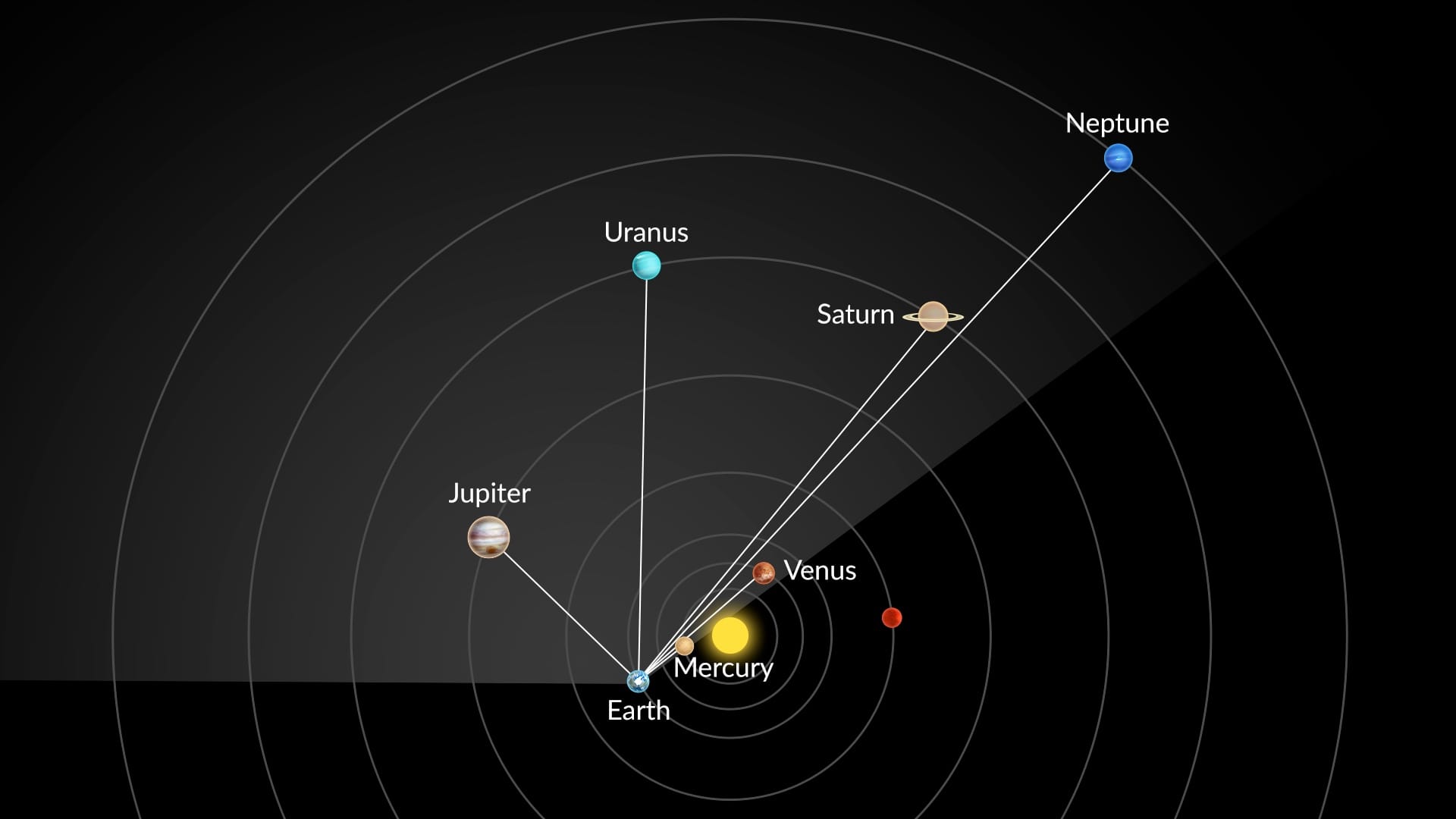
- Definition and Terminology: Explain that a “planetary alignment” or “planet parade” refers to planets appearing close together in the sky from Earth’s viewpoint, not a true spatial lineup where they are perfectly aligned with the Sun. It’s an optical illusion due to their orbits.
- The Role of the Ecliptic: All planets orbit the Sun in a nearly flat plane called the ecliptic, causing them to follow similar paths across our sky, enabling such alignments.
- Types of Alignments: Differentiate between small alignments (3-4 planets) and grand ones (5+); the February 28 event is a six-planet parade, excluding Mars and Earth.
- Frequency and Rarity: Such events occur every few years, but visibility of all six naked-eye or with minimal aid makes this one accessible; compare to past events like the 2024 alignment.
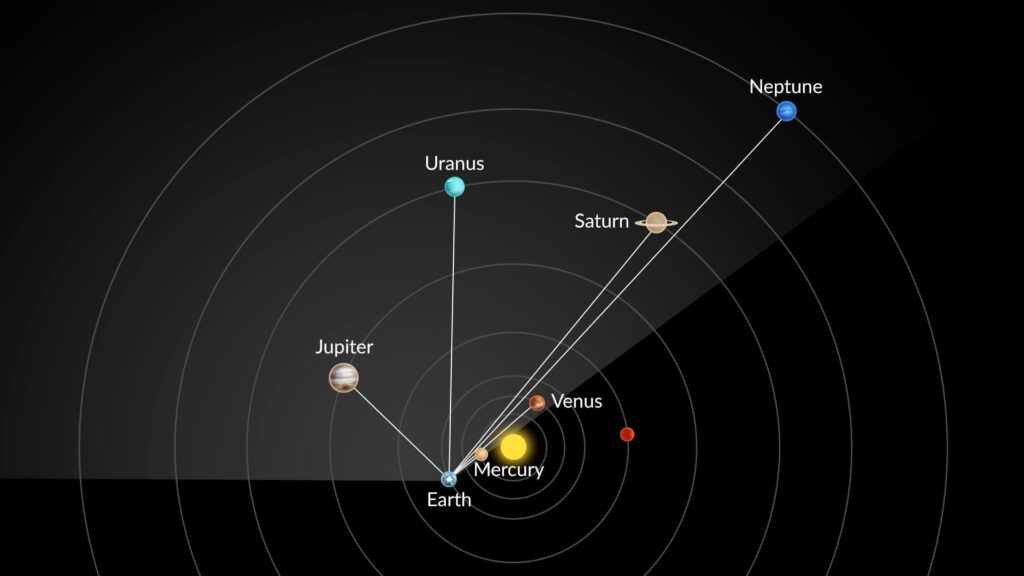
- Visual Representation: Include a diagram showing planetary positions relative to the Sun and Earth.
Ever had that moment when everything lines up perfectly and you just gasp? That’s exactly how a planetary alignment hits! It’s when planets seem to gather close together in our sky, not crashing in space (they’re still super far apart!), but appearing in a beautiful arc because they all orbit the Sun on the same flat path called the ecliptic. It’s like nature’s own light show!
This six-planet parade feels extra special because it’s bigger and more visible than everyday groupings. Imagine the excitement building as the sky darkens, your eyes widen, your breath catches, and suddenly you’re connected to something huge and beautiful. Pure magic!
. Scientific Facts About the Involved Planets
- Mercury: Innermost planet, orbital period 88 days; visible briefly due to proximity to Sun; surface temperature extremes.
- Venus: Brightest planet, phase like the Moon; thick atmosphere causes greenhouse effect; similar size to Earth.
- Saturn: Gas giant with iconic rings; 29.5-year orbit; visible rings tilt varies.
- Jupiter: Largest planet, 11.9-year orbit; stormy atmosphere with the Great Red Spot; many moons.
- Uranus: Ice giant, tilted axis causes extreme seasons; faint magnitude requires aid; discovered in 1781.
- Neptune: Farthest, windy with dark storms; 165-year orbit; blue hue from methane.
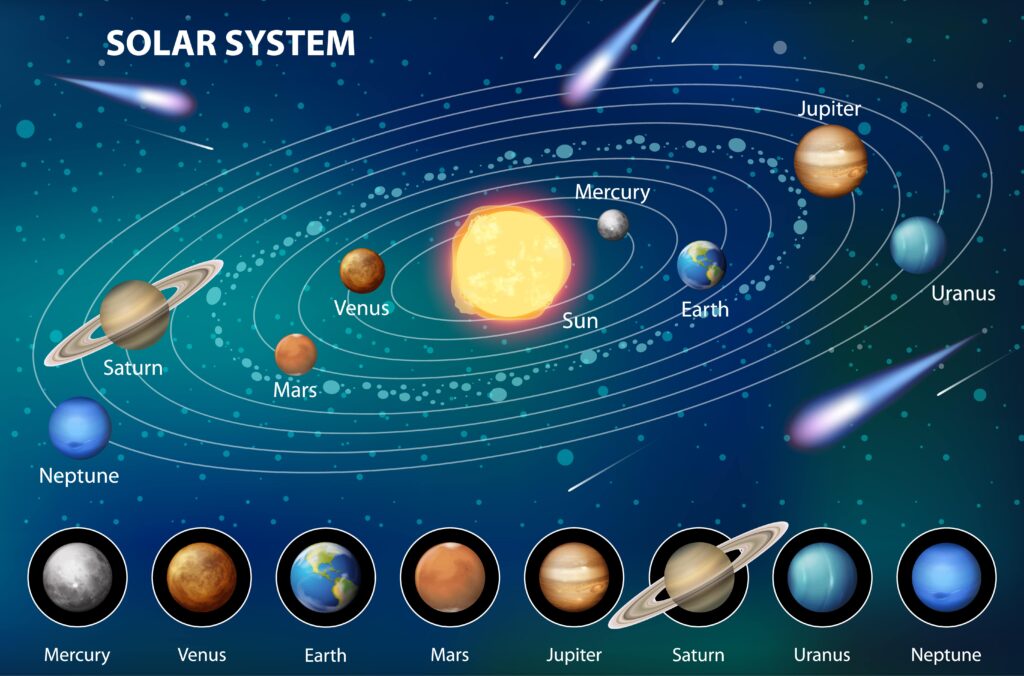
- Comparative Data: Include facts like distances from the Sun, sizes, and why they appear as points of light.
Fun Facts About These Amazing Planets
Each planet is like a unique friend in our solar system family. Mercury is the speedy one, zipping around the Sun in just 88 days, with super-hot days and freezing nights. Venus, our “evening star,” is Earth’s twin in size but has a runaway greenhouse effect, making it hotter than an oven.
Saturn’s rings are like a cosmic crown, made of ice and rock. Jupiter, the giant, has wild storms like the Great Red Spot and over 90 moons. Uranus tilts sideways, causing crazy seasons, and Neptune is windy with a deep blue colour from methane gas.
They’re all different sizes and distances from the Sun, but from Earth, they look like bright points of light. Isn’t it cool how these worlds, so far away, can line up for us to see?
The Real Scoop on February 28, 2026: Get Excited!
On Saturday, February 28, 2026, right after sunset, Mercury, Venus, Saturn, Neptune, Uranus, and Jupiter will line up in a stunning evening display. Your pulse will quicken when you spot that graceful curve from west to southeast, with a nearly full Moon shining brightly near Jupiter, as if the universe added extra sparkle just to wow you!
Here’s the lineup that will make your jaw drop (from low west to higher southeast): Mercury (tiny and tricky low down), super-bright Venus (blazing like a diamond, stealing the show), golden Saturn (rings visible with binoculars, mind-blowing!), faint Neptune (blue mystery needing help to spot), greenish Uranus (cool and distant), and mighty Jupiter (huge and bold, lighting up the southeast). No Mars this time, he’s hiding on the Sun’s far side.
The whole parade lasts about an hour as twilight fades, but the lower ones set quickly feel that urgency and excitement! In Rotterdam, sunset hits around 6:19 PM CET, so the prime window is roughly 6:30–7:30 PM. Clear skies will make your heart soar; clouds might bring a little disappointment, but try nearby dates too!
How to Witness This Heart-Pounding Spectacle
The thrill of stepping out and seeing it with your own eyes is unbeatable! Find a dark spot with a clear western view—no tall buildings blocking the horizon. In Rotterdam, head to Euromast for that epic high vantage or a quiet park like Het Park. Bundle up against the chill, but the inner warmth of discovery will keep you glowing.
Start 15–30 minutes after sunset, your excitement builds as Venus pops out first, shining brilliantly. Trace upward: Mercury nearby (if your eyes adjust), Saturn higher, then hunt Uranus and Neptune with binoculars (they’ll feel like hidden treasures!). Jupiter anchors the east with the Moon nearby, pure joy!
Grab friends or family; sharing those “Oh wow!” gasps makes the emotion explode. Use apps like Star Walk for live guidance; it’s like having a personal sky guide cheering you on. No fancy gear needed for the bright ones, but binoculars turn faint dots into real worlds. Feel the rush!
Quick, Mind-Blowing Facts About These Cosmic Wonders
These aren’t just dots, they’re entire worlds! Venus dazzles as the brightest because of its thick clouds reflecting sunlight. It’s like Earth’s fiery twin. Jupiter, the king, storms bigger than Earth and has dozens of moons, spotting it feels triumphant. Saturn’s rings? Iconic and breathtaking up close with any scope.
Uranus rolls sideways (weird seasons!), Neptune whips with supersonic winds and deep blue methane vibes. Mercury zips fastest around the Sun. Standing under them all lined up, you’ll feel tiny yet amazed at how perfectly everything moves.
More February 2026 Sky Magic to Fuel Your Wonder
This month overflows with emotion! An annular solar eclipse on February 17 (ring of fire, stunning if you’re in the path), plus the Alpha Centaurids meteor shower mid-month for shooting-star wishes. The planet parade crowns it all; your stargazing heart will be full!
Myths, Misconceptions, and Cultural Impact
- Common Myths: Debunk ideas that alignments cause earthquakes, tides, or apocalyptic events – gravitational pull is negligible.
- Misconceptions: Not all planets are in a straight line in space; “rare” is relative, as smaller alignments happen often.
- Cultural and Historical Significance: Alignments in astrology vs. astronomy; inspired art, literature, and space missions; indigenous cultures’ interpretations.
- Modern Media Hype: Address how social media amplifies events, leading to overstatements.
Busting Scary Myths Just Pure Joy Ahead
No need to worry, alignments don’t cause earthquakes or disasters; the planets’ gravity is way too weak from so far away. It’s all safe, beautiful optics. Feel relieved and dive into pure happiness instead!
Final Thoughts: This Could Be Your Most Memorable Night
February 28, 2026, isn’t just an event; it’s a moment that stirs deep wonder, excitement, and peace. Step outside, look up, and let the universe fill you with awe. Your heart will thank you. Mark the date, grab someone special, and chase that magical feeling!
Frequently Asked Questions (FAQs)
1. What exact time should I start watching in Rotterdam?
Aim for 6:30–7:30 PM CET on February 28—right after sunset around 6:19 PM. The thrill peaks as the sky darkens!
2. Do I really need equipment, or can I just look up?
The naked eye catches Venus, Jupiter, Saturn, and maybe Mercury. Binoculars unlock Uranus and Neptune—extra wow factor!
3. Will this alignment mess with Earth or cause anything weird?
Absolutely not! It’s harmless beauty, no shakes, tides, or drama. Just feel the joy!
4. Why no Mars in the lineup?
Mars is on the Sun’s opposite side, rising in the morning, not evening-visible. Six is still epic!
5. Can people everywhere see it the same way?
Yes, worldwide, but Northern spots like Rotterdam get a great low-to-high arc. Southern views flip a bit.
6. What if clouds ruin February 28?
Heartbreaking, but planets stay close for days around it—check February 27 or March 1. Weather apps are your friend!
References
– Star Walk: Rare Planetary Alignment February 28, 2026
– NASA Watch the Skies: Notable 2026 Events
– Space.com: February Planet Parade Guide
– BBC Sky at Night: Six-Planet Parade Viewing
– Forbes: See Six Planets This Weekend
– Popular Science: February Stargazing Highlights
– E! News & Martha Stewart: How to Watch the 6-Planet Parade