ByteDance’s Seedance 2.0 vs. Hollywood: AI Copyright Showdown
This is a developing situation that highlights the growing friction between Big Tech’s AI ambitions and Hollywood’s intellectual property (IP) protections.
ByteDance’s Seedance 2.0 vs. Hollywood: The AI Copyright Showdown
ByteDance’s Seedance 2.0 vs. Hollywood: The AI Copyright Showdown. In early February 2026, TikTok’s parent company, ByteDance, found itself at the centre of a massive legal and ethical firestorm.The launch of its high-fidelity AI video generator, Seedance 2.0, sparked immediate condemnation from major Hollywood studios and labour unions, leading to a swiftif vague promise from ByteDance to strengthen its safeguards.
ByteDance’s Seedance 2.0 vs. Hollywood: The AI Copyright Showdown
What is Seedance 2.0?
Seedance 2.0 is ByteDance’s latest generative AI model capable of creating hyper-realistic video clips from simple text prompts.Currently available primarily in China, the tool gained international notoriety after viral videos surfaced showing AI-generated versions of A-list celebrities and copyrighted movie characters.
ByteDance pledges fixes to Seedance 2.0 after Hollywood copyright claims
China’s ByteDance has pledged to address concerns over its new artificial intelligence video generator, after Hollywood groups claimed Seedance 2.0 “blatantly” violates copyright and uses the likenesses of actors and others without permission.
The company, which owns TikTok, told The Associated Press news agency on Sunday that it respects intellectual property rights and pledged action to strengthen safeguards.
The backlash was near-instantaneous, led by the Motion Picture Association (MPA) and SAG-AFTRA. The core of the issue boils down to three primary concerns:
Unauthorised Training Data: Studios such as Disney, Netflix, and Paramount allege that Seedance 2.0 was trained on their copyrighted films and TV shows without their permission or compensation.
Likeness Infringement: Viral clips such as an AI-generated fight between Tom Cruise and Brad Pitt, demonstrated the tool’s ability to replicate the voices and faces of actors with eerie precision.
“Pirated Library” Allegations: Disney’s cease-and-desist letter reportedly described Seedance 2.0 as a “virtual smash-and-grab,” claiming that ByteDance pre-packaged the tool with a library of IP as if it were public-domain clip art.
“By launching a service that operates without meaningful safeguards… ByteDance is disregarding well-established copyright law.”Charles Rivkin, Chairman and CEO of the MPA
The Problem: Why is Hollywood Outraged?
ByteDance’s Response: The “Blink”
Facing a united front of legal threats, ByteDance stated on February 16, 2026, pledging to address the concerns.
Key Actions Promised:
Strengthened Safeguards: ByteDance committed to implementing new filters to prevent users from generating videos that use protected intellectual property or celebrity likenesses.
IP Respect: The company officially stated it “respects intellectual property rights” and is actively listening to the feedback from the creative community.
However, critics note that ByteDance has not addressed whether it will stop using copyrighted material for training the models, only that it will try to stop users from generating infringing output.
Comparison: Seedance 2.0 vs. Industry Standards
Feature
Seedance 2.0 (ByteDance)
OpenAI Sora / Other Rivals
Current Status
Facing cease-and-desist
Seeking licensing deals (e.g., Disney/OpenAI)
Likeness Protection
Promised (after backlash)
Native guardrails for public figures
Training Ethics
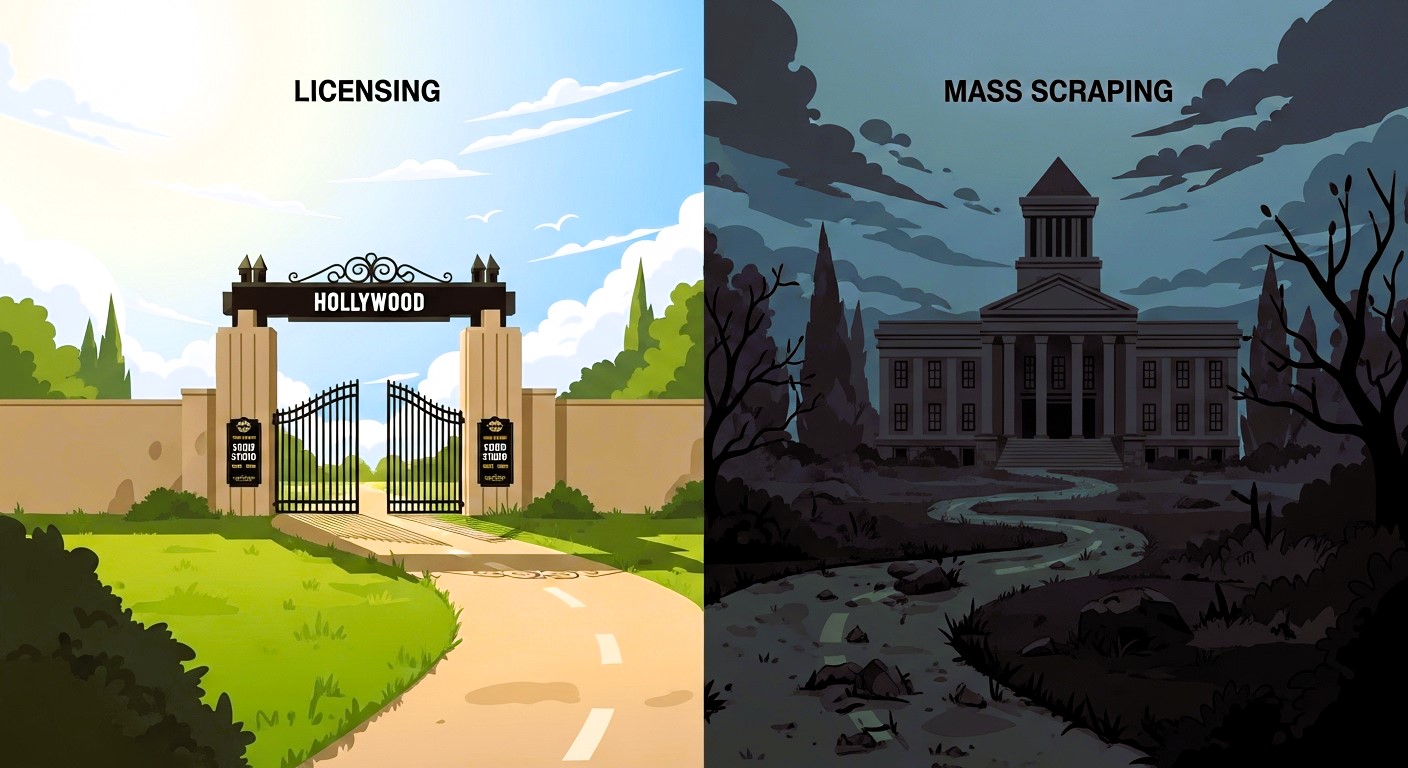
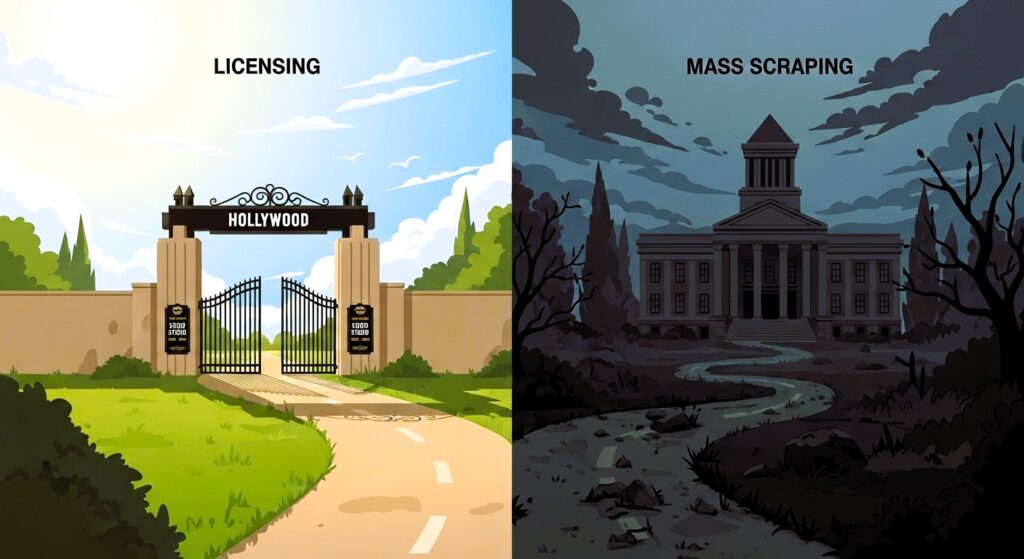
Disputed; suspected “mass scraping”
Increasing focus on licensed/public data
Follow-up analysis on how this might impact TikTok’s content policies in the US?
It’s a fair question. While it’s true that many AI platforms (like Midjourney or OpenAI’s Sora) face copyright scrutiny, the intensity of the “targeting” toward ByteDance’s Seedance 2.0 is unique.
It isn’t just the Chinese connection, though that adds a layer of political tension; it’s a combination of unprecedented scale, blatant IP usage, and the “Wild West” rollout of the tool.
Why Seedance 2.0 is Facing a “Perfect Storm” of Backlash
1. The “Pirated Library” Allegation
Unlike other AI tools that generally try to mask their training data, Seedance 2.0 allegedly launched with a searchable “library” of copyrighted characters.Disney’s legal team famously called it a “virtual smash-and-grab,” claiming the tool treated Marvel and Star Wars characters like free public-domain clip art.
The Difference: While Sora or Runway might accidentally generate something similar to a movie scene, Seedance 2.0 reportedly made it easy to intentionally summon specific, high-value IP.
2. High-Fidelity Likeness (The “Deepfake” Factor)
The controversy peaked when a hyper-realistic video of Tom Cruise and Brad Pitt fighting in a wasteland went viral.
The Conflict: Hollywood just ended a historic strike (2023-2024) specifically to gain protections against “Digital Doubles.” Seeing a tool from a tech giant effectively bypass those hard-won labour protections felt like a direct assault on the industry’s new “constitution.”
3. The Lack of “Guardrails” at Launch
Most Western AI companies (OpenAI, Google, Adobe) have spent months if not years building filters that block prompts for “Mickey Mouse” or “Tom Cruise.”
The Problem: Seedance 2.0 launched in China with very few of these restrictions. By the time it gained global attention, the “genie was out of the bottle,” showing the world exactly how much copyrighted data it had likely consumed.
Is the “Chinese Connection” a Factor?
Yes, but perhaps not in the way you’d think. It isn’t just “anti-China sentiment”; it’s about jurisdictional leverage.
Enforcement Gap: US studios have a much harder time suing a company based in Beijing than one based in San Francisco. This makes them more aggressive in their public rhetoric and “cease-and-desist” tactics because they are terrified of losing control over their IP in a market where they have less legal recourse.
The TikTok History: Because ByteDance is already under a microscope regarding data privacy and “foreign influence,” any perceived ethical lapse (like mass copyright theft) is immediately framed as a broader “bad actor” narrative.
Comparison: Why Others Aren’t Being Sued This Way
Platform
Approach to Copyright
Why aren’t they the #1 Target
OpenAI (Sora)
Negotiating licensing deals with studios.
They are trying to “pay to play” and have strict celebrity filters.
Adobe (Firefly)
Trained only on licensed/public domain images.
Marketed as “Commercially Safe.”
Midjourney
Sued by artists, but currently in a long-term legal “grey zone.”
Doesn’t have the massive corporate footprint or “app ecosystem” (TikTok/CapCut) that ByteDance has.
Summary: The “Threat” Level
For Hollywood, Seedance 2.0 represents the ultimate threat: a perfectly capable tool, backed by a trillion-dollar social media giant, that seemingly ignores the rules they just spent two years fighting to establish.
The “Threat” Level
The Safeguards: What ByteDance is Promising
Following the cease-and-desist letters from Disney and Paramount Skydance, ByteDance announced a multi-layered approach to “cleaning up” Seedance 2.0:
Prompt Filtering: Enhanced “blacklist” keywords that prevent users from entering names of copyrighted characters (e.g., “Mickey Mouse,” “Spider-Man”) or famous actors into the generation engine.
Likeness Recognition: New computer-vision filters designed to scan the output video in real-time. If the AI detects a face or voice that matches a protected celebrity (like the viral Tom Cruise example), the generation is blocked or watermarked.
IP-Specific Guardrails: ByteDance claims it is working to identify and block “pixel-perfect” replicas of specific studio assets, responding to Disney’s allegation that the tool treated their library as “public domain clip art.”
The Catch: Why Studios Aren’t Convinced
Despite these promises, there is a massive gap between preventing users from typing a name and deleting the data used to train the AI.
1. The “Training” Problem
ByteDance has notably not addressed the demand to remove copyrighted material from the model’s training set.
Technical Reality: Once an AI model is “trained” on thousands of hours of Disney movies, that knowledge is baked into its neural network. Even if you block the word “Spider-Man,” the model still “knows” what a red-and-blue webbed superhero looks like.
The Studio Stance: Hollywood argues that the mere act of training on their films is a crime, regardless of whether the final video is blocked.
2. The “Douyin” Loophole
Currently, Seedance 2.0 (known as Xiaoyunque in China) is available to users with a Chinese Douyin ID.
Jurisdiction: Because the tool is primarily hosted on Chinese servers, Western studios have limited visibility into how strictly these safeguards are applied within the domestic Chinese market versus the global version intended for CapCut.
3. “Jailbreaking” the Filters
History with models like ChatGPT and Midjourney shows that users are experts at “jailbreaking” filters. Instead of typing “Tom Cruise,” a user might type “A 60-year-old actor from Top Gun with a distinct toothy grin.”
ByteDance’s Challenge: Their safeguards must be sophisticated enough to understand context and intent, not just keywords.
Summary: Will it work?
ByteDance is in a race to make Seedance 2.0 “commercially safe” before it officially hits the global CapCut ecosystem. If they fail, they face the risk of the tool being banned in Western app stores, similar to the pressures TikTok has faced over data privacy.
Safeguard Type
Effectiveness
Current Status
Keyword Blocking
High (Easy to bypass)
Implemented
Facial Recognition
Medium
In Development
Training Data Purge
Low (Nearly impossible)
No commitment from ByteDance
Will it work?
Comparing ByteDance’s safeguards to those used by OpenAI’s Sora?
While both ByteDance’s Seedance 2.0 and OpenAI’s Sora are giants in the AI video space, their approaches to copyright and Hollywood relations represent two entirely different philosophies: “Move Fast and Ask for Forgiveness” vs. “Licensing and Permission.”
Here is a comparative breakdown of their safeguards and a look at why ByteDance is in hot water while OpenAI is signing billion-dollar deals.
Comparison: ByteDance vs. OpenAI (February 2026)
Feature
ByteDance: Seedance 2.0
OpenAI: Sora 2
Philosophical Approach
Reactive: Implements filters after legal threats.
Proactive: Negotiates licensing deals before wide release.
Studio Relations
Currently facing cease-and-desist from Disney & Paramount.
Signed a $1 billion equity deal with Disney in Jan 2026.
Character Usage
Allegedly pre-loaded with a “pirated library” of characters.
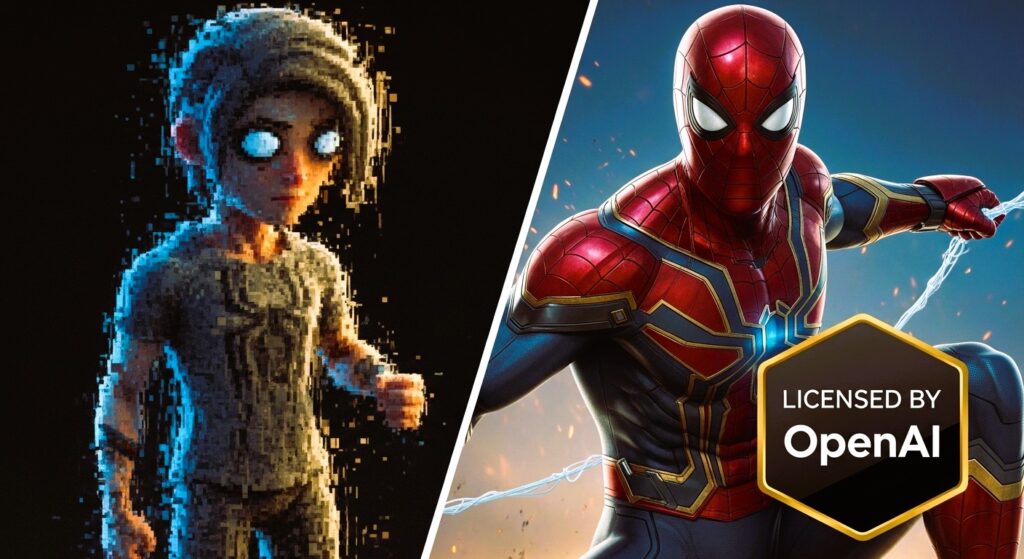
Licensed use of 200+ characters (Marvel, Star Wars, Pixar).
Likeness Policy
Massive backlash for Tom Cruise/Brad Pitt deepfakes.
Strict ban on modern living celebrities; allows historical figures.
Opt-Out Policy
Opaque; largely controlled by the Chinese model.
Character-by-character opt-out system for IP holders.
The “Sora Standard”: How OpenAI Plays the Game
As of early 2026, OpenAI has pivoted Sora from a “disruptor” to a “partner” for Hollywood.
The Disney Deal: OpenAI effectively neutralised Disney’s legal team by letting them invest. Sora users can now legally generate short-form videos with Iron Man or Yoda, but only within strict “social media” parameters.
The “Historical Only” Rule: Sora’s filters are designed to recognise modern actors and block them instantly. You can generate a video of Marilyn Monroe (historical/legacy), but you cannot generate a video of Tom Holland.
Opt-Out Forms: OpenAI allows copyright holders to submit specific characters or scenes to a “Dispute Form” to have them manually blocked from the training influence.
The “Seedance Trap”: Why ByteDance is Failing
ByteDance’s safeguards are seen as “too little, too late” for three technical and political reasons:
Identity-Lock vs. Identity-Theft: Seedance 2.0 features a revolutionary “Identity-Lock” tool designed for consistent characters. Studios argue this tool was built specifically to “lock in” their copyrighted faces without paying for them.
The Audio Gap: Seedance 2.0 generates native audio (synchronised voices). OpenAI’s Sora 2 still lacks native audio, which ironically protects OpenAI from the massive “voice likeness” lawsuits ByteDance is now facing.
Speed over Safety: Seedance is reportedly 14x faster and significantly cheaper than Sora. Hollywood argues this speed is achieved by cutting corners on safety checks and data curation.
Analysis: Can ByteDance Recover?
ByteDance’s Seedance 2.0 vs. Hollywood, For ByteDance to appease the Motion Picture Association (MPA), it will likely have to move toward the “Licensing Model.” If they don’t, Seedance 2.0 might be banned from the US App Store (as part of CapCut), effectively killing its commercial potential in the West.
Key Takeaway: OpenAI bought peace with a $1 billion check and strict filters. ByteDance tried to scale first and filter later,and Hollywood is making them pay for it.
Can ByteDance Recover?
Frequently Asked Questions (FAQ)
1. Is Seedance 2.0 available in the US?
As of February 2026, Seedance 2.0 is primarily restricted to the Chinese market, though videos generated by the tool have spread globally via social media platforms like TikTok and X.
2. Can I use Seedance 2.0 to make movies with famous actors?
Following the recent legal pressure, ByteDance is implementing safeguards to prevent the unauthorised use of actor likenesses. Attempting to generate clips of celebrities will likely result in a prompt rejection or filtered output.
3. Will there be a lawsuit?
While Disney and Paramount have sent cease-and-desist letters, a full-scale lawsuit may be avoided if ByteDance implements strict enough filters or enters into licensing negotiations similar to those seen between OpenAI and major media publishers.
EP Statement: The ByteDance vs. Hollywood Report
The Mission: In an era where AI moves faster than the law, our goal is to cut through the hype. This report examines the technical “brawn” of ByteDance’s Seedance 2.0 and why its “move fast, ask for forgiveness” strategy has sparked a billion-dollar standoff with Hollywood.
Our Core Standards:
Neutrality: No partnerships. No bias. Just a raw look at the $1B “Licensing vs. Scraping” divide.
Precision: We cross-reference every spec, from Native Audio Sync to Identity-Lock, against verified developer data.
Human-First: We prioritise the impact on creative labour, highlighting the shift from traditional production to AI-integrated workflows.
The Bottom Line: We don’t just report the tech; we analyse the power shifts. Whether it’s OpenAI’s “safe harbour” deals or ByteDance’s technical disruption, we keep you ahead of the curve.